BAKU, Azerbaijan, July 3. Uzbekistan and
Kazakhstan have agreed to strengthen cooperation on air quality
monitoring and the reduction of transboundary air pollution through
joint scientific research and practical environmental
initiatives.
This was reflected in the statement by Uzbekistan's National
Committee on Ecology and Climate Change of Uzbekistan.
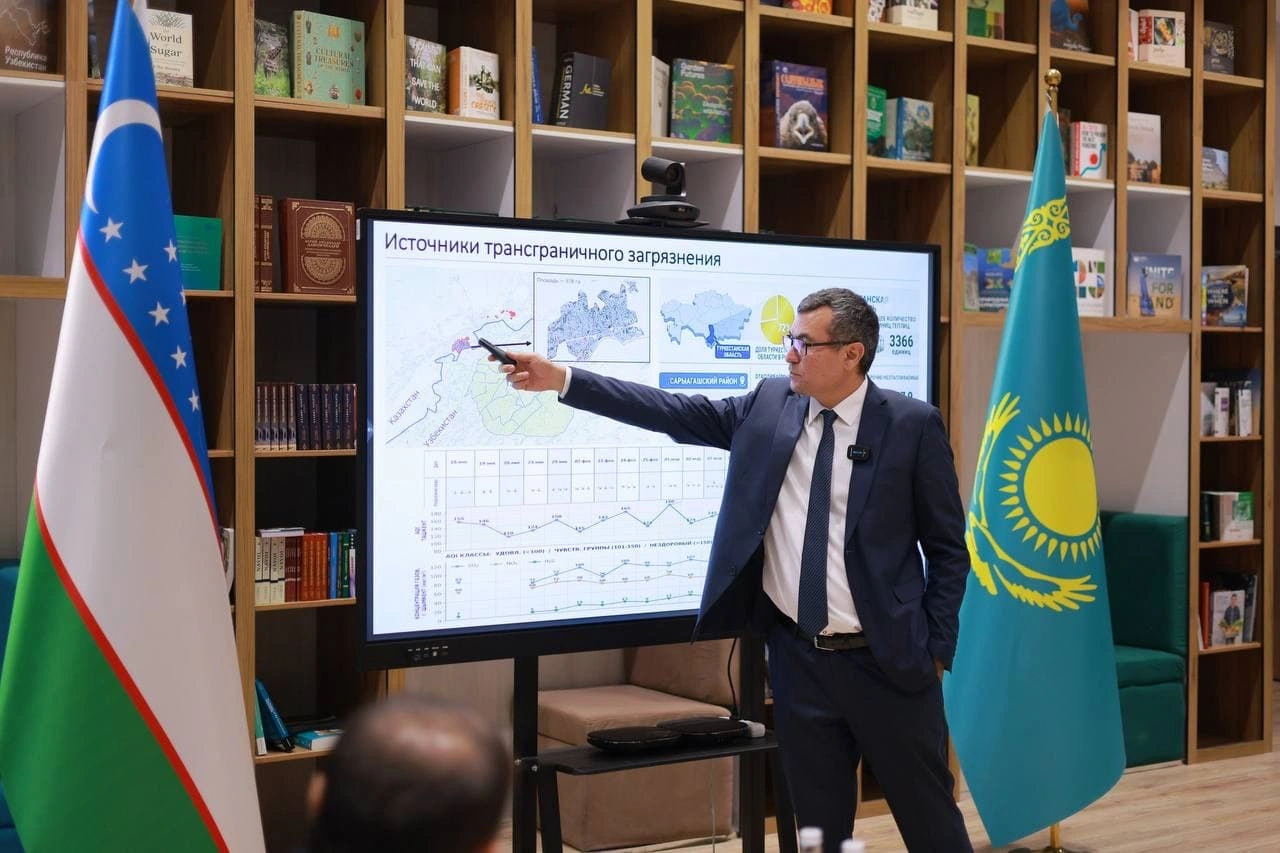
The discussions took place at the Central Asian University of
Environmental and Climate Change Studies (Green University), where
an Uzbek delegation received representatives of the Ministry of
Ecology and Natural Resources of Kazakhstan.
The meeting focused on expanding bilateral cooperation in air
protection, improving air quality monitoring systems, and
implementing joint measures to reduce cross-border pollution.
The talks followed agreements reached during the meeting between
Shavkat Mirziyoyev and Kassym-Jomart Tokayev in Bukhara on April
11, 2026, where the two leaders emphasized the importance of
regional environmental initiatives, including the Clean Air project
in border areas.
The meeting brought together representatives of Uzbekistan's
National Committee on Ecology and Climate Change, the National
Climate Change Center, the Hydrometeorological Service Agency, and
research institutions. The Kazakh delegation included officials
from the Committee for Environmental Regulation and Control,
Kazhydromet, and other specialized agencies.
During the talks, the parties exchanged information on
environmental protection measures, shared regulatory experience,
and reviewed progress under the joint Clean Air initiative.
Particular attention was given to air quality monitoring, with
experts presenting data on atmospheric circulation, the transport
of pollutants, and concentrations of particulate matter, including
PM10 and PM2.5.
The Uzbek side presented research indicating that the main
source of air pollution in the country's major cities is
anthropogenic activity, while atmospheric circulation also plays a
significant role in the spread of pollutants across borders.
"The atmosphere has no state borders, making coordinated
scientific research and joint action essential for improving air
quality in border regions," the committee said.
The parties also agreed to establish a joint working group
involving scientific institutions from both countries to develop
and implement practical measures aimed at reducing transboundary
air pollution.
As part of the visit, the Kazakh delegation reviewed
Uzbekistan's Clean Air project, visiting sites in Tashkent Region
where greenhouses are being relocated to Surkhandarya Region, as
well as the Tashkent Thermal Power Plant to examine modern
emissions filtration systems. The delegation was also introduced to
Uzbekistan's environmental vehicle sticker system, designed to
reduce transport-related emissions.
"The establishment of a joint scientific working group will help
develop evidence-based solutions to improve air quality and
minimize transboundary pollution," the committee said.
The two countries agreed to continue holding joint practical
activities aimed at strengthening regional environmental
cooperation and reducing cross-border air pollution.