BAKU, Azerbaijan, June 30. Kazakhstan has
created a legislative framework for the development of air taxis
and unmanned aviation, the Ministry of Transport of Kazakhstan
said.
According to the ministry, on June 24, 2026, President
Kassym-Jomart Tokayev signed the Law “On Amendments and Additions
to Certain Legislative Acts of the Republic of Kazakhstan on
Digitalization, Personal Data Protection, Road Traffic and
Regulation of Advanced Technologies in Transport.”
The amendments introduce changes to the Law “On the Use of the
Airspace of the Republic of Kazakhstan and Aviation
Activities.”
According to the ministry, the move officially establishes a
modern regulatory framework for the development of innovative
aviation and the integration of advanced technologies into
Kazakhstan’s national aviation system.
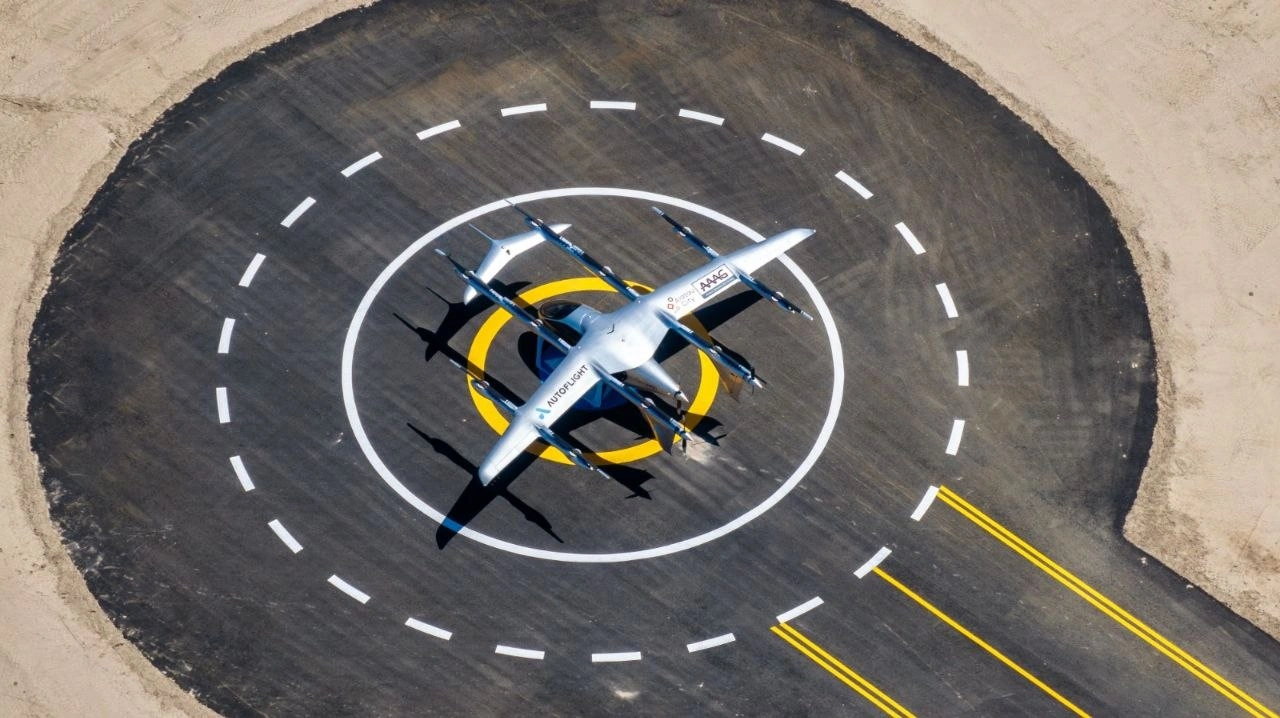
With the adoption of the amendments, Kazakhstan has legally
established rules for the urban air mobility (UAM) market and
joined a group of countries with developed regulatory frameworks
for eVTOL (electric vertical take-off and landing aircraft),
alongside the United States, the European Union, South Korea and
China.
The ministry said the legislation introduces seven key
changes.
These include the introduction of the concept of Advanced Air
Mobility and the definition of its categories — urban and regional
air mobility; the creation of a legal basis for operating eVTOL
aircraft and other aircraft approved for advanced air mobility; and
recognition of vertiports as part of the supporting
infrastructure.
The amendments also establish new certification mechanisms for
aviation developers and manufacturers, operators of urban air
mobility services and civil remotely piloted aircraft systems.
In addition, Kazakhstan introduced the legal status of an
unmanned traffic management (UTM) system designed to provide
digital control of drone flights, including information exchange,
identification, routing and airspace coordination.
The legislation further establishes cybersecurity and digital
infrastructure requirements for drone traffic services and improves
state regulation of civil unmanned aviation systems, including
registration, operation, certification and flight management
procedures.
According to the ministry, the legislative changes move
innovative aviation technologies from an experimental stage into a
fully regulated environment, creating transparent conditions for
investment, technology deployment and the development of high-tech
business.