BAKU, Azerbaijan, June 29. Construction has
officially begun on one of Kazakhstan’s largest green energy
investment projects - a 1-gigawatt (GW) wind power plant in the
Zhambyl region of southern Kazakhstan.
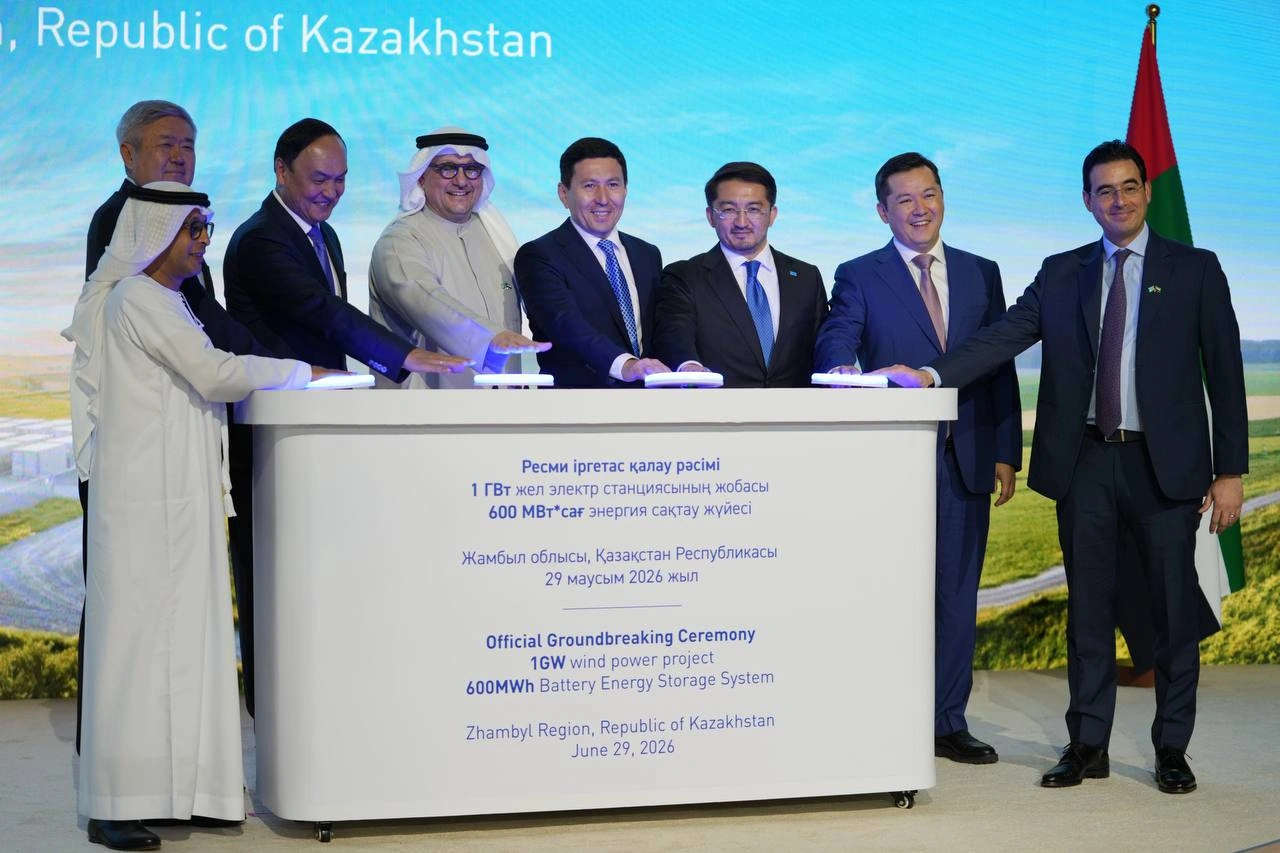
This was announced in a report published by the Kazakh Ministry
of Energy following the capsule-laying ceremony via teleconference,
which was attended by Vice Minister of Energy Sungat Yessimkhanov,
Chairman of the Management Board of Samruk-Kazyna Nurlan Zhakupov,
and Chief Executive Officer of UAE-based investment company Masdar
Mohamed Jameel Al Ramahi.
According to the ministry, with an estimated investment of
around $1.4 billion, the project is expected to help address
electricity shortages in the country’s southern regions.
The ministry notes that the project is expected to contribute to
the development of renewable energy and support the country’s
long-term carbon neutrality agenda.
“Partnership with Masdar contributes to the development of
renewable energy and advances Kazakhstan’s progress toward carbon
neutrality. This project will strengthen regional energy security
and bring advanced technologies into the renewable energy sector.
We highly value our partners’ willingness to invest in the
country’s sustainable development and will provide the necessary
support for the successful implementation of all stages of the
project,” Yessimkhanov said.
One of the project’s key technological features is the
integration of wind generation with a large-scale battery energy
storage system (BESS). The facility will include a 300 MW storage
system with a capacity of 600 MWh.
The storage component is expected to improve grid reliability by
enabling a stable electricity supply despite weather fluctuations
and helping manage peak evening demand.
The consortium’s investors and shareholders include Masdar with
a 40% stake, W Solar (40%), Kazakhstan’s Qazaq Green Power, part of
the Samruk-Kazyna fund (18%), and the Kazakhstan Investment
Development Fund (KIDF) with 2%.
From an environmental perspective, the project is expected to
reduce carbon dioxide emissions by approximately 2.5 million tons
annually, supporting Kazakhstan’s national climate targets.
The full commercial commissioning of the wind complex is
scheduled for the third quarter of 2029.