BAKU, Azerbaijan, June 26. Emirati Masdar is
targeting up to 10 GW of renewable capacity in Azerbaijan as the
UAE pushes to help the country become a regional green hydrogen
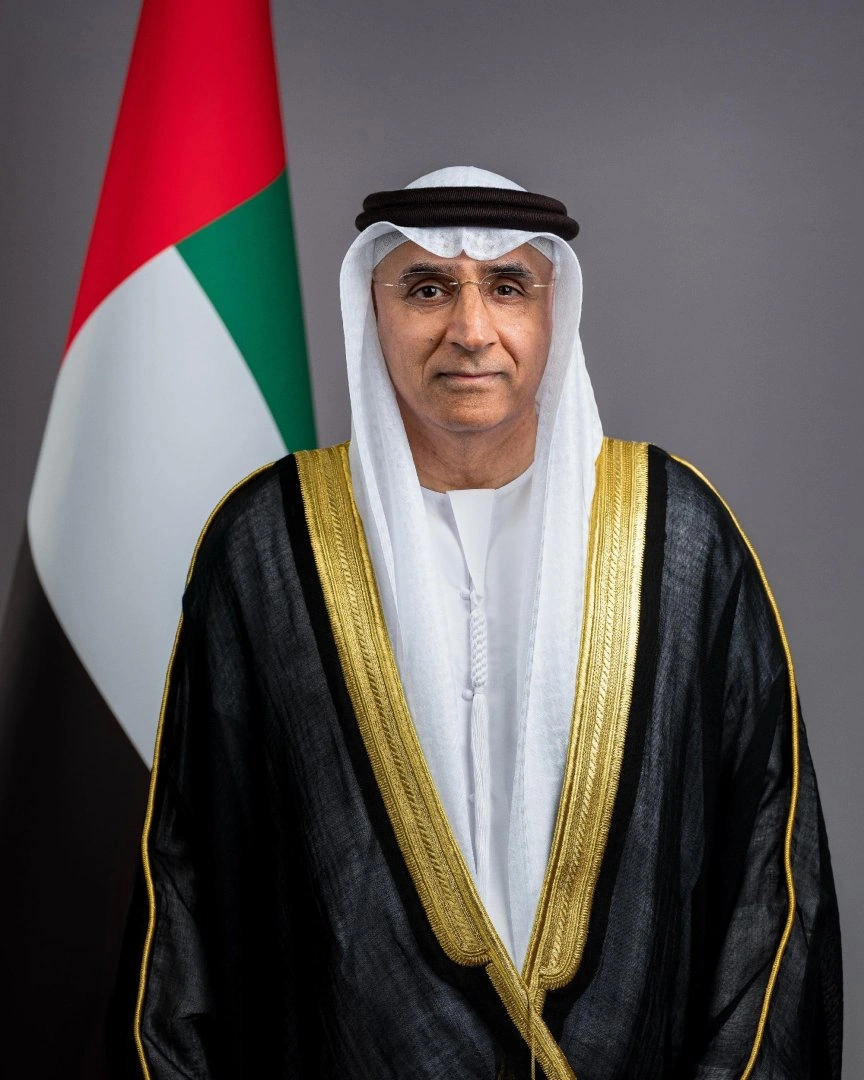
hub, the UAE Ambassador to Azerbaijan told in an interview with
Trend.
The UAE does not view economic growth and climate action as
competing forces, the ambassador said, stressing that the country's
approach is built on pragmatism rather than ideology.
"An orderly, just, balanced, and equitable energy transition is
one that reflects different national circumstances, development
priorities, and energy needs. For an energy transition to succeed
globally, pathway choices must advance emissions reduction while
strictly ensuring energy security, affordability, reliability, and
system stability," he said.
He explained that Abu Dhabi rejects the idea of picking
technological winners and losers in the energy sector.
"We should not be in the business of picking winners and losers
among technologies; we should be focused on absolute emissions
reduction. A technology-neutral framework allows countries to
utilize the most suitable tools and technologies according to their
specific national contexts. Whether it is expanding renewables,
scaling low-carbon hydrogen, optimizing energy efficiency,
utilizing energy storage, or deploying other low-carbon
technologies, every nation must have the flexibility to design its
own optimal energy mix," the ambassador noted.
He pointed to Masdar - the UAE's state-backed clean energy
company - as the clearest expression of this philosophy in action.
The company has built a renewable portfolio spanning more than 40
countries across six continents, with a capacity of 65 GW and a
stated target of 100 GW by 2030. The UAE also hosts the
International Renewable Energy Agency (IRENA) in Abu Dhabi.
Masdar scales up green hydrogen push in
Azerbaijan
Asked about Emirati companies' interest in Azerbaijan's green
hydrogen sector, the ambassador described the bilateral energy
relationship as one that is expanding rapidly, with Masdar serving
as the primary driver.
"Masdar has signed major implementation agreements with the
Ministry of Energy of Azerbaijan that include a specific focus on
green hydrogen. Our multi-gigawatt onshore wind and solar
agreements explicitly incorporate complex measures to utilize wind
power for the production and export of green hydrogen, aiming to
decarbonize local industries and position Azerbaijan as a premier
green energy exporter to Europe," he said.
The ambassador noted that building a green hydrogen economy
requires a solid renewable electricity base first - and Masdar is
investing heavily in that foundation. He pointed to the 230 MW
Garadagh Solar PV Plant, the largest solar facility in the Caspian
region, as a starting point from which Masdar and SOCAR Green are
now scaling up further, with the Bilasuvar and Neftchala solar
projects currently in execution and an ultimate shared vision of up
to 10 GW of clean energy capacity in Azerbaijan.
Offshore wind is also on the agenda. At COP29 in Baku, Masdar,
SOCAR Green, and ACWA Power signed a Memorandum of Understanding to
explore 3.5 GW of offshore wind projects in the Caspian Sea.
"This agreement directly supports Azerbaijan's plans to develop
its offshore wind resources to power green hydrogen production and
water desalination projects," the ambassador said.
He drew a parallel between the two countries' energy histories,
noting that both the UAE and Azerbaijan built their prosperity on
hydrocarbons before pivoting toward clean energy.
"By combining Azerbaijan's incredible natural wind and solar
bounty with the UAE's capital, innovation, and international
project execution expertise, Emirati companies are fully committed
to helping Azerbaijan emerge as a central hub for the regional and
transregional green hydrogen economy," he added.
Bilateral ties anchored by landmark CEPA
Beyond energy, the ambassador said the broader economic
relationship between the two countries has moved well past
traditional diplomacy.
"The economic relationship between the United Arab Emirates and
Azerbaijan has transitioned from traditional diplomatic ties into a
deep, institutionalized, and highly strategic partnership," he
said.
He cited the UAE-Azerbaijan Comprehensive Economic Partnership
Agreement (CEPA), which has officially entered into force, as the
cornerstone of that shift - setting a roadmap focused on expanding
non-oil trade, accelerating renewable energy projects, developing
digital infrastructure, and promoting mutual investments.
UAE launches Global Energy Efficiency
Alliance
The ambassador also outlined the UAE's Global Energy Efficiency
Alliance, built on the momentum of the COP28 Global Renewables and
Energy Efficiency Pledge. The initiative supports the global goal
of doubling the annual rate of energy efficiency improvements -
from roughly 2% to over 4% - by 2030.
"Energy efficiency is one of the most practical, immediate, and
cost-effective tools for reducing emissions, lowering costs,
improving competitiveness, and strengthening energy resilience," he
said.
The Alliance focuses on implementation through technology,
standards, digital tools, capacity-building, financing, and
private-sector engagement - areas where, the ambassador argued,
countries can make measurable progress quickly across buildings,
industry, transport, power systems, and urban infrastructure.