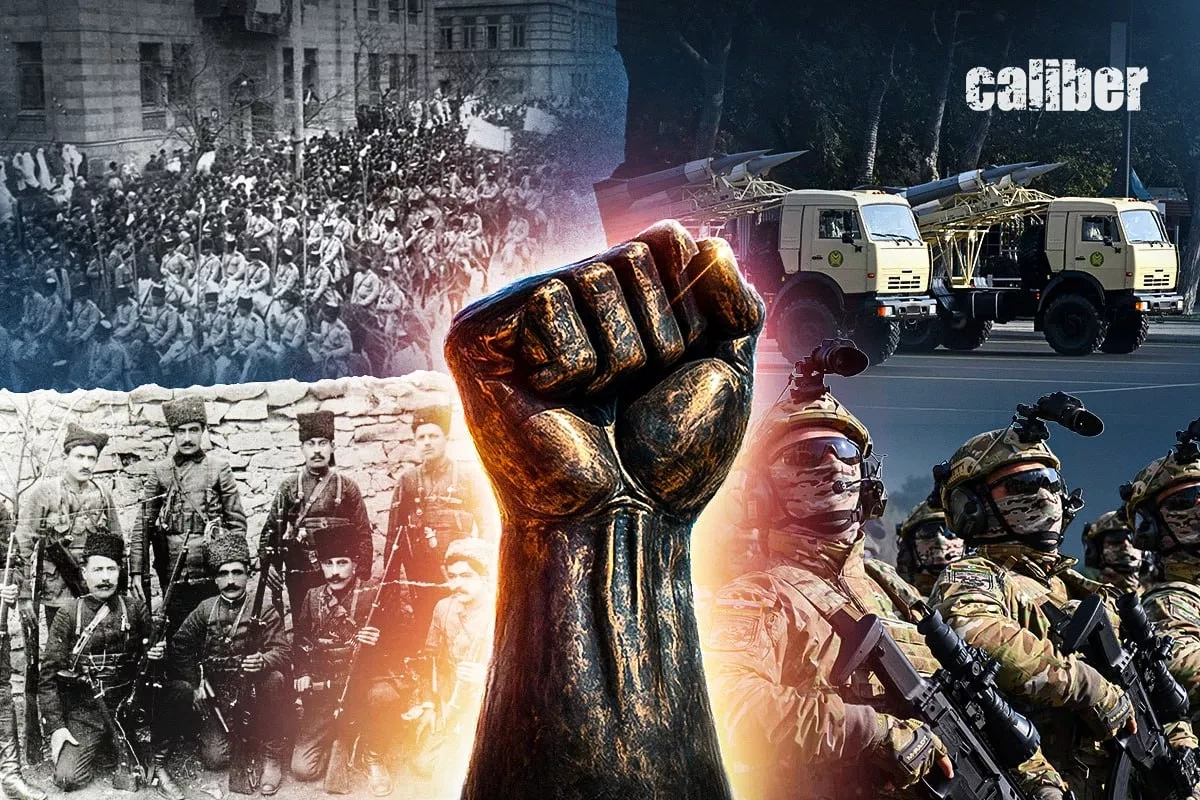
The figure 108 may not seem particularly significant to some when viewed in the context of world history. Yet it was during this period that the Armed Forces of the independent Republic of Azerbaijan travelled a difficult
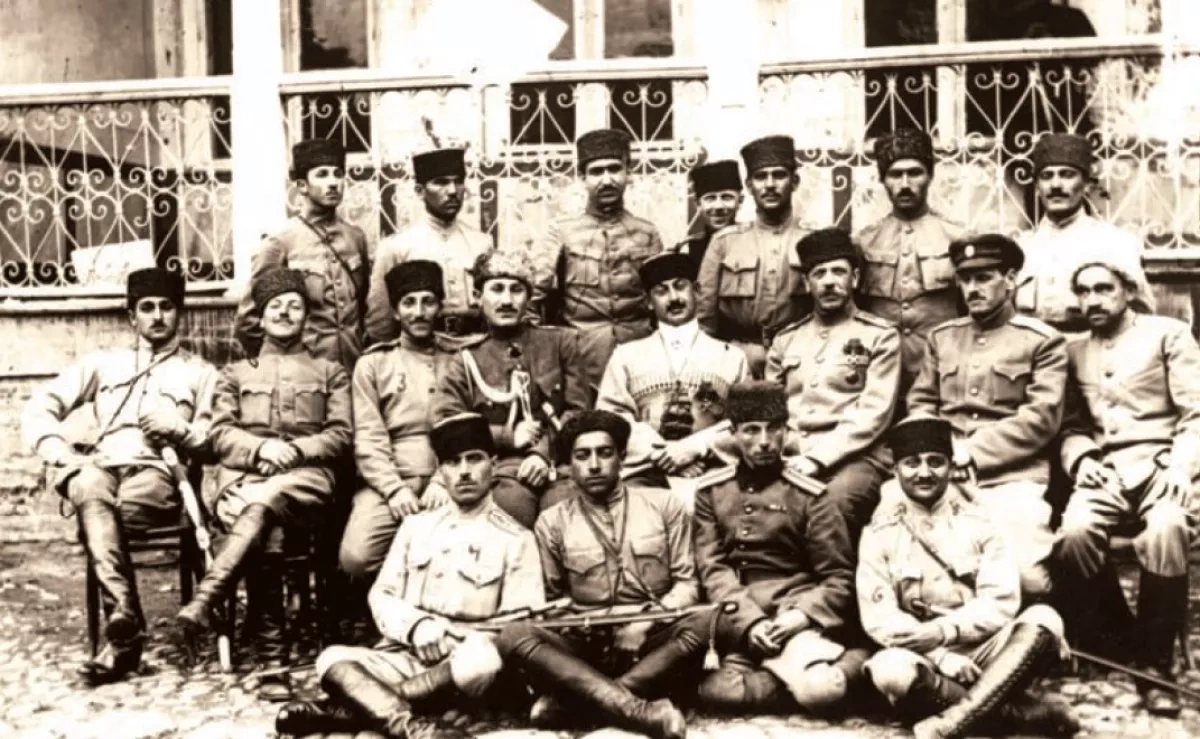
The fate of the Azerbaijani Army, which traces its origins to the Separate Corps established by a decision of the government of the Azerbaijan Democratic Republic on June 26, 1918, under the command of General Aliagha Shikhlinski, can hardly be described as smooth or cloudless. Several decades of disruption separate the first regular military unit of the ADR from today’s victorious Armed Forces — first the Soviet period, which swallowed Azerbaijan’s very statehood, and then the early 1990s, when independence was restored but there was no army capable of defending it.
The corps, established in 1918, existed only briefly. In the autumn of that year, together with Nuri Pasha’s Islamic Army of the Caucasus, it liberated Baku from Armenian-Bolshevik forces on September 15, a date that remains the first combat success of Azerbaijan’s national army. However, in April 1920, the Bolsheviks brought an end both to the first democratic republic in the Muslim East and to its armed forces: the national army was disbanded, and the very idea of Azerbaijani statehood was buried beneath the Soviet system for the next seven decades.
With the restoration of independence in 1991, Azerbaijan once again faced the task of building its own army. It soon became clear, however, that there was a vast gap between having the right to maintain armed forces and possessing a real military capable of defending the state. The first years of independence were marked by disparate armed detachments that were not united into a single, manageable force. There was no unified command, no discipline, and no coherent strategy. Armenian armed formations took full advantage of this situation, and the occupation of Azerbaijani territories expanded month after month.
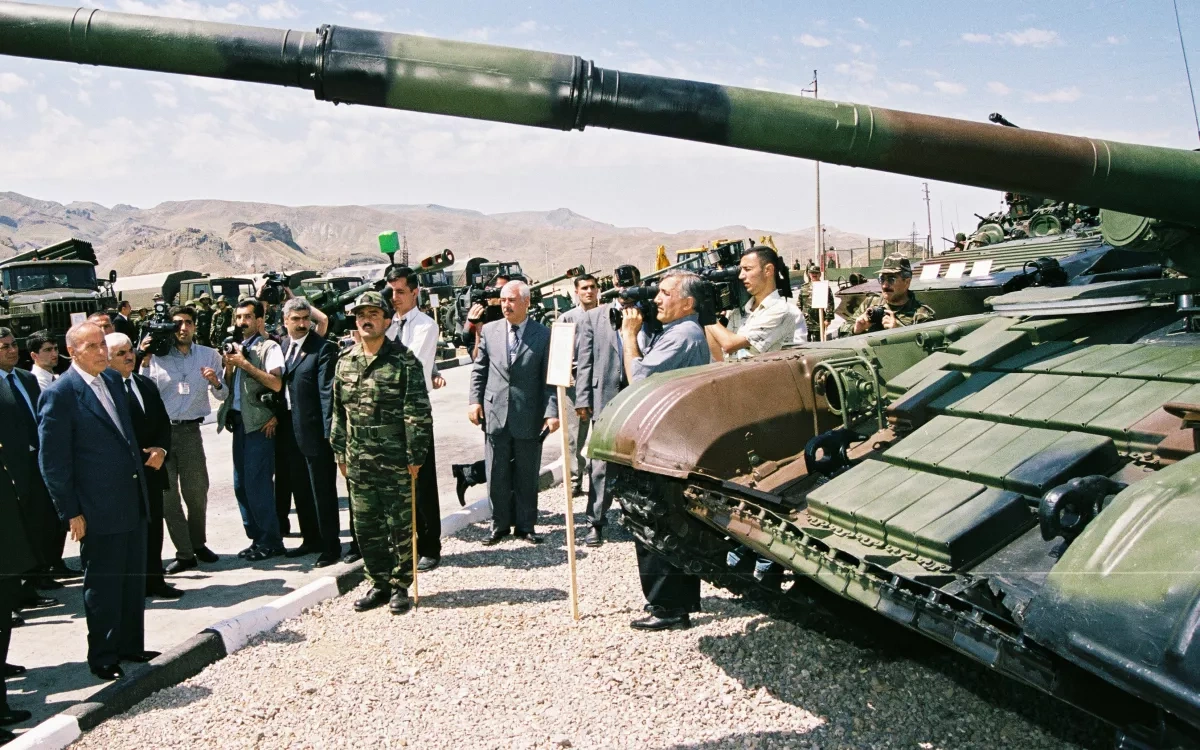
A turning point came when Heydar Aliyev assumed leadership of independent Azerbaijan. The steps taken by the national leader in the military sphere are difficult to overstate. Armed groups that had brought anarchy and chaos into the country’s domestic political life were disbanded, and a regular army with a unified command structure was established. This was a process of institution-building—a monumental undertaking that yielded its first results in January 1994. During military operations on the southern front, Azerbaijani forces liberated around twenty villages in the Fuzuli district, as well as the settlement of Horadiz and the village of Jojug Marjanli.
Against the backdrop of the overall tragic course of the First Karabakh War, these were local successes. Yet they demonstrated something crucial: a disciplined and well-commanded army could launch offensives and liberate territory rather than remain in a constant state of retreat. The foundation laid during those years bore fruit a quarter of a century later. The link between the large-scale work carried out in the 1990s and the triumphs of the 2020s is direct, even though generations stand between them.
The development of the armed forces continued under the leadership of President Ilham Aliyev, but with a different strategic objective: transforming Azerbaijan’s military into the strongest force in the region. Economic growth played a decisive role in this process. Fueled by oil revenues, defence spending increased by more than fifteen times after 2003, according to official figures. These resources were invested in modern weaponry, the modernisation of military service and infrastructure in line with NATO-oriented standards, and the establishment of a domestic defence industry comprising more than twenty military production facilities and over a thousand types of defence-related products.
At the same time, Azerbaijan expanded its military-technical cooperation with key partners, most notably Türkiye and Israel, gaining access to technologies that would later prove instrumental in determining the outcome of the war. By the end of the second decade of the twenty-first century, the Azerbaijani Armed Forces had become the most powerful military in the South Caucasus in terms of overall firepower, with a significant lead over regional counterparts.
The numbers continue to reflect this reality. In the Global Firepower 2026 ranking, Azerbaijan is placed 60th among 145 countries, while Armenia ranks 101st. A gap of more than forty positions between two neighbouring states that spent three decades in a state of conflict serves as a tangible indicator of the results achieved through decades of military development and modernisation.
This military strength was repeatedly tested in practice, and each test became another step forward. The April 2016 clashes marked the first major demonstration of Azerbaijan’s modernised armed forces. Responding to Armenian shelling with a swift counteroffensive, Azerbaijani troops liberated more than 2,000 hectares of territory in the Fuzuli, Jabrayil, and Aghdara directions, captured strategically important heights, and altered the configuration of the line of contact.
It was during these operations that strike drones were employed for the first time, causing panic among opposing forces. What might have appeared to be merely a tactical episode in 2016 would, four years later, become one of the decisive factors in a much larger conflict.
The 2018 Gunnut operation in the Nakhchivan direction highlighted a different aspect of the Azerbaijani military’s capabilities—not firepower, but mobility and operational flexibility. Azerbaijani forces liberated the village of Gunnut and a number of commanding heights, bringing approximately 11,000 hectares under control and securing oversight of a strategically important road section.
Each of these operations sent a clear message to the opposing side: time was no longer working in its favour.
The Tovuz clashes of July 2020 served as a prelude to the events that would soon follow, and their significance extends far beyond military statistics. The Armenian provocation along the state border was repelled, with enemy firing positions and military equipment neutralised. Yet the most important developments occurred not on the battlefield, but behind the front lines. The massive march in Baku and the long queues of thousands of volunteers outside military enlistment offices reflected a nationwide mobilisation, bringing the army and the people together as a single force.
The twelve Azerbaijani servicemen who lost their lives in those clashes became martyrs on the eve of a war that would ultimately reshape the region. On September 27, 2020, in response to large-scale shelling of Azerbaijani military positions and civilian settlements, the Armed Forces of Azerbaijan launched a counteroffensive that entered history as the Patriotic War.
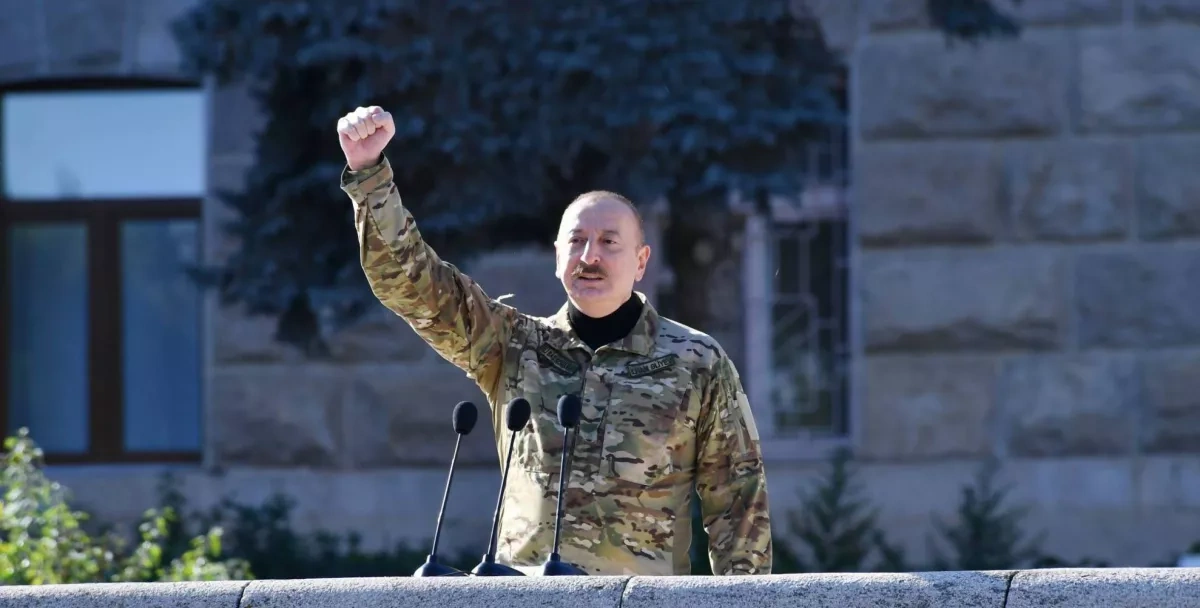
Over the course of 44 days, the Azerbaijani Army, under the leadership of the Supreme Commander-in-Chief, President Ilham Aliyev, carried out the operation known as “Iron Fist.” As a result, five cities, four settlements, and 286 villages were liberated from Armenian occupation. On November 8, Shusha—the pearl of Karabakh and the heart of Azerbaijan—was liberated. On November 10, a trilateral statement was signed, formally confirming the complete military defeat of the opposing side.
After the autumn of 2020, the
Today, Azerbaijan continues to strengthen its military potential not for the sake of a new war, but to ensure that the previous one can never be repeated. This is a fundamentally different reality from thirty years ago: today, the strength of our army guarantees peace.
June 26 should be seen not merely as an anniversary, but as a lesson paid for at a very high price. One hundred and eight years ago, the Azerbaijani state first realised that it could not exist without its own army; two years later, it lost both its army and its statehood. Having regained independence in 1991, it nearly lost it again because of the absence of a capable military force. Only after traversing this difficult