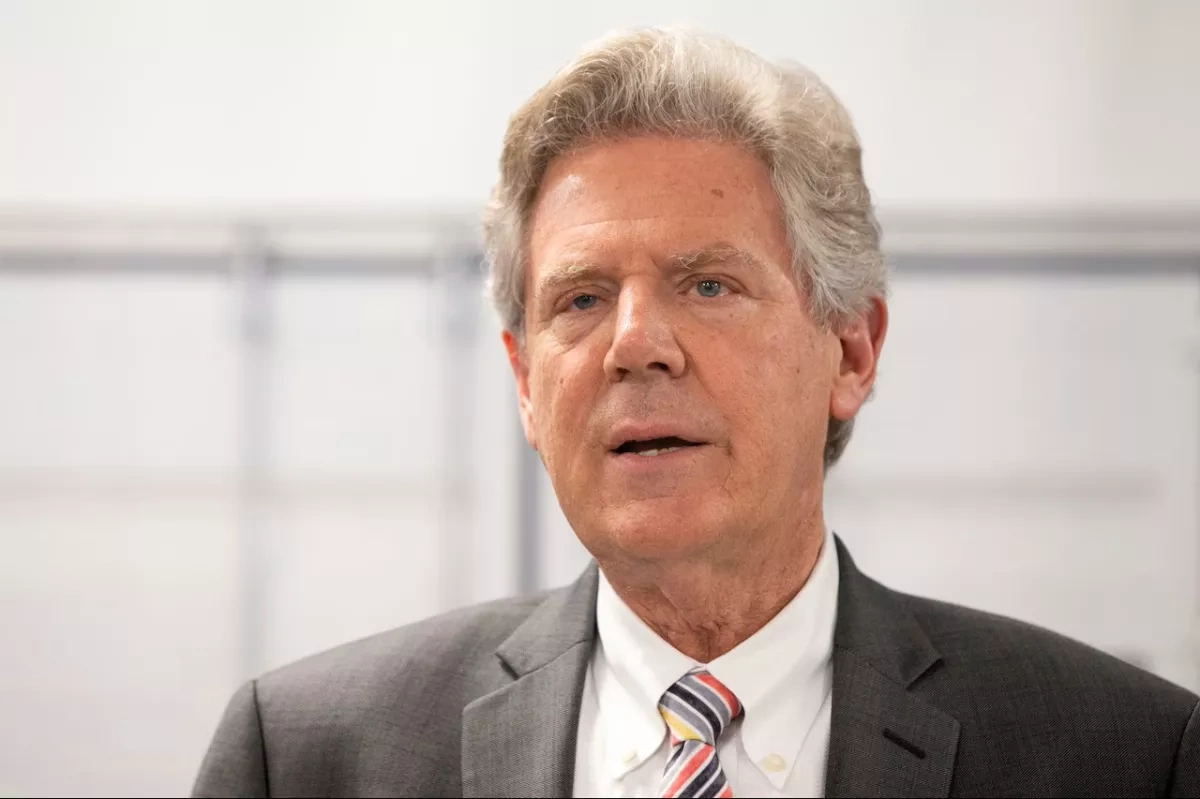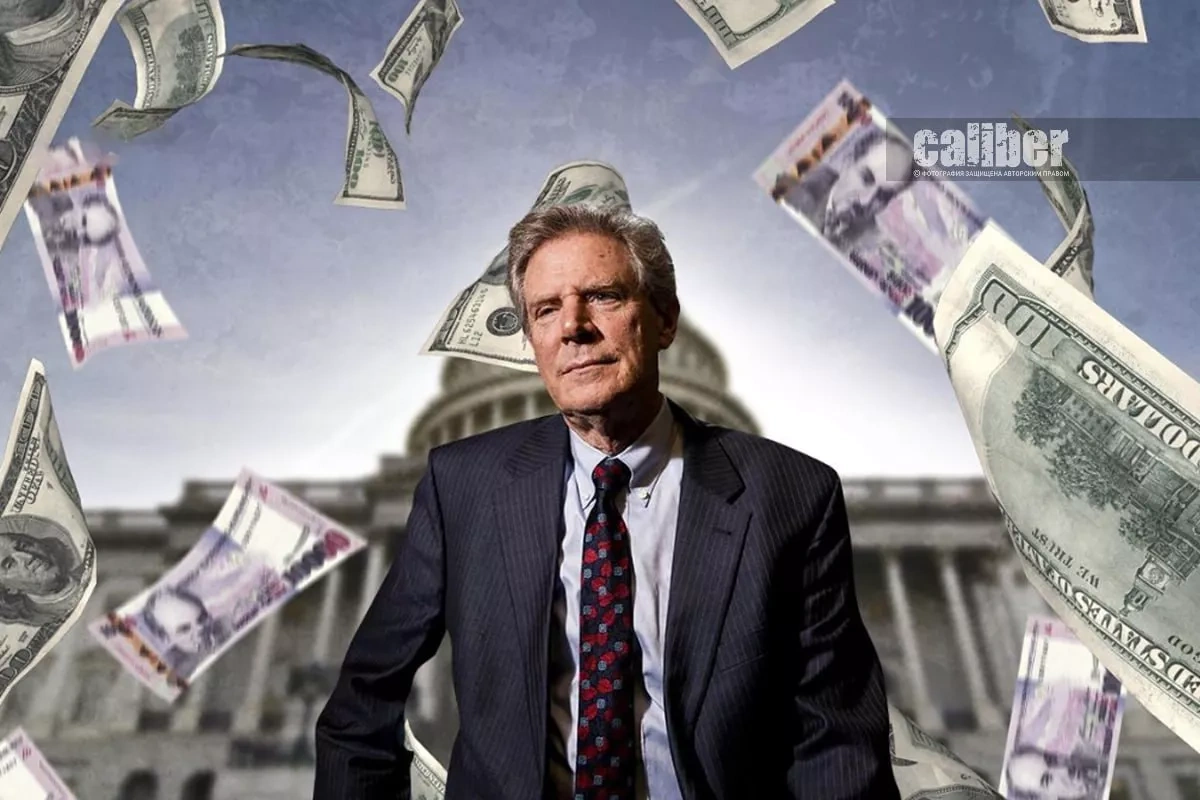
When Congressman Frank Pallone introduced an amendment to the U.S. defence budget bill for fiscal year 2027, prohibiting the U.S. President from using his authority to restrict the application of the notorious Section 907 unless Azerbaijan meets a list of ultimatum-like conditions, it did not cause alarm in Baku. Rather, it evoked a kind of weary sense of déjà vu.
In all of this, what is recognisable is not so much the document itself, but the signature style behind it. Over more than three decades in the U.S. Congress, a distinct type of politician has emerged — a legislator whose stance on the South Caucasus is not authored by themselves, but by the organisation that funds them. Pallone is merely the current face of this subtype, a co-founder of the Armenian Caucus and one of the most loyal advocates of the Armenian National Committee of America (ANCA). But what is more interesting is not Pallone himself, but the pattern into which he fits: American politicians who have served Armenian lobbying interests tend, with suspicious regularity, to end up poorly. And this coincidence is worth examining more closely.
Take the most prominent figure of the recent past — Senator Bob Menendez. A long-time chairman of the Senate Foreign Relations Committee, he was an indispensable battering ram for the Armenian lobby: it was his signature that appeared on the harshest anti-Azerbaijani resolutions, he was the one blocking any steps toward Baku, and ANCA addressed him as a guaranteed enforcer. In the Armenian diaspora press, he was hailed as a friend, patron, and protector of Armenian interests.
One of the outcomes of the senator’s tireless activity was the verdict delivered by a federal court in January 2025, according to which Menendez would spend 11 years in prison for bribery — gold bars, stacks of cash, and a luxury Mercedes-Benz discovered during a search earned him the nickname “Gold Bar Bob.” He went down in history as the first U.S. senator found to have worked for foreign governments, meaning that, for a bribe, he promoted the interests of other countries. In June of the same year, Menendez was sent to a federal correctional facility in Pennsylvania; his wife received four and a half years in the same case. Thus, a man who had traded his influence for decades ultimately traded himself into a prison cell — and there is nothing accidental in his downfall.
The logic here is straightforward, even if it is not always stated openly. A politician willing to sell his position on the South Caucasus in exchange for lobby support is, in essence, selling it in general — and once that happens, other buyers will inevitably appear. In this sense, Menendez simply converted public office into personal gain, and the Armenian lobby in this scheme was merely one client among others, and not even the most generous. It paid in political backing and diaspora votes, whereas foreign governments paid in bullion. But the psychology of a trader does not change depending on the denomination: the one who once put a mandate up for sale will continue to trade it with everyone.
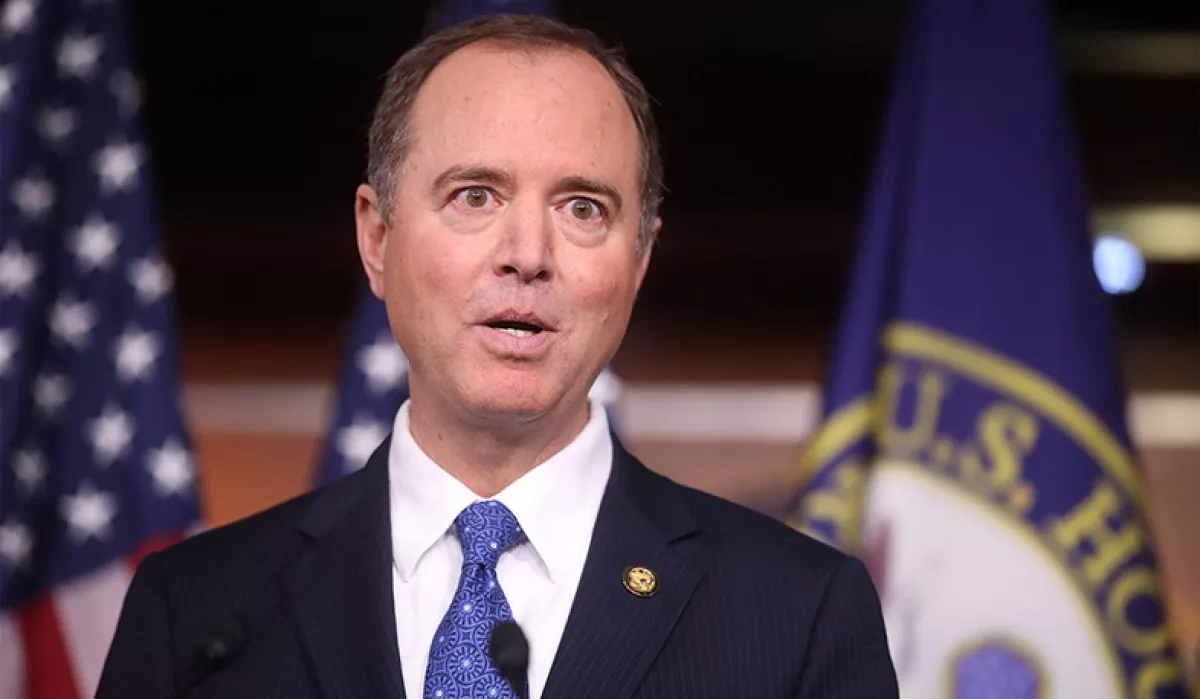
Another star of the Armenian caucus — Adam Schiff — followed a different route, but in the same direction. A long-time congressman from California, a state with one of the largest Armenian communities in the United States, he built his career on unwavering support for the diaspora agenda and was warmly embraced by the same ANCA. Schiff made a name for himself as the chief prosecutor in the Trump impeachment proceedings, becoming one of the most recognisable figures in his party, only to suffer a resounding setback when the accusations he led repeatedly collapsed, and his own reputation began to be dissected by his colleagues. Schiff’s trajectory is the story of a politician who overestimated the durability of his position and discovered that the audience he had catered to was unable to protect him once the political winds shifted. A lobby can hand out awards and organise standing ovations, but it cannot save its favourites — especially those who have become a liability.
This is the core trap for those who become “well-fed” by it. The Armenian lobby offers a simple deal: you defend our agenda, and we provide you with votes, funding, praise in diaspora media, and the image of a defender of the oppressed. The deal looks advantageous, especially for a politician from a district with a significant Armenian community. But it carries a hidden cost that is not visible at the moment of signing. First, it conditions politicians into easy money and equally easy loyalty, eroding the discernment that separates a statesman from a hired operator. Second, it ties them to an agenda that rapidly becomes outdated: defending Armenian interests in their revanchist form means swimming against the tide of history, as developments in the South Caucasus move toward peace. A politician invested in this agenda risks being left with an asset that is visibly depreciating before their eyes.
In this context, Pallone’s amendment to Section 907 looks like a complete anachronism. It demands that Azerbaijan release so-called “prisoners of war,” although in reality these are former leaders of the separatist regime, convicted by an Azerbaijani court under Azerbaijani law, through proceedings conducted in full compliance with procedural standards. It calls for the “withdrawal of troops” from Azerbaijani territory, where the Azerbaijani Armed Forces are operating within the internationally recognised borders of their own state. It demands guarantees for cultural heritage from a country that is restoring monuments in Karabakh that were destroyed during years of Armenian occupation.
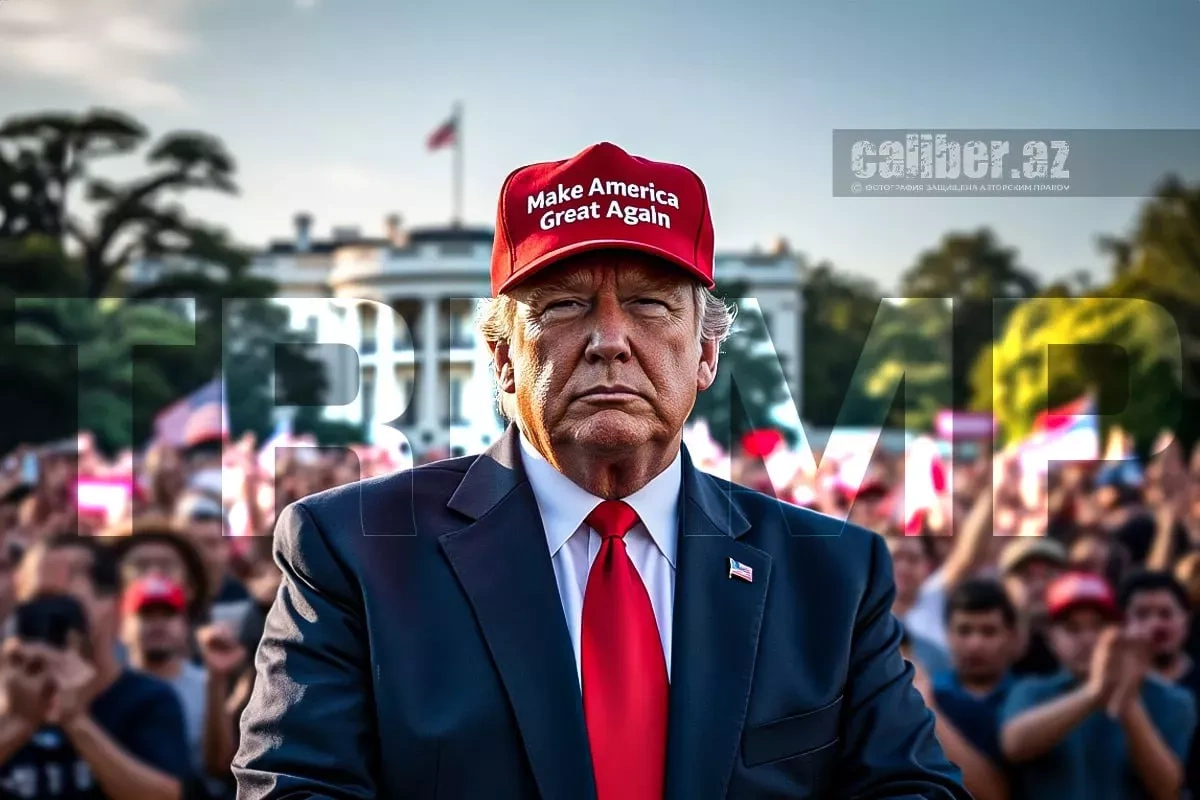
Section 907 itself, adopted in 1992, has long since lost its connection to present-day realities. After September 11, 2001, Congress allowed the President to waive its application in order to enable cooperation with Baku, and during the landmark Washington 2025 process, President Trump personally signed a Memorandum suspending its enforcement. This is a crucial point that supporters of the amendment deliberately avoid: by attempting to strip the President of his authority to waive the provision, Pallone is not targeting an abstract bureaucratic mechanism, but a concrete, public, and personal decision of the sitting President of the United States, who made peace in the South Caucasus one of his key foreign policy achievements and named a transit corridor after himself — the “Trump Route for International Peace and Prosperity.”
Pallone is brandishing an instrument that his own political leadership has already relegated to history, and he is doing so in direct opposition to the White House’s stated position. It must be acknowledged plainly: the practical weight of such initiatives is limited. Even if Pallone’s amendment passes all readings, it would still collide with the White House’s pragmatic course toward Baku — focused on energy, logistics, and regional stability — areas in which Washington is unlikely to tie its own hands in deference to a narrow lobbying faction.
In this context, Pallone’s amendment to Section 907 looks like a complete anachronism. It demands that Azerbaijan release so-called “prisoners of war,” although in reality these are former leaders of the separatist regime, convicted by an Azerbaijani court under Azerbaijani law, through proceedings conducted in full compliance with procedural standards. It calls for the “withdrawal of troops” from Azerbaijani territory, where the Azerbaijani Armed Forces are operating within the internationally recognised borders of their own state. It demands guarantees for cultural heritage from a country that is restoring monuments in Karabakh that were destroyed during years of Armenian occupation.
Section 907 itself, adopted in 1992, has long since lost its connection to present-day realities. After 11 September 2001, Congress allowed the President to waive its application in order to enable cooperation with Baku, and during the landmark Washington 2025 process, President Trump personally signed a Memorandum suspending its enforcement. This is a crucial point that supporters of the amendment deliberately avoid: by attempting to strip the President of his authority to waive the provision, Pallone is not targeting an abstract bureaucratic mechanism, but a concrete, public, and personal decision of the sitting President of the United States, who made peace in the South Caucasus one of his key foreign policy achievements and named a transit corridor after himself — the “Trump Route for International Peace and Prosperity.”
Pallone is brandishing an instrument that his own political leadership has already relegated to history, and he is doing so in direct opposition to the White House’s stated position. It must be acknowledged plainly: the practical weight of such initiatives is limited. Even if Pallone’s amendment passes all readings, it would still collide with the White House’s pragmatic course toward Baku — focused on energy, logistics, and regional stability — areas in which Washington is unlikely to tie its own hands in deference to a narrow lobbying faction.
But the issue is not even its practical weight. The real point is who this initiative is directed against in essence: by promoting Section 907, the Armenian lobby and its allies in Congress are not attacking Baku — they are attacking their own President and his foreign policy course. This transforms them from “friends of Armenia” into saboteurs of American peace diplomacy, working against the White House in favour of an agenda that has already faded into irrelevance. Such initiatives remain symbolic gestures, entered into the congressional record and presented to sponsors as proof of “work done”, but they now carry an added flavour of open dissent against the sitting White House administration.
Baku observes these new performances by the “well-fed” with weary familiarity and unshaken composure, because the main outcome has already been decided — not in the corridors of Capitol Hill, but on the ground in the South Caucasus, where the balance of power has already been set, and not in favour of those who, three decades ago, devised Section 907.