BAKU, Azerbaijan, June 18. The rapid
development of artificial intelligence technologies is creating new
legal, ethical and institutional challenges in the field of human
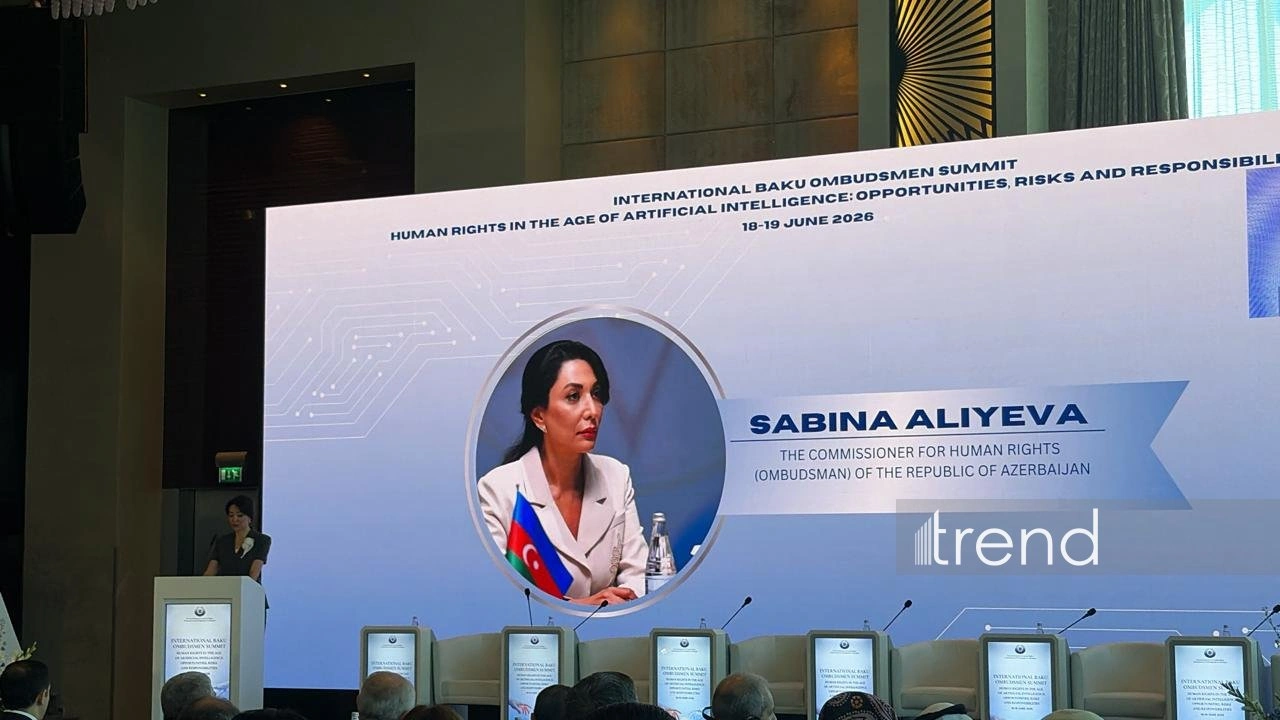
rights, Ombudsman Sabina Aliyeva said, Trend's correspondent
reports from the event.
Speaking at the International Baku Summit of Ombudsmen on “Human
Rights in the Age of Artificial Intelligence: Opportunities, Risks
and Responsibilities,” Aliyeva told that the modern human rights
agenda is no longer limited to the protection of traditional rights
and freedoms, as digital transformation requires new legal and
ethical approaches as well as more effective protection
mechanisms.
She said artificial intelligence has evolved beyond a technical
tool and is now widely used in public administration, education,
healthcare, social protection, labor relations, media, law
enforcement and judicial systems. For this reason, she emphasized
that AI systems must comply with the principles of legality,
transparency, accountability, equality and respect for human
dignity.
Aliyeva noted that Azerbaijan’s recent state programs and
strategic documents promote the use of artificial intelligence
within a safe, ethical and human rights–based framework, while also
supporting the development of the digital economy and improving
public services.
She added that ombudsman institutions play an important role in
protecting human rights in the era of digital transformation,
including through rights restoration, monitoring, legal education,
legislative improvement and international cooperation.
The Ombudsman also highlighted a new publication prepared by her
office titled “Artificial Intelligence and Human Rights: What
Should We Know?”, which outlines the impact of AI technologies on
human rights, associated risks and protection mechanisms.
Aliyeva stressed the importance of international cooperation,
saying that effective management of AI-related risks requires
shared approaches and stronger multilateral coordination.