BAKU, Azerbaijan, June 10. Environmental
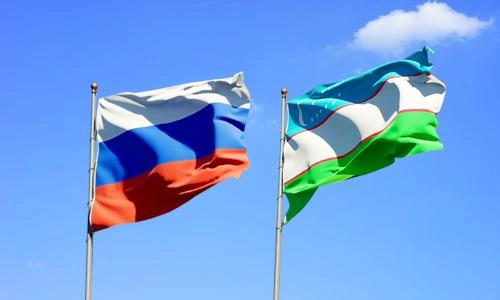
officials from Uzbekistan, Russia, Kazakhstan, and Kyrgyzstan met
via videoconference to discuss a draft roadmap for implementing the
environmental section of the Central Asia–Russia Joint Action Plan
for 2025–2027, Trend
reports via the Uzbek National Committee on Ecology and Climate
Change.
Participants included Uzbek Deputy Minister of Ecology,
Environmental Protection and Climate Change Jusipbek Kazbekov,
Russian Deputy Minister of Natural Resources and Environment Dmitry
Tetenkin, Kazakh Deputy Minister of Ecology and Natural Resources
Mansur Oshurbayev, and Chingiz Kochorov, head of international
cooperation at Kyrgyzstan’s Ministry of Natural Resources, Ecology
and Technical Supervision.
The meeting was hosted by Uzbekistan’s National Committee on
Ecology and Climate Change and the discussions focused on the work
of the six-party environmental working group, the draft roadmap for
implementing Section IX of the joint action plan, and mechanisms
for coordinating and finalizing the document.
Speaking during the meeting, Kazbekov highlighted the growing
environmental challenges facing the region, including climate
change, land degradation, declining water resources, biodiversity
loss, and the increasing frequency of extreme weather events.
He noted that Central Asia is among the regions most vulnerable
to the impacts of climate change, citing accelerating glacier melt,
expanding desertification, deteriorating land quality, and mounting
pressure on water supplies.
Against this backdrop, Uzbekistan emphasized the importance of
strengthening both regional and international cooperation on
environmental protection and climate adaptation. Officials
described the Central Asia–Russia format as an effective platform
for combining scientific expertise, exchanging best practices, and
developing practical solutions to shared environmental
challenges.
Participants expressed support for the draft cooperation roadmap
and underscored the relevance of its key priorities, including
joint climate research, the development of environmental monitoring
and data-sharing systems, biodiversity conservation initiatives,
and expanded scientific collaboration.
At the conclusion of the consultations, the parties agreed to
continue working together to finalize the roadmap and deepen
environmental cooperation under the Central Asia–Russia
framework.
.