BAKU, Azerbaijan, June 10. The Trans-Caspian
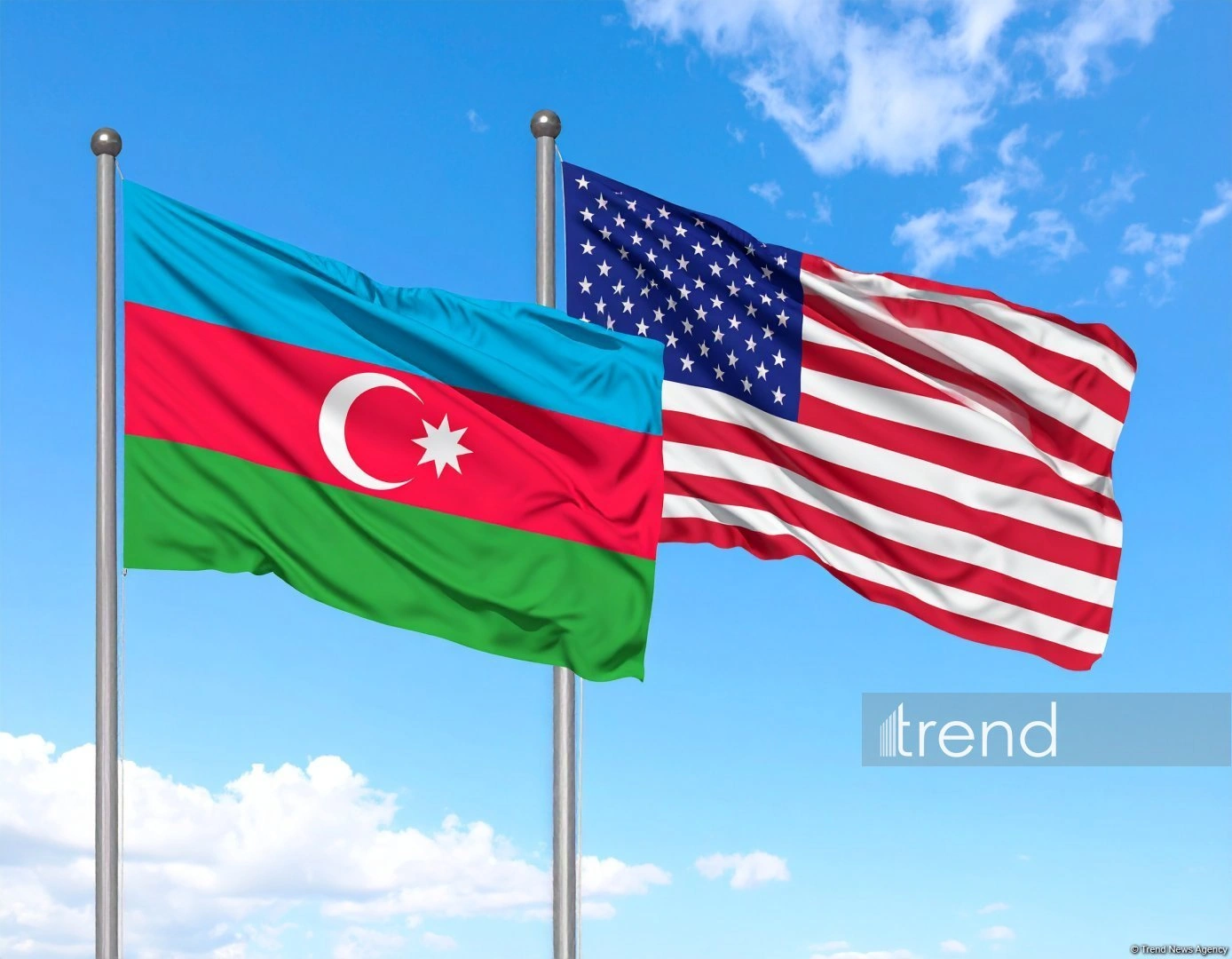
Forum 2026 in Washington represents a strategic recalibration of
the Eurasian economic landscape, emphasizing the partnership
between the United States, Azerbaijan, and Central Asian countries.
On June 10, the Caspian Policy Center convenes U.S. officials and
regional leaders at the National Press Club to deliberate on
economic security and the development of enduring commercial
partnerships.
The list of speakers includes Hikmet Hajiyev, Assistant to the
President of the Republic of Azerbaijan - Head of the Foreign
Policy Affairs Department of the Presidential Administration, and
U.S. Under Secretary of State Christopher Landau.
Washington's goal is clear: the White House is seeking reliable
commercial routes to diversify global supplies, while for Baku,
this is an excellent opportunity to strengthen its status as a
major logistical and energy hub at the crossroads of
continents.
The multimodal Middle Corridor (TITR) is currently showing
powerful operational growth, which is backed by concrete figures.
From 2019 through 2025, the volume of cargo transportation along
this route grew 5–6 times, rising to the level of 4.12–5.2 million
tons. In 2024 alone, the total indicator jumped by 62–63%, and the
container flow increased 2.6 times, amounting to about 56,500 TEU.
In 2025, the bar rose even higher — to 76,900 TEU.
Notably, in the first nine months of last year, transit through
Azerbaijan's infrastructure grew by 6%, exceeding 2.6 million tons.
Currently, the corridor's ongoing capacity is estimated at 6
million tons per year, but the immediate goal of the parties is to
reach 10 million tons by 2027 and process up to 300,000 TEU by
2029. Plans for the 2025–2026 period include launching 600 regular
container trains, with growth up to 2,000 trains by 2029.
Physical infrastructure is also being modernized to meet these
tasks: the Baku Port of Alat is expanding to a capacity of 25
million tons and 500,000 TEU, while the upgraded Baku-Tbilisi-Kars
railway line is already prepared to stably receive 5 million tons
of cargo. Azerbaijan is successfully converting geography into
transit revenues while advancing digitalization projects.
In parallel, the US is interested in direct access to the
region's raw materials for the stable operation of its industry.
Kazakhstan stands as a key player here, controlling about 40% of
global uranium production. Its output in 2025 amounted to 25,839
tons, and the forecast for 2026 equals 27–29,000 tons. Astana also
holds strong positions in titanium, zinc, manganese, and chromium.
American business is already actively entering this market: Cove
Capital is implementing a $1.1 billion tungsten project with the
support of the U.S. EXIM Bank, which allocated about $900
million.
Azerbaijan wins in this scheme as a transit country. The export
of minerals and uranium across the Caspian creates an excellent
effect for the development of Baku's transport network. This is
precisely why energy will be discussed separately at the forum,
with the participation of U.S. Deputy Assistant Secretary of State
Shawna Wilson and representatives of Kazatomprom.
The energy track is complemented by a "green" vector.
Azerbaijan, Kazakhstan, and Uzbekistan have ratified an agreement
to establish a joint venture, the Green Corridor Alliance,
headquartered in Baku, to export renewable energy and clean
hydrogen to Europe. In the first four months of 2026, Uzbekistan
generated more than 2.5 billion kilowatt-hours from RES, against an
annual plan of 15 billion kilowatt-hours. Baku plans to link this
flow with the Black Sea Submarine Cable project, plugging the
region's clean energy system into the European market.
Such a collaborative partner approach by Azerbaijan and the U.S.
to working with Central Asia opens up new scenarios for regional
development. In practice, this cooperation leads to the creation of
a single, end-to-end commercial corridor that will unite transport,
digital networks, and clean energy. Under this scenario, Washington
gains stable and secure access to critical raw materials and new
markets, while Central Asian countries diversify their export
destinations.
For Baku, this synergy manifests itself in guaranteed long-term
transit revenues and an influx of U.S. direct investment in port
and logistics infrastructure. Ultimately, the Middle Corridor
relies on tangible financial support from the United States,
evolving into a stable, predictable, and mutually beneficial trade
bridge.