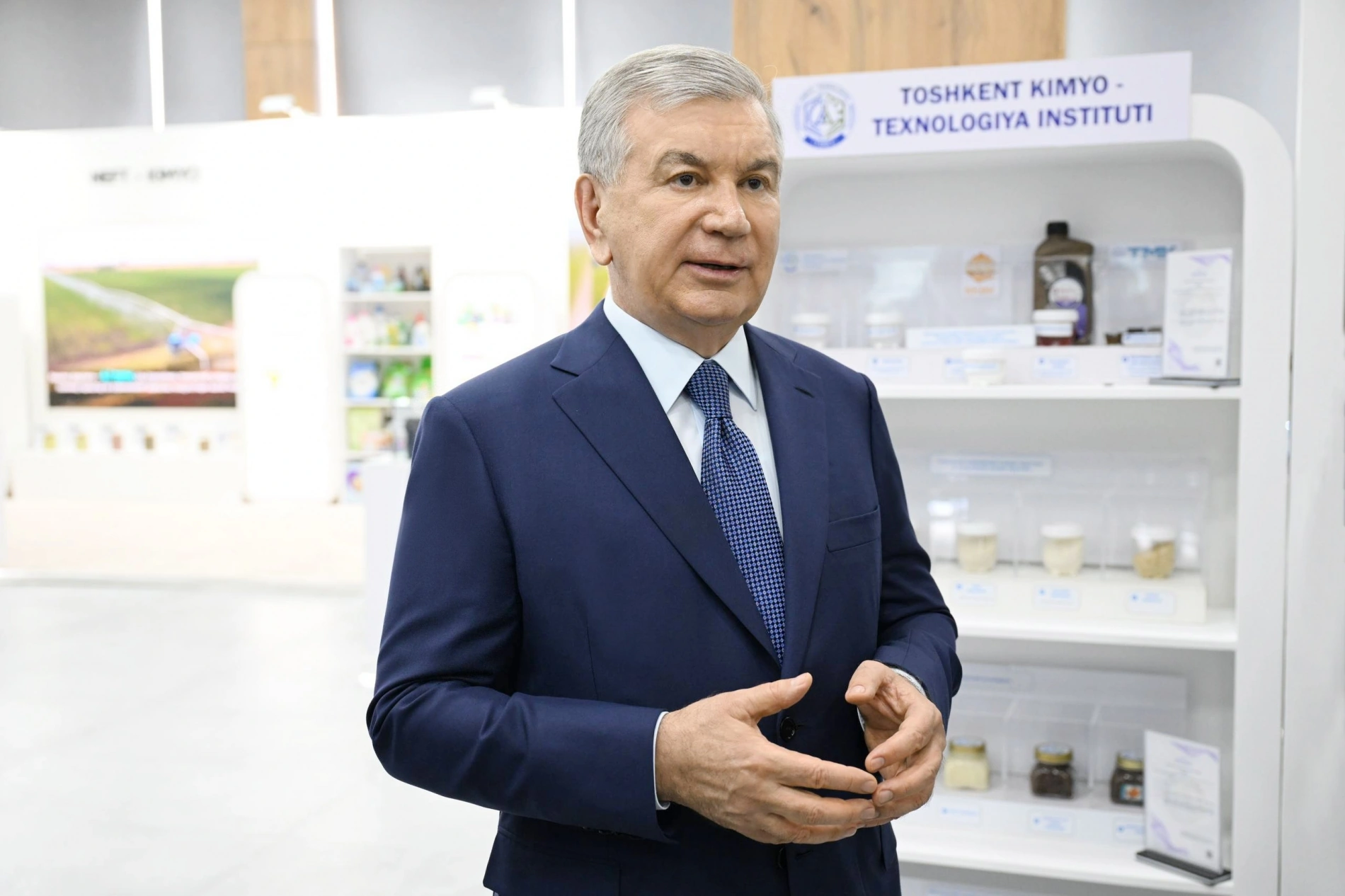
BAKU, Azerbaijan, June 2. President Shavkat
Mirziyoyev reviewed the development of the Chirchiq Chemical
Industrial Technopark, a strategic industrial hub established to
support Uzbekistan’s initiatives to modernize manufacturing,
enhance value-added production, and expand exports, Trend reports via the press
service of the Uzbek president.
The technopark, created under a presidential decree in February
2022, aims to foster the deeper processing of chemical products,
facilitate the adoption of advanced technologies, and attract both
domestic and foreign investment.
Occupying a 26.4-hectare site, the industrial zone has received
$25 million in funding for the development of engineering networks,
utilities, and modern infrastructure.
In a meeting, it was announced that in 2025, the technopark
attracted $56 million in investment, generated 758 jobs, and
produced over 150 distinct products with a total value of $60
million.
Long-term development projections anticipate total investment of
$207 million by 2030, with annual output expected to reach $294
million, exports projected at $48 million, and employment expanding
to 2,300 positions.
During his visit, President Mirziyoyev was briefed on the
technopark’s operational activities as well as a range of
scientific and industrial initiatives designed to strengthen
Uzbekistan’s chemical sector.
The meeting emphasized the strategic significance of fertilizer
production for the national agricultural industry. While Uzbekistan
currently produces 3.7 million tons of mineral fertilizers
annually, demand for imported phosphate and water-soluble
fertilizers remains substantial. To address this gap, authorities
have developed investment projects valued at $2.8 billion aimed at
modernizing the sector.
The president also reviewed plans for the petrochemical
industry, where domestic demand for polymers continues to grow.
According to projections, annual demand could reach 3.2 million
tons by 2032. Major projects, including coal-to-olefins production
in Angren and an oil-processing complex in Kungrad, are expected to
help meet domestic demand and reduce imports.
In the household chemicals sector, officials outlined
initiatives aimed at cutting imports by half, increasing the share
of domestically produced goods in the local market to 64%, and
expanding export volumes.
The projects form part of Uzbekistan’s broader strategy to
strengthen industrial self-sufficiency, attract investment, and
develop higher-value manufacturing industries.