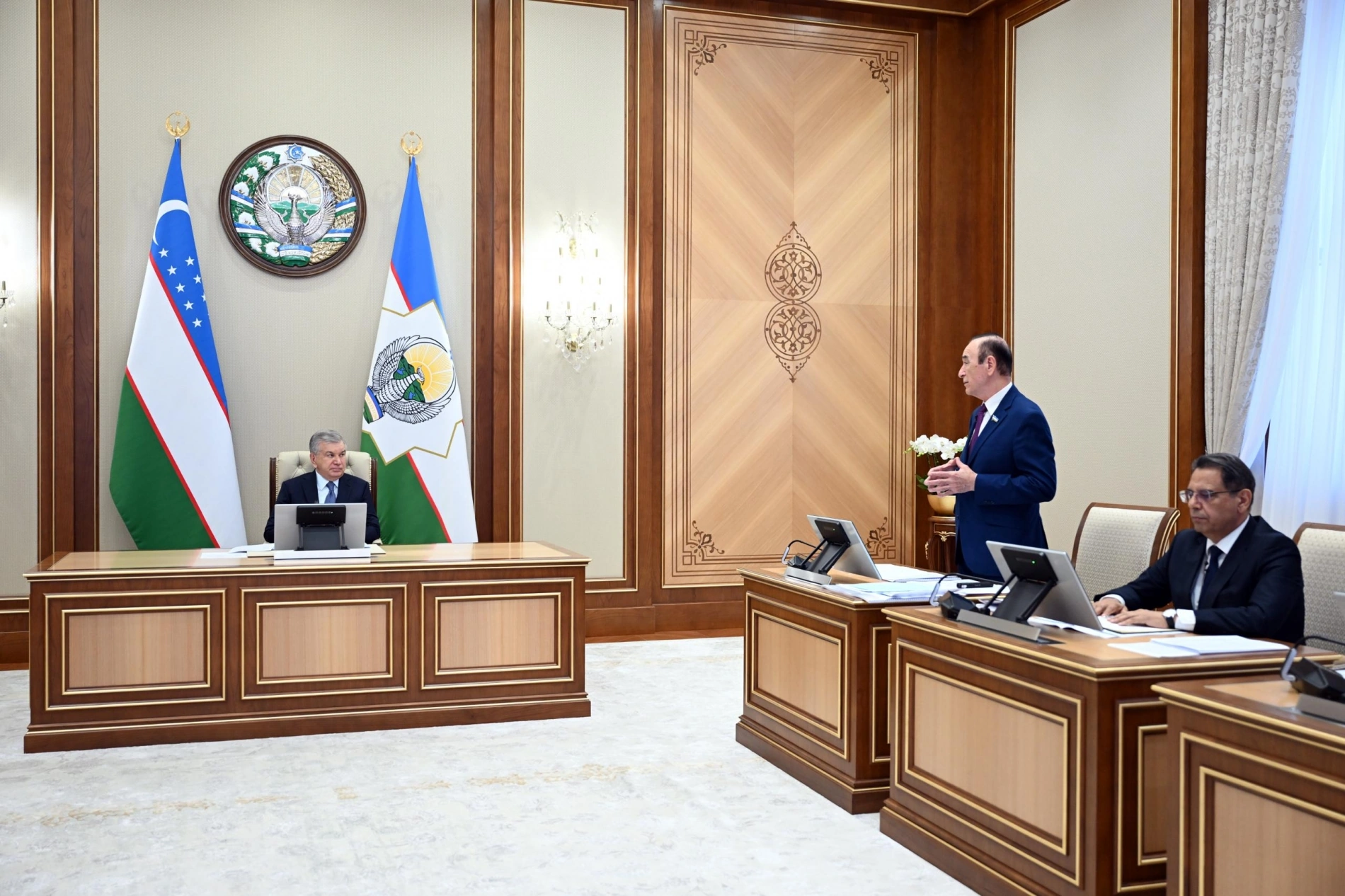
TASHKENT, Uzbekistan, May 25. President Shavkat
Mirziyoyev reviewed a package of proposals aimed at modernizing
Uzbekistan’s scientific research system, strengthening doctoral
education and increasing the practical impact of academic work,
Trend reports, citing
the presidential press service.
These reforms form part of Uzbekistan’s wider initiative to
enhance its scientific competitiveness and bring its research
sector into line with international standards.
Officials said scientific activity in Uzbekistan has increased
in recent years, including growth in the number of papers published
in international journals and higher-ranked scientific
publications. However, authorities acknowledged that challenges
remain in improving research quality, strengthening academic
integrity and expanding the practical application of scientific
work.
During the presentation, officials proposed introducing a new
support system for researchers in priority areas such as artificial
intelligence, renewable energy, food security, medicine, water
resources, new materials and seismology.
Under the proposals, doctoral scholarships in strategic
scientific fields would increase by 70%, while additional annual
funding would be allocated for laboratory equipment and research
materials.
Authorities also discussed plans to strengthen accountability
for academic supervisors by introducing a performance-based
incentive system tied to successful dissertation defenses and
international scientific activity.
Another major focus of the reforms involved restructuring the
Higher Attestation Commission, which oversees academic degree
certification in Uzbekistan. Officials proposed integrating the
commission into the Academy of Sciences system, increasing
oversight responsibilities for scientific councils and introducing
rating-based evaluations.
The government additionally plans to reduce bureaucracy through
full digitalization of academic degree procedures. According to
officials, digital dissertation defense systems could cut
administrative processes by up to 50%.
The reforms would also eliminate several paper-based
requirements, including excessive printing of dissertation
materials and repeated review procedures.
Officials further proposed launching new programs titled
“Academic Degree Within a Project” and “Practical Doctorate,”
allowing researchers to earn PhD degrees through applied scientific
projects developed in cooperation with industrial enterprises and
based on real economic needs.
The proposals also call for expanding the use of international
experts in evaluating scientific projects, introducing digital
assessment tools and improving transparency in research
funding.
As scientific activity continues to grow, authorities emphasized
the need to strengthen research quality controls and academic
ethics standards. Plans include creating a unified digital
monitoring system for researchers and improving oversight
mechanisms.
The discussions additionally focused on increasing cooperation
with Uzbek scientists working abroad. Officials proposed
establishing a Scientific Advisory Council to develop
recommendations based on international experience and modern
research standards.
Mirziyoyev instructed officials to further refine the proposals
and continue modernizing Uzbekistan’s scientific and higher
education systems.