BAKU, Azerbaijan, May 19. Thanks to
Azerbaijan’s firm stance and decisive actions, the South Caucasus
is transitioning from decades of instability to opportunities for
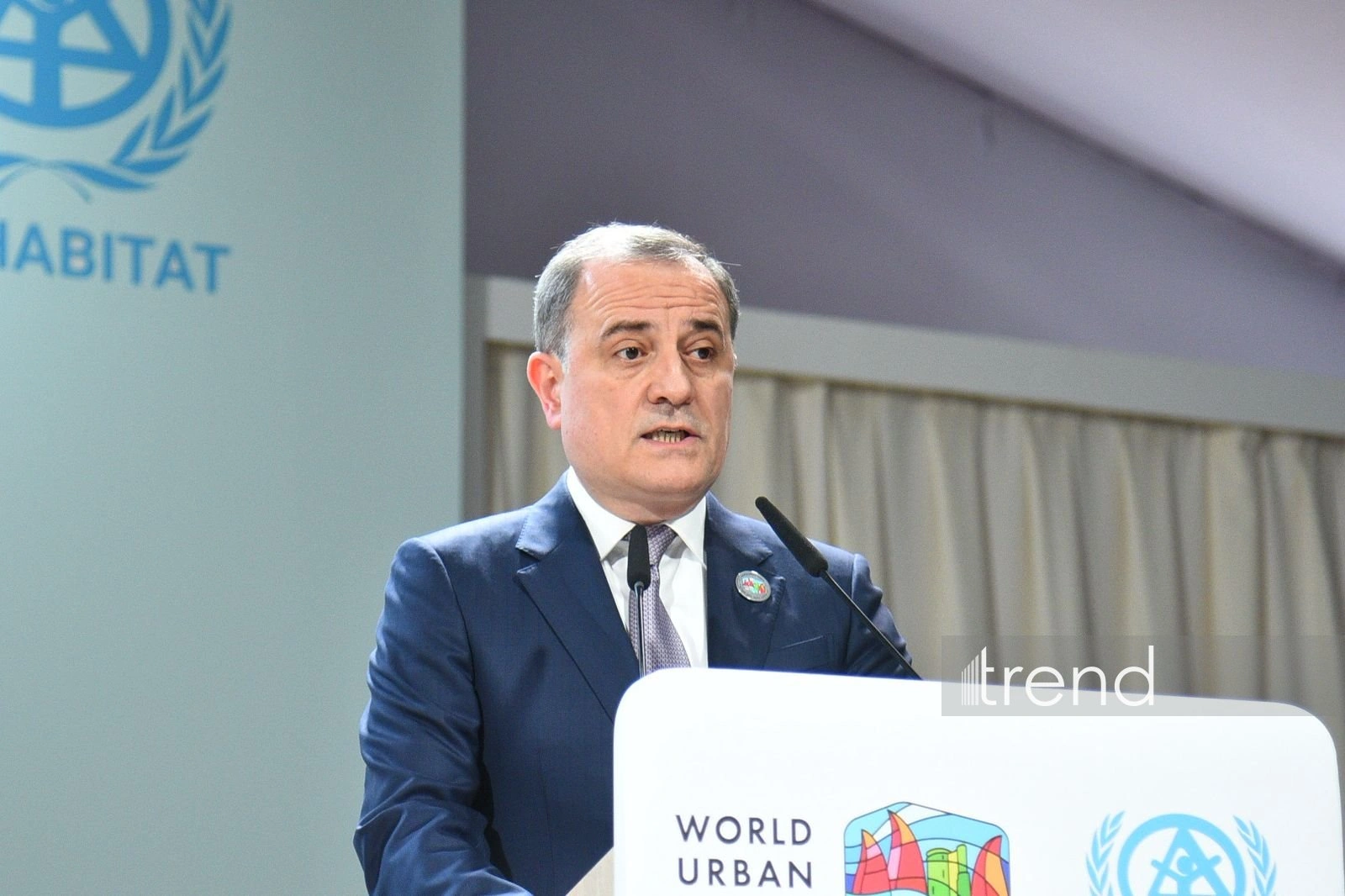
genuine peace and cooperation, the country's Foreign Minister
Jeyhun Bayramov said, Trend reports.
He made the statement at the event “Cities at the Heart of
Connectivity: Urban Reconstruction and Regional Cooperation,” held
in Baku as part of WUF13.
The minister emphasized that the end of the protracted conflict
and the full restoration of Azerbaijan’s sovereignty and
territorial integrity have changed the regional dynamics,
eliminated the main threat to peace and security, and created new
opportunities for regional cooperation, trade, connectivity, and
economic development:
“In this context, the process of bilateral normalization of
relations with Armenia initiated by Azerbaijan creates a solid
foundation for the development of cooperation and interconnection
for the benefit of the countries of the region,” he emphasized.
Bayramov recalled that the Washington Peace Summit, held on August
8, 2025, was marked by its historic outcomes:
“The joint statement and bilateral agreement signed by the
leaders of Azerbaijan and Armenia, as well as U.S. President Donald
Trump as a witness, effectively established peace between the
parties and laid the foundation for a new phase of
confidence-building and economic cooperation.
Azerbaijan is determined to continue this process with patience,
responsibility, and with the aim of achieving a complete,
sustainable, and irreversible normalization,” he concluded.
The third day of the 13th session of the World Urban Forum
(WUF13) is underway in Baku.
On the first day, a ministerial meeting dedicated to the New
Urban Agenda, a roundtable of ministers, assemblies of women and
civil society, business sessions, and discussions on urban
well-being were held. A ceremony for raising the flags of the
United Nations and Azerbaijan also took place within the framework
of the forum.
The second day of the forum drew attention with the first-ever
Leaders Summit. High-level discussions on the global housing
crisis, urbanization policy, and urban resilience were held that
day. At the same time, the Mexico City pavilion was inaugurated
within the framework of WUF13. The pavilion was presented as an
important platform for expanding cooperation with the Latin
American region and preparing for WUF14.
WUF13, which has attracted more than 40,000 registered
participants from 182 countries, will continue until May 22. Held
under the theme “Housing the world: Safe and resilient cities and
communities,” the forum brings together governments, international
organizations, experts, and representatives of civil society to
strengthen global cooperation in the field of sustainable urban
development.