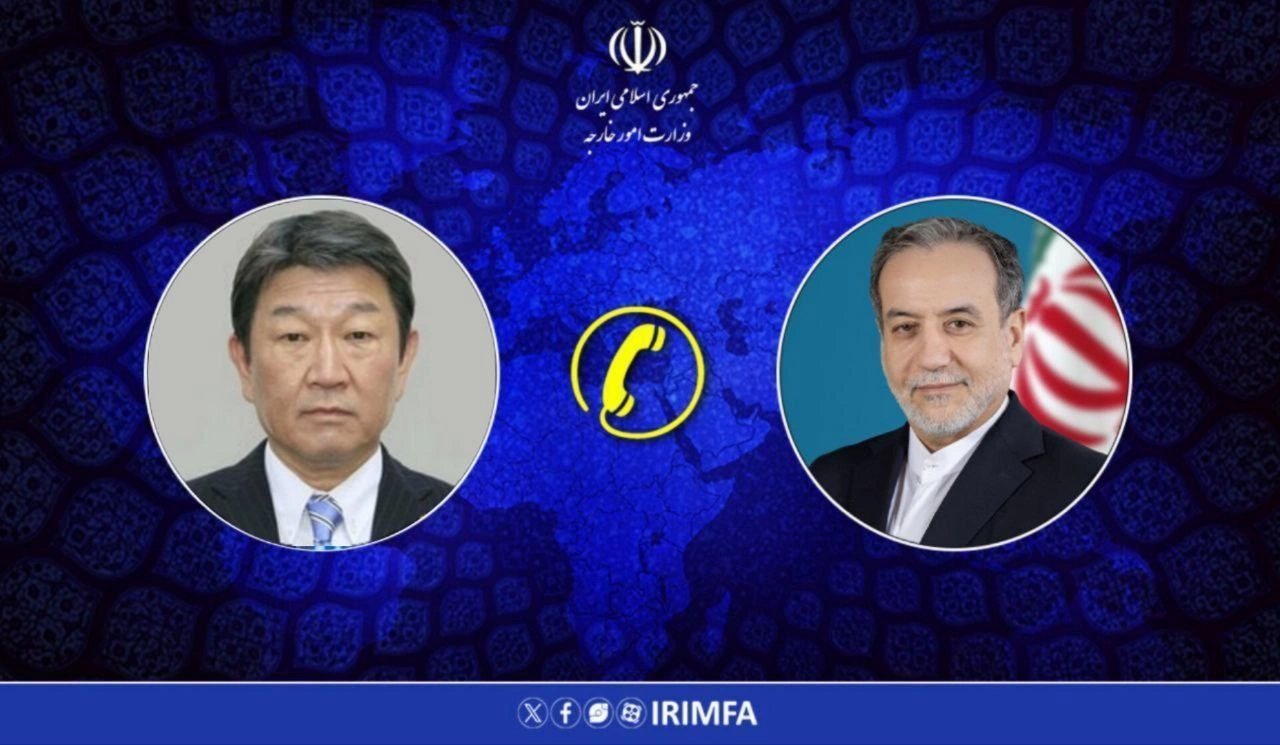
BAKU, Azerbaijan, March 18. Iranian Foreign
Minister Seyed Abbas Araghchi and his Japanese counterpart
Toshimitsu Motegi discussed the latest situation in the region and
military escalation, Trend reports.
In a phone conversation between the foreign ministers of the two
countries, the Iranian minister noted that Iran will continue to
defend itself against U.S. and Israeli military air strikes.
Araghchi noted that the current situation in the Strait of
Hormuz is the result of U.S. and Israeli military air strikes on
Iran.
He said that the U.S. side wants other countries to take steps
regarding the opening of the Strait of Hormuz. Any step by those
countries would mean joining the war.
During the conversation, the Japanese minister noted the
importance of continuing contacts and consultations between Japan
and Iran.
Since no concrete agreement was reached in negotiations between
the United States (US) and Iran over the nuclear program, the US
and Israel began military airstrikes against Iran on February 28.
In response, Iran launched missile and drone attacks on Israel and
US military facilities located in countries across the region,
starting the same day.
On the first day of the air strikes against Iran, Iran’s Supreme
Leader Ayatollah Seyyed Ali Khamenei and several high-ranking
military officials were killed. On March 8, Iran’s Assembly of
Experts elected Seyyed Mojtaba Khamenei as Iran’s third Supreme
Leader by majority vote.
From March 1 through March 5, the confrontation expanded
further, affecting several countries across the Middle East.
According to information, the U.S. side suffered losses of 13
dead and more than 140 wounded.
The ongoing conflict has significantly threatened the region’s
energy infrastructure and maritime transport. Oil prices have
surged on global markets due to heightened security tensions around
the Strait of Hormuz, prompting several countries to advise their
citizens to leave the region.
Stay up-to-date with more news on Trend News
Agency's WhatsApp channel