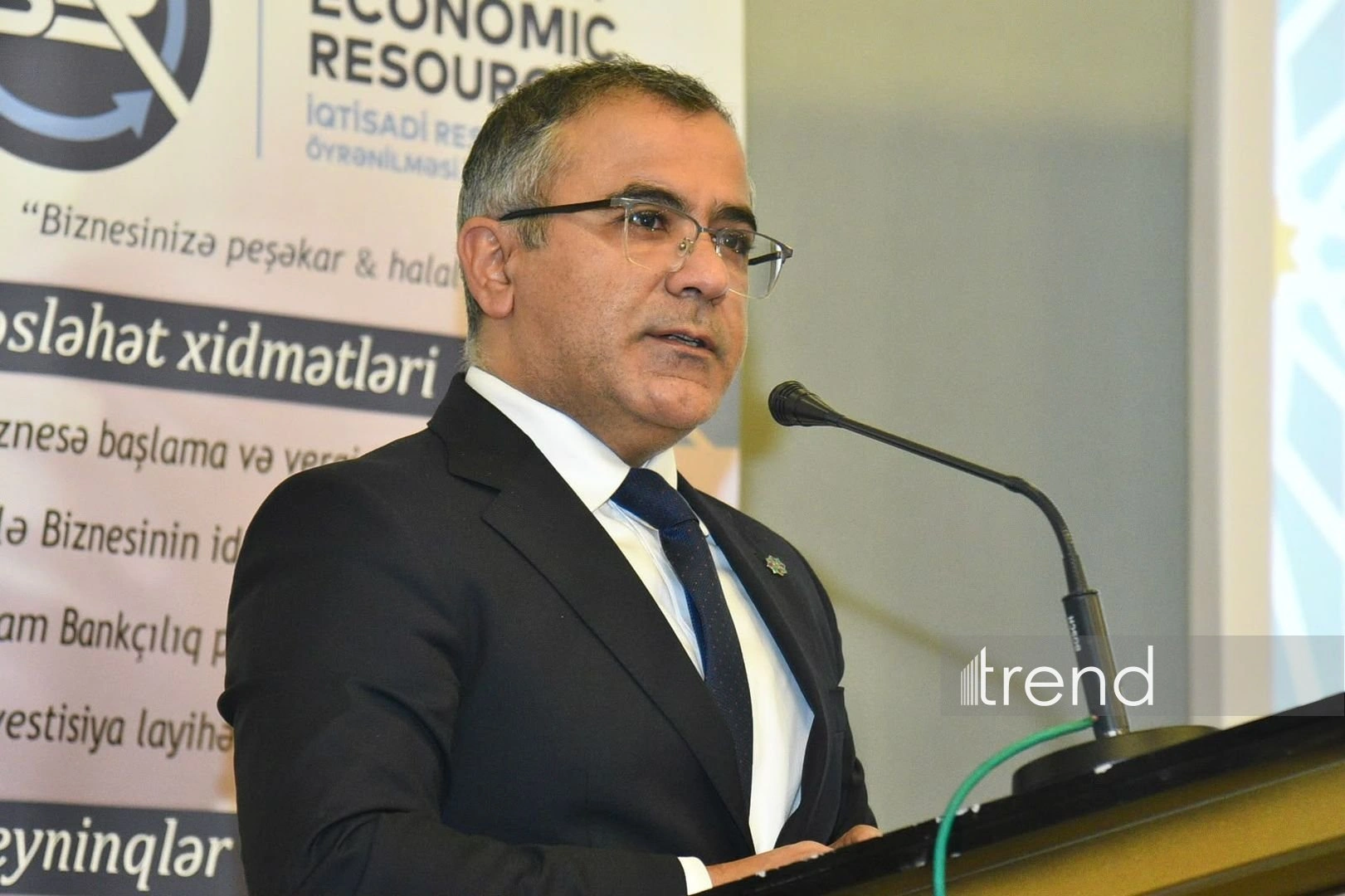
BAKU, Azerbaijan, February 11. The TRIPP
initiative (Trump Route for International Peace and Prosperity)
will provide Central Asian countries with significant opportunities
to diversify their foreign economic relations, Professor at the
Department of International Trade and Business, Faculty of
Business, Dokuz Eylul University, Ülviyye Aydın told Trend.
According to Ülviyye Aydin, the TRIPP initiative is regarded as
a novel transport and logistics project with the potential to
significantly enhance trade flows and foster deeper economic
integration within Central Asia.
"The primary objective of this initiative is to establish an
alternative trade and transit corridor, linking the Central Asian
nations across the Caspian Sea to the South Caucasus and European
markets, thereby reinforcing the region’s integration into the
global economic framework," she explained.
Historically, Central Asian countries have been constrained in
their trade routes, predominantly relying on corridors that pass
through Russia and Iran. The alternative route proposed by TRIPP
offers the prospect of reduced transit times, lower transportation
costs, and greater predictability in trade flows. This, in turn,
would expand export opportunities for the region’s economies while
enhancing the efficiency of import processes.
She further emphasized that U.S. involvement in the project
could not only heighten international interest in the region but
also bolster its investment appeal, thereby promoting both economic
and political cooperation among the regional states.
“Another important effect of the project could be deeper
economic integration. TRIPP promotes not only infrastructure
development but also the harmonization of customs procedures,
simplification of border crossings, and the introduction of unified
standards in logistics services. These measures reduce trade
barriers between countries and create conditions for deeper
regional integration. For landlocked countries, the strategic
importance of TRIPP lies in strengthening their transit role.
Kazakhstan, Uzbekistan, and Turkmenistan will be able to integrate
more actively into global supply chains,” the expert believes.
She further noted that the implementation of the TRIPP
initiative is expected to stimulate an increase in foreign direct
investment from Europe, which, over the long term, will bolster
production capacity and facilitate the export of value-added
products.
"The TRIPP project, for instance, is set to deliver substantial
benefits to Kazakhstan, primarily due to the country's strategic
geographic position and its well-established transport and
logistics infrastructure, which align seamlessly with the project’s
core route. The ports of Aktau and Kuryk on the Caspian Sea are
poised to play pivotal roles in the Caspian segment of TRIPP,
enabling Kazakhstan to integrate more swiftly into the initiative
and thereby boost its transit revenues. Moreover, Kazakhstan has
long positioned itself as a critical transit hub within Eurasia,
and TRIPP stands to further strengthen this position by reducing
its reliance on Russian routes. In addition to increased transit
revenues, Kazakhstan is likely to benefit from enhanced exports of
industrial, petrochemical, and agricultural products," she
explained.
Additionally, Ülviyye Sanili Aydin highlighted that, for
landlocked Uzbekistan, the project will offer alternative, more
efficient trade routes, thereby enhancing its foreign trade
capabilities.
“TRIPP will offer a shorter route to European markets, reduce
logistics costs, and expand export potential. Given the sensitivity
of Uzbekistan’s economy in sectors such as textiles, agriculture,
and light industry, the project could significantly enhance the
country’s international competitiveness,” she said.
At the same time, the professor noted that TRIPP will contribute
to a more flexible and secure supply chain formation.
“The availability of alternative transit routes reduces
geopolitical risks and helps prevent disruptions in regional and
international trade, which is particularly important for the stable
transportation of raw materials, agricultural goods, and industrial
products. From an export perspective, the project will provide
faster and cheaper access to European markets, increasing the
region’s international competitiveness. Lower logistics costs will
positively affect the final price of goods, increasing both the
volume and diversity of exports. Overall, TRIPP is considered an
important regional initiative that strengthens Central Asia’s
integration into the global trading system and enhances economic
efficiency,” she emphasized.
The expert also highlighted that Azerbaijan, as a transit
country, plays a key role in ensuring the effective and sustainable
operation of TRIPP.
“Azerbaijan’s strategic geographical position allows it to serve
as a natural bridge between Central Asia and Europe. The
Baku–Tbilisi–Kars railway, the Baku International Sea Trade Port,
and the country’s well-developed internal road and rail networks
provide a solid infrastructure base for the uninterrupted, fast,
and efficient transportation of goods along the TRIPP route.
Azerbaijan also plays a pivotal role in regional coordination,
leveraging its experience within the Middle Corridor, its efforts
to streamline customs procedures, its ongoing digitalization
initiatives, and its mechanisms for logistics cooperation with
neighboring states. These factors collectively enhance the
institutional sustainability of the TRIPP project. As a vital
transit hub, Azerbaijan acts as a crucial link between Central
Asian countries, the South Caucasus, and European partners,
ensuring the long-term, coordinated, and reliable operation of the
project,'' she added.
Aydın further emphasized that the TRIPP initiative could
significantly contribute to the creation of a unified economic and
logistics space among Turkic states, including Türkiye.
"The project establishes a seamless transport and trade corridor
connecting Central Asia, the Caspian region, the South Caucasus,
and Türkiye, thereby strengthening the physical connectivity
between Turkic nations. This connectivity not only facilitates the
integration of logistics routes but also reduces trade costs and
streamlines the coordination of cargo flows. Under the TRIPP
framework, the harmonization of transport, customs, and transit
procedures is poised to deepen institutional cooperation among
Turkic states, creating favorable conditions for the formation of a
cohesive economic space. Consequently, TRIPP is viewed not merely
as an infrastructure project but as an initiative that fosters
long-term economic integration and fortifies the logistics alliance
among Turkic countries," she concluded.