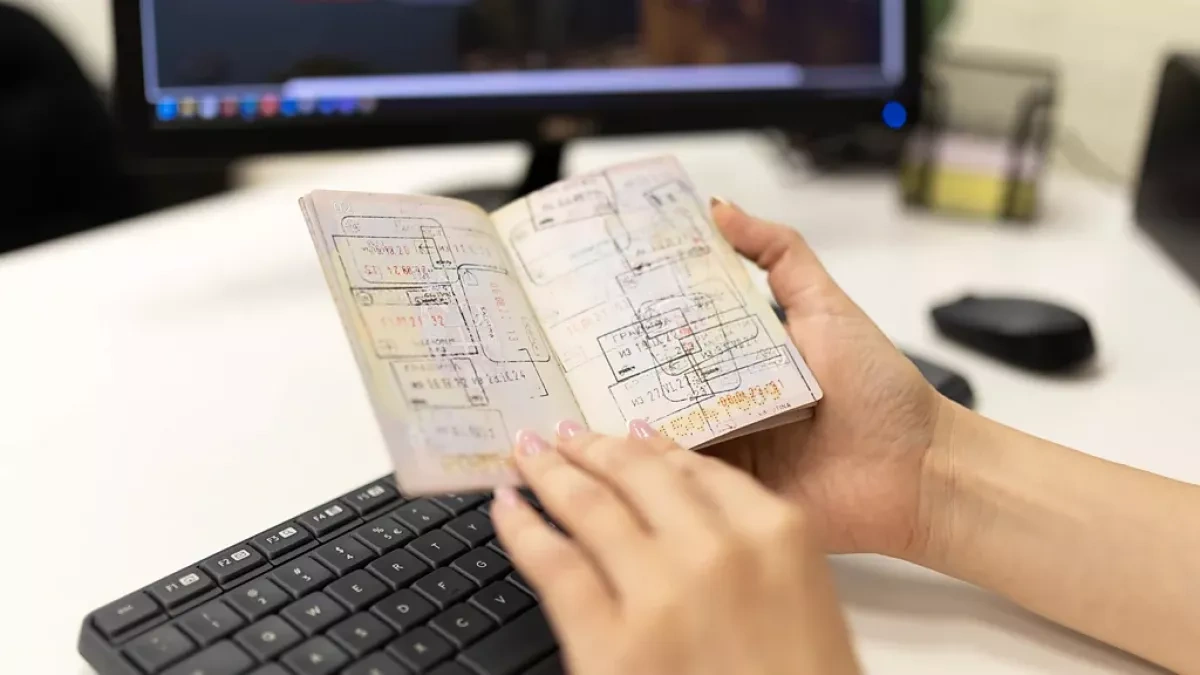
The European Union has begun rolling out its new Entry/Exit System (EES), which could soon eliminate the tradition of receiving passport stamps at borders.
In October 2025, the system was introduced across the Schengen area, with full implementation expected by April 2026. The EES will replace the manual stamping of passports with digital border screening, recording biometric data and the dates of entry and exit for non-EU nationals, BBC writes.
This move is part of a broader global trend towards digital border management. Countries like Australia, Japan, and Canada already use biometric data at border crossings, while the United States has announced plans to implement similar systems in the near future. With the rise of digital processing, passport stamps—once a staple of international travel—could become a thing of the past.
Patrick Bixby, a professor at Arizona State University and author of License to Travel: A Cultural History of the Passport, explains the historical significance of the tradition.
"Versions of passport stamps go all the way back to the Middle Ages or Renaissance,” he said. “A wax seal would be put on letters of conduct by sovereigns in Europe. That’s kind of the beginnings, least as far as I’m concerned.”
Though travel documents and some form of stamps have existed for centuries, the modern passport began taking shape in the early 20th century. After World War I, the League of Nations standardised passport protocols as borders became more tightly regulated. By the 1950s, the tradition of receiving passport stamps had become a marker of both mobility and status, especially during the "golden age" of travel, when commercial flights became more accessible to the general public.
For many travelers, passport stamps hold sentimental value.
Writer Elle Bulado, based in New York, shares a similar sentiment.
Others are less nostalgic about the change. Jorge Salas-Guevara, founder of the tour company New Paths Expeditions, looks forward to the time-saving benefits of the new system.
Despite the practical benefits of digitisation, Bixby suggests that there is something uniquely special about physical documents.
“There’s something about having [a document] that was with you when you were there. It creates a kind of aura around the physical object that dissipates when everything becomes digitised,” he says.
By Sabina Mammadli