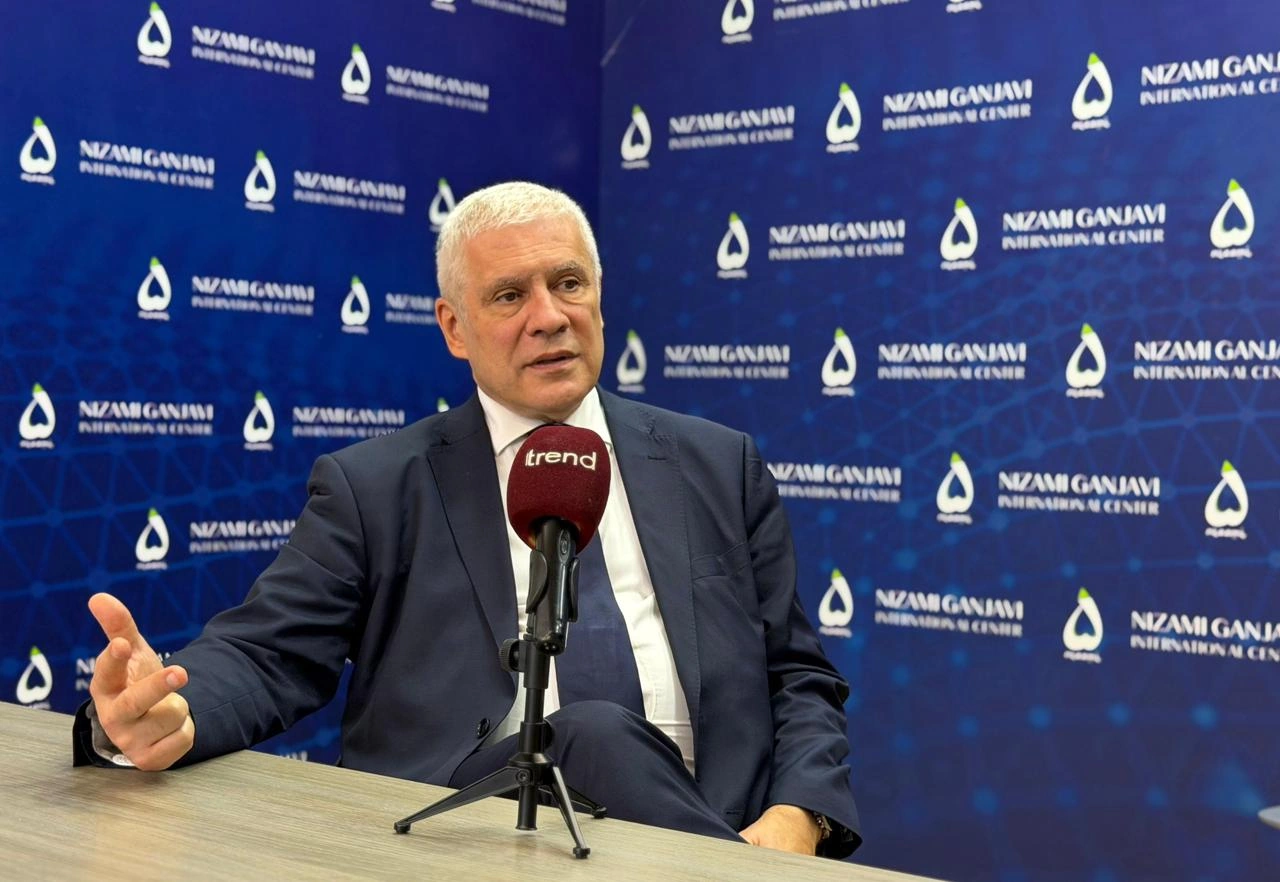
BAKU, Azerbaijan, December 9. Azerbaijan and
Serbia, possessing strategic energy resources and located along key
transport corridors, play an important role amid growing global
instability member of the Board of the Nizami Ganjavi International
Center and former President of Serbia, Boris Tadic, told Trend in an exclusive
interview.
"Serbia possesses significant lithium reserves, a resource
poised to underpin future energy systems. Meanwhile, Azerbaijan
holds substantial oil and gas reserves, which already constitute a
key pillar of global energy potential," he remarked.
He further highlighted the strategic location of both nations,
situated on critical transit corridors between Southern and
Southeastern Europe, which enhances their geopolitical
significance.
"Any nation situated along such vital routes inevitably faces
heightened risks. To disregard this reality is to risk failure.
Therefore, it is essential to adopt a cautious and balanced
approach, navigating the complexities of major power rivalries with
a well-considered policy," Tadic emphasized.
Regarding global dynamics, Boris Tadic pointed out that the
erosion of respect for international law has emerged as a primary
driver of contemporary global instability. He argued that the
fragmentation of the international system began in the Balkans,
notably with the Kosovo issue.
"We are now witnessing the war in Ukraine, efforts to justify
military interventions, and a series of armed conflicts unfolding
in various parts of the globe," he noted.
Tadic emphasized that the international community must find a
way out of the current crisis, resolving both the Kosovo issue and
the task of preventing new conflicts in the future.
He also recalled that when the Global Baku Forum was being
established, the world was different: at that time, the war in
Ukraine was not even being discussed, and even settlement in the
Middle East seemed closer than today’s crises.
Speaking about forms of international engagement, Tadic said
that the development of multilateral cooperation is especially
important today.
“Multilateralism remains one of the key models of international
interaction. It is not the only format, but without this
philosophy, it is impossible to develop comprehensive solutions to
the challenges the world is facing,” he said.
Tadic also paid special attention to the impact of
digitalization and artificial intelligence on global processes.
According to him, many politicians still underestimate the
importance of these technologies and the neuroscientific research
underlying them.
“Artificial intelligence is a reflection of the human mind. The
digital world makes it possible to transmit data much faster and in
a more complex form, ensuring a high level of connectivity,” he
noted.
At the same time, he stressed that technological progress also
carries serious risks.
“Everything depends on regulation, data control, data center
security, and addressing their enormous energy consumption. In the
future, we will need much more regulation,” Tadic stated.
According to him, if the world finds the right solutions in
these areas, humanity will be able to live in a safer and more
sustainable environment.
“Otherwise, another scenario is possible. Today, we are at a
crossroads — both in terms of military conflicts and technological
development,” Tadic concluded.