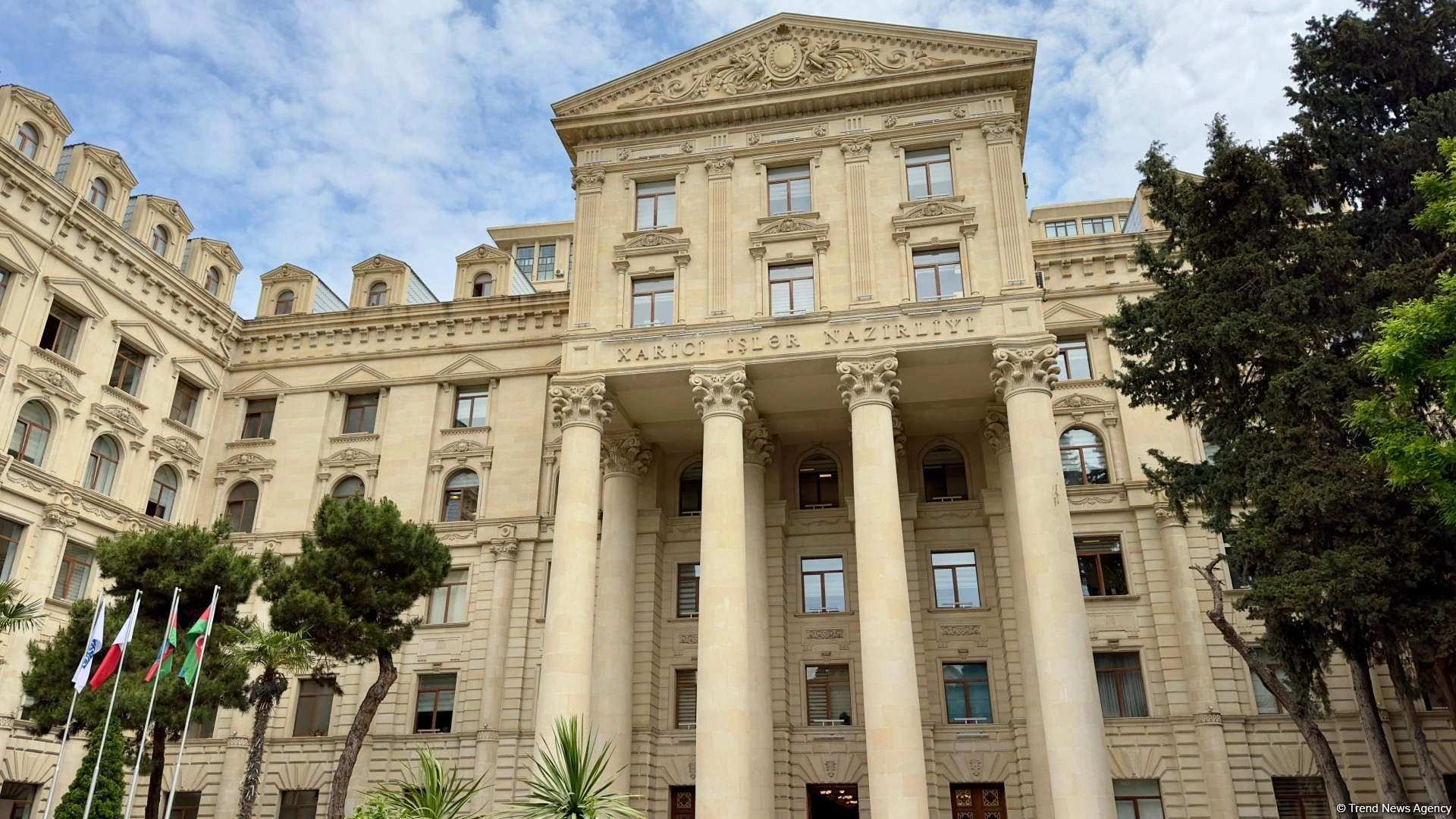
BAKU, Azerbaijan, December 9. The
prioritization of several issues in the document titled “Strategic
Agenda for EU-Armenia Partnership,” signed following the 6th
meeting of the EU-Armenia Partnership Council held on 2 December
2025 in Brussels, is a matter of serious concern, as they distort
the realities of the post-conflict period and run counter to the
overall peace agenda between Azerbaijan and Armenia, the
Azerbaijani Foreign Ministry said in a statement, Trend reports.
Commenting on the recent document, the ministry noted that the
bilateral document sets strategic priorities between the EU and
Armenia for the next seven years, and its inclusion of issues
targeting Azerbaijan is unacceptable. The ministry warned that this
approach could negatively affect Azerbaijan-EU relations.
"The wording in the introductory part of the document and
several other sections such as 'Karabakh Armenians displaced
following Azerbaijan’s military operations,' in reference to
Armenian residents who voluntarily migrated from Azerbaijan to
Armenia following their refusal of reintegration plans proposed by
Azerbaijan, as a partnership priority between the EU and Armenia,
and the classification of those people as 'refugees' is a vivid
example of bias against Azerbaijan.
Moreover, the support for full, immediate, and effective
implementation of all relevant rulings of the International Court
of Justice (ICJ) expressed within the section on possible EU
contributions to the regional normalisation processes clearly
refers to the well-known claims brought by Armenia against
Azerbaijan.
While it is entirely irrational to bring an issue of purely
bilateral nature that directly concerns Azerbaijan and Armenia into
an agenda with another party, such an approach also disregards the
fact that Azerbaijan likewise has its own legitimate court
proceedings against Armenia.
This provision in the EU-Armenia document directly contradicts
the peace process, considering an article regarding the elimination
of these claims in the peace agreement initialed with the
participation of the leaders of Azerbaijan, the U.S., and Armenia
in Washington, and raises serious questions about the proclaimed
intention of the Armenian side.
Identification of Armenians, who are accused of and sentenced
for crimes against humanity and military crimes, as 'prisoners of
war,' and prioritisation of their release is a serious distortion
of realities, and is unacceptable.
While the EU-Armenia document enshrines multiple provisions that
support Armenia’s lacking regional consensus 'crossroads of peace'
initiative, it is concerning that not a single reference was made
to the 'Trump Route for International Peace and Prosperity' (TRIPP)
project, a crucially important arrangement in the normalization
process, reached during the 8 August Washington D.C. Summit. This
raises questions with regard to the seriousness of Armenia to
implement its commitments within the agreement on TRIPP, co-signed
by the Prime Minister of Armenia in Washington D.C., and about the
proclaimed support of the EU to this project.
Given that Article 7 of the initialed draft agreement between
Azerbaijan and Armenia obliges not to allow the deployment of any
third party’s forces along their shared border, another serious
concern is the decision to preserve and fully operationalise the EU
Monitoring Mission in Armenia (EUMA), which has been used as a
propaganda tool against Azerbaijan, instead of bringing its
activities to an end.
Among the listed priorities, the emphasis on military and
defense issues also serves to promote Armenia’s militarization.
The issues outlined above, which revive the elements of the
former conflict despite the positive progress achieved in the
post-conflict normalization since 8 August, cast serious doubt on
Armenia’s intentions. Our expectation is that Armenia and the EU
will take concrete steps to remove these harmful provisions, which
do not reflect the current realities. For our part, we will
continue to monitor the situation closely and draw the necessary
conclusions," the statement reads.