BAKU, Azerbaijan, October 29. The Central Bank
of Azerbaijan (CBA) may conduct foreign currency purchases worth
approximately $1 billion by the end of this year, governor of the
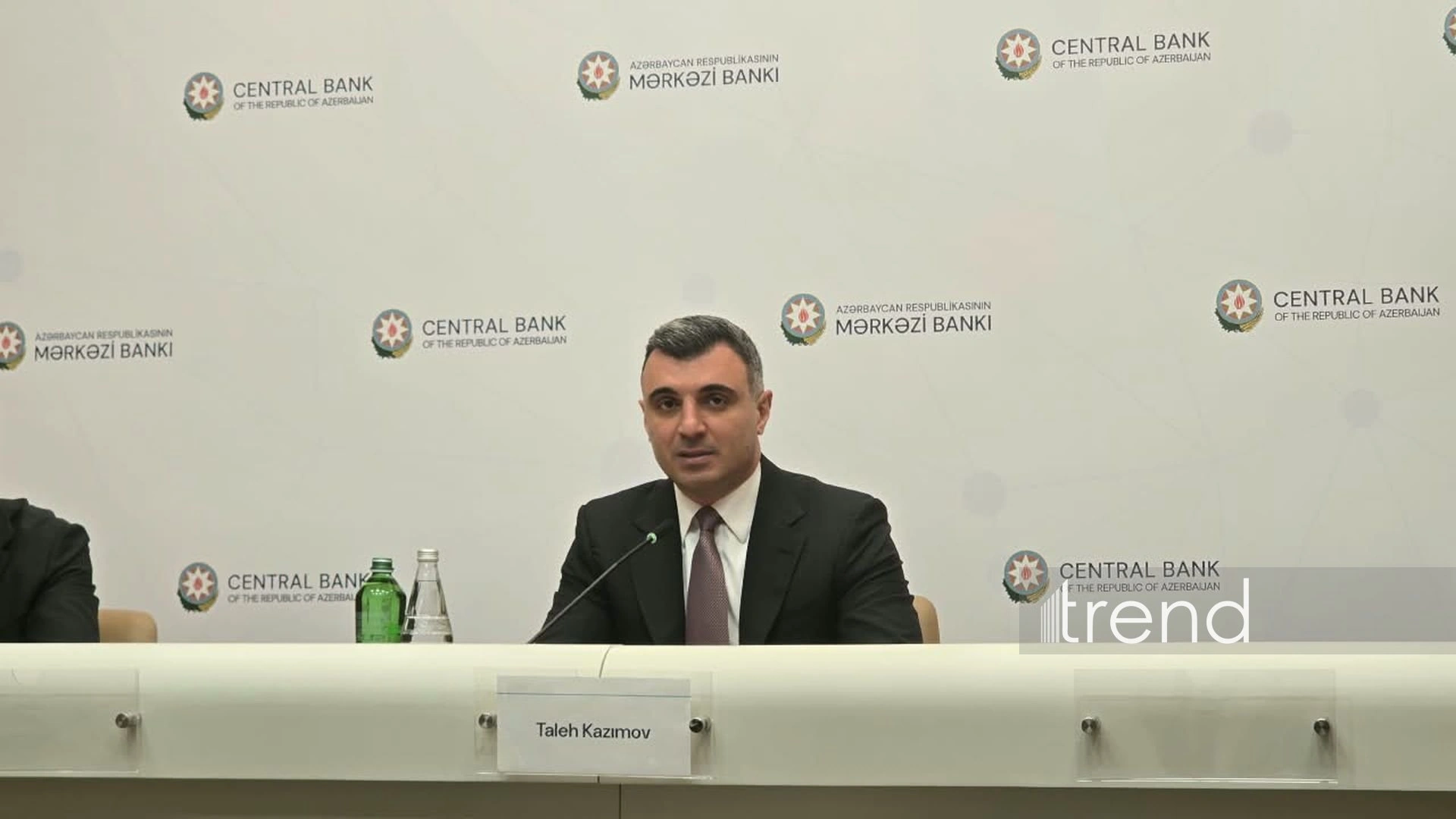
Central Bank of Azerbaijan (CBA) Taleh Kazimov said, Trend's correspondent
reports from the event.
He made the remarks at a press conference on Thursday following
a meeting on the parameters of the interest rate corridor.
Kazimov noted that the bank has no specific target for the size
of its foreign exchange reserves or a fixed limit for its currency
purchases.
According to him, the Central Bank makes its decisions based on
market conditions and the potential inflationary impact of money
issuance, regardless of the level of its foreign exchange
reserves.
“We have no target requiring our reserves to reach a certain
level before we stop purchasing foreign currency. We expect to
continue our buying interventions through the end of the year,
including over the remaining two months. We may purchase around $1
billion, but we have no target to stop at a specific amount,” he
said.
The CBA governor also addressed measures to increase activity in
the interbank money market. According to him, banks previously
preferred to keep their available funds with the Central Bank
rather than place them with other banks.
“Our goal is for banks to direct their available funds to one
another more often instead of placing them with the Central Bank.
Where there is demand, placing funds in the interbank market can
also support lending,” Kazimov said.
He emphasized that, under the decision adopted on September 23,
the interest rate paid by the Central Bank on funds attracted from
banks was reduced to 5%. This made transactions with other banks
more attractive than placing funds with the CBA.
“All banks participate in the interbank market. However, each
bank has its own liquidity needs: one may have excess funds, while
another may have less available liquidity. Banks can participate
both in the Central Bank’s operations and in the interbank market,”
he added.
Commenting on the potential inflationary impact of manat
issuance resulting from foreign currency purchases, Kazimov said
the Central Bank had purchased $3.6 billion this year and issued an
equivalent amount in manats. However, the funds issued do not have
an immediate, direct impact on the economy.
“If these funds were put to use in the economy immediately, they
could accelerate inflation. We are not seeing that under current
conditions,” Kazimov noted.
According to him, lending is one of the main channels through
which money issuance affects the economy. When demand for loans
increases, banks can channel their available funds into the economy
through lending. Therefore, the Central Bank assesses the potential
inflationary impact every time it issues manats.
“We currently have no specific limit on foreign currency
purchases. Every time we issue manats, we seek to assess the impact
on inflation. If there is no inflation risk, we continue purchasing
foreign currency,” the CBA governor said.