TURKMENBASHI, Turkmenistan, October 8.
Azerbaijan's chairmanship of the Consultative Meeting of the Heads
of State of Central Asian countries will give additional impetus to
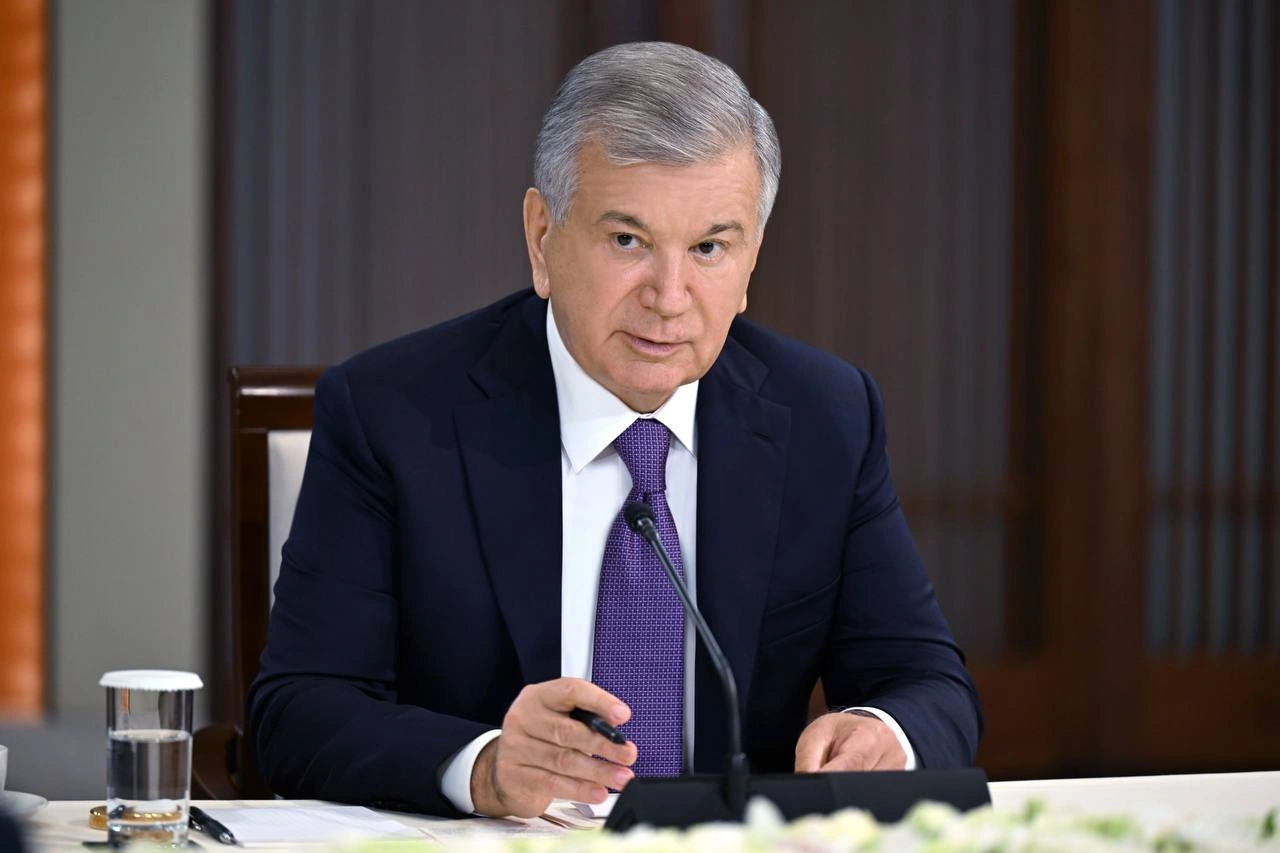
the format, President of Uzbekistan Shavkat Mirziyoyev said on
October 8 at the eighth Consultative Meeting of the Heads of State
of Central Asian countries and Azerbaijan in Avaza, Trend’s special correspondent
reports.
“I am convinced that under the leadership of the Azerbaijani
side, our work within this format will receive additional impetus,
while brotherly cooperation will contribute to strengthening unity,
trust and solidarity,” he said.
Mirziyoyev noted that the Consultative Meeting of Central Asian
countries with the participation of Azerbaijan is of historical
significance.
“Today's meeting is of particular importance as it is being held
for the first time together with brotherly Azerbaijan,” he
said.
Mirziyoyev also highlighted Turkmenistan's successful
chairmanship.
“Over the past year, we have made significant progress in
regional cooperation on many important issues and reached concrete
agreements. Central Asia has changed significantly in recent years.
The very atmosphere of relations between our countries has changed.
We meet more often, discuss issues openly, find solutions and
support each other. Our Consultative Meetings have played an
important role in this.
When creating this format, we proceeded from a simple
understanding: the prosperity and security of Central Asia directly
depend on trust between our states. A historic event was the
completion of the procedure for concluding the Treaty of
Friendship, Good Neighborliness and Cooperation for the Development
of Central Asia in the 21st Century.
At the same time, we are not seeking to create cumbersome
structures. We need a flexible and clear format in which strong,
sovereign and independent states cooperate on the basis of mutual
respect, trust and pragmatism. This approach has already produced
results,” he said.
Mirziyoyev also proposed stepping up efforts to establish a
regional alliance on critical minerals initiated by Uzbekistan.
According to him, one of the first steps could be the creation of a
unified digital map of critical mineral reserves in Central
Asia.
He noted that such a resource would provide a more comprehensive
picture of the region's potential and demonstrate to international
investors that the Central Asian countries and Azerbaijan are ready
to develop this area jointly.
“The next major area is technological development. Artificial
intelligence and big data are already transforming industry,
transport, energy, agriculture, education and public
administration. The productivity of our economies and our ability
to compete in the future will largely depend on these technologies.
At the same time, digital projects often deliver results faster
than large-scale infrastructure projects. Therefore, I propose that
we combine the capabilities of our countries and begin creating
shared computing infrastructure.
Its foundation could be an interconnected network of national
data centers. This would allow us to use computing capacity more
efficiently, develop our own digital products and create conditions
for large-scale artificial intelligence projects. But
infrastructure alone is not enough. We also need specialists,
research and strong technology companies. Therefore, we propose
launching joint targeted training programs, supporting research
projects and creating more opportunities for technology
entrepreneurship.
Finally, one of the most important issues for the future of our
region is people. Our country has significant demographic
potential. The population is growing, and the number of young
people is increasing. Our future will largely depend on the quality
of their education and professional training: what our economy will
look like in 10, 20 or 30 years. We must keep this in mind.
Therefore, education and youth support should have a special place
in our cooperation. We need to better understand what specialists
our economies will need tomorrow.
For this purpose, we propose developing a regional atlas of
in-demand professions and skills. It could combine our countries'
forecasts for areas where there is already a shortage of
specialists and where demand is expected to grow in the coming
years. This would allow universities and vocational institutions to
take into account the actual needs of our economies in advance. In
the future, we could train specialists for specific major projects
being implemented simultaneously in several countries of our
region. In this way, education would be directly linked to the
development of industry, transport, energy, digital technologies
and other sectors.
Esteemed heads of state, we have achieved a great deal in recent
years. It is now important to consolidate these changes and make
our cooperation sustainable for decades to come. The formula is
simple: solidarity and trust for the sake of development and
security. We are responsible for the region we leave to future
generations. It should be peaceful, secure and economically strong,
and provide people with opportunities to live, work, study and
raise their children with dignity. Taking this opportunity, I
congratulate Azerbaijan on assuming the chairmanship of the
Consultative Meetings,” he said.