BAKU, Azerbaijan, October 8. Iran has not
halted its nuclear industry activities, Iranian Vice President and
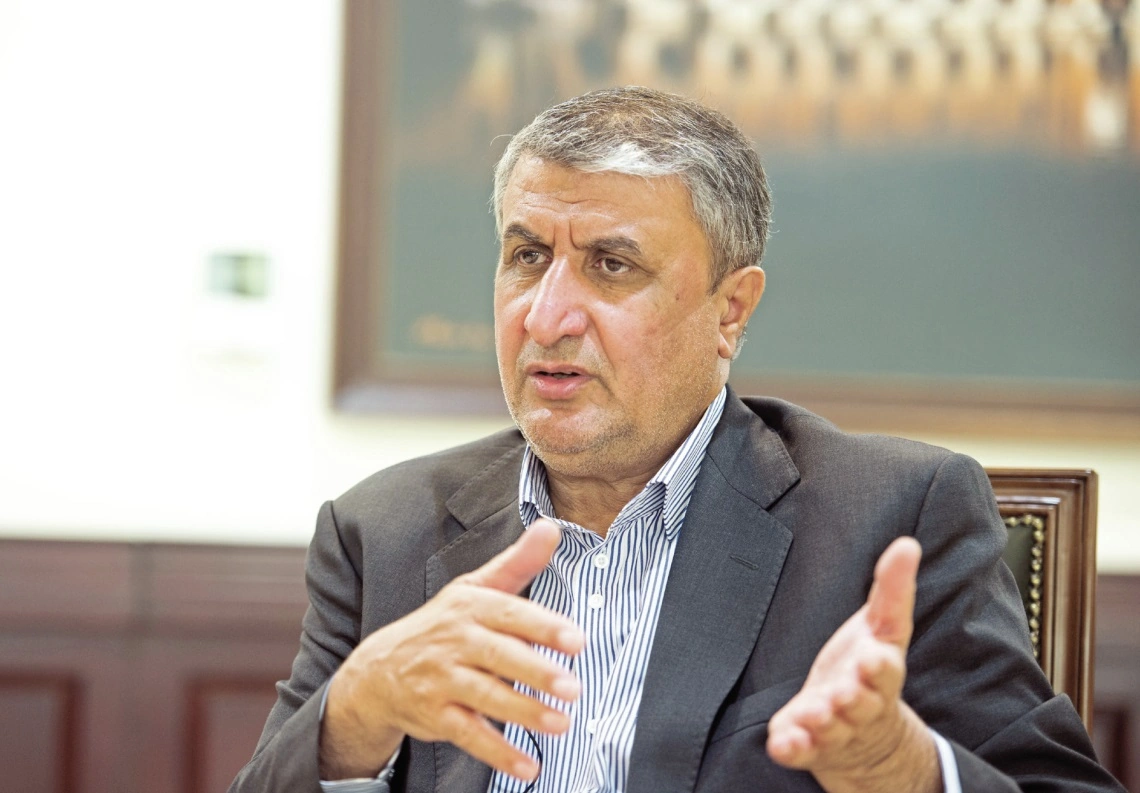
Atomic Energy Organization of Iran (AEOI) Chairman Mohammad Eslami
said on Oct. 8 at the opening of the Center for Diagnosis and
Treatment of Childhood Cancer in Tehran, according to the AEOI.
“There are pressures, sanctions, threats and attacks against
Iran’s nuclear industry. However, Iran has managed to preserve its
development,” Eslami said.
He said healthcare and food security are considered strategic
priorities for Iran’s development at the AEOI. Despite all pressure
and sanctions, the organization continues its development.
Eslami said that, alongside the pressure, accusations are also
being made against Iran, adding that those making the accusations
know that they do not reflect reality. Despite all this, employees
of Iran’s nuclear industry continue to perform their duties
properly, he said.
“Currently, 78 types of products are being manufactured under an
agreement with Iran’s Food and Drug Administration, while more than
20 other products are at the research stage,” Eslami said.
He said Iran is among the first countries to introduce
alpha-emitting radiopharmaceuticals into the treatment sector.
“This is an achievement that Iran’s nuclear industry specialists
and medical professionals can be proud of. Iran’s nuclear industry
can even compete with the US in the field of alpha-emitting
radiopharmaceuticals. This achievement has been made at a time when
the country is facing various threats,” Eslami said.
Eslami added that one of the AEOI’s main areas of activity is
food and agricultural products. According to official statistics,
around 30% of the country’s approximately 130 million tons of
annual production becomes waste, he said.
He said some pests and diseases affecting agricultural products
are not eliminated, resulting not only in economic losses but also
in the loss of the country’s resources.
According to Eslami, four gamma irradiation centers were
operating in Iran in 2021. Their number has since increased and is
expected to reach 20 by the end of the current Iranian year on
March 20, 2027.
Technology is used at these centers to remove toxic substances
and contaminants from food products, he said.