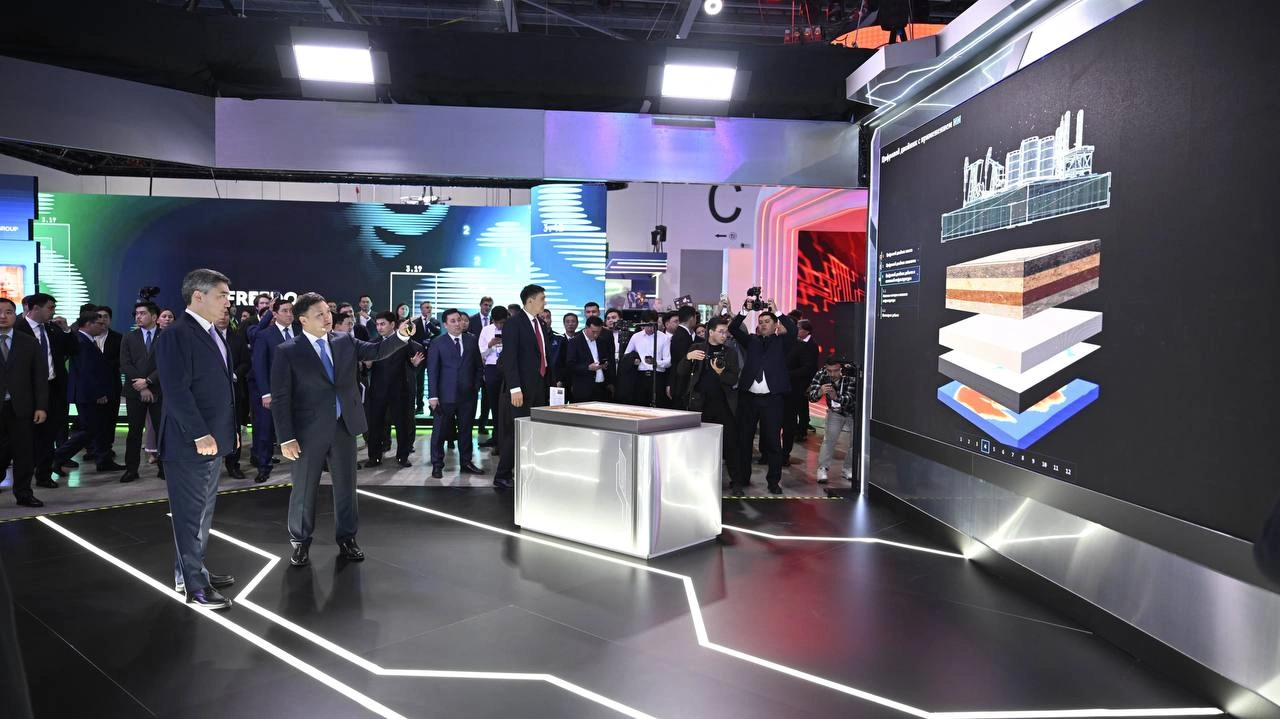
BAKU, Azerbaijan, October 3. KazMunayGas (KMG)
plans to deploy digital twins at 12 oil fields by the end of 2028,
covering more than 90% of the group’s oil production, Chairman of
the Management Board Askhat Khassenov said at the AI & Digital
Bridge 2026 forum in Astana, according to the company's press
service.
Khassenov reported to Kazakhstan’s Prime Minister Olzhas
Bektenov on the implementation of digital projects at production
facilities.
He noted that scaling up the project is expected to enable an
additional 2.8 million tons of oil to be produced, while the
economic effect is estimated at 326 billion tenge (about $737.8
million).
“One of the projects being implemented by the national company
is a digital twin of oil fields using artificial intelligence (AI).
The system combines data on reservoirs, wells and production,
calculates development scenarios and offers optimal options based
on technological and economic efficiency. AI processes large
amounts of data and generates recommendations within several hours,
whereas such calculations previously took months,” the company said
in a press release.
For mature KMG fields, where the share of hard-to-recover
reserves is increasing, the use of new technologies is becoming
particularly important. Digital tools make it possible to analyze
data more accurately, reduce calculation times, and select
solutions for further field development.
Khassenov presented the digital twin of the Vostochny Moldabek
field operated by Embamunaigas in Kazakhstan’s Atyrau region.
At the field, the digital reservoir model calculated around 700
development scenarios. The system also ranks wells by potential,
automatically selects candidates for geological and technical
measures, and helps determine well operating modes, including by
forecasting potential complications.
The digital production system monitors the well stock, with data
updated every five minutes, allowing the company to track well
conditions and respond to deviations more quickly.
Khassenov said the use of digital tools could reduce production
losses by 5% and cut labor costs by up to 15%.