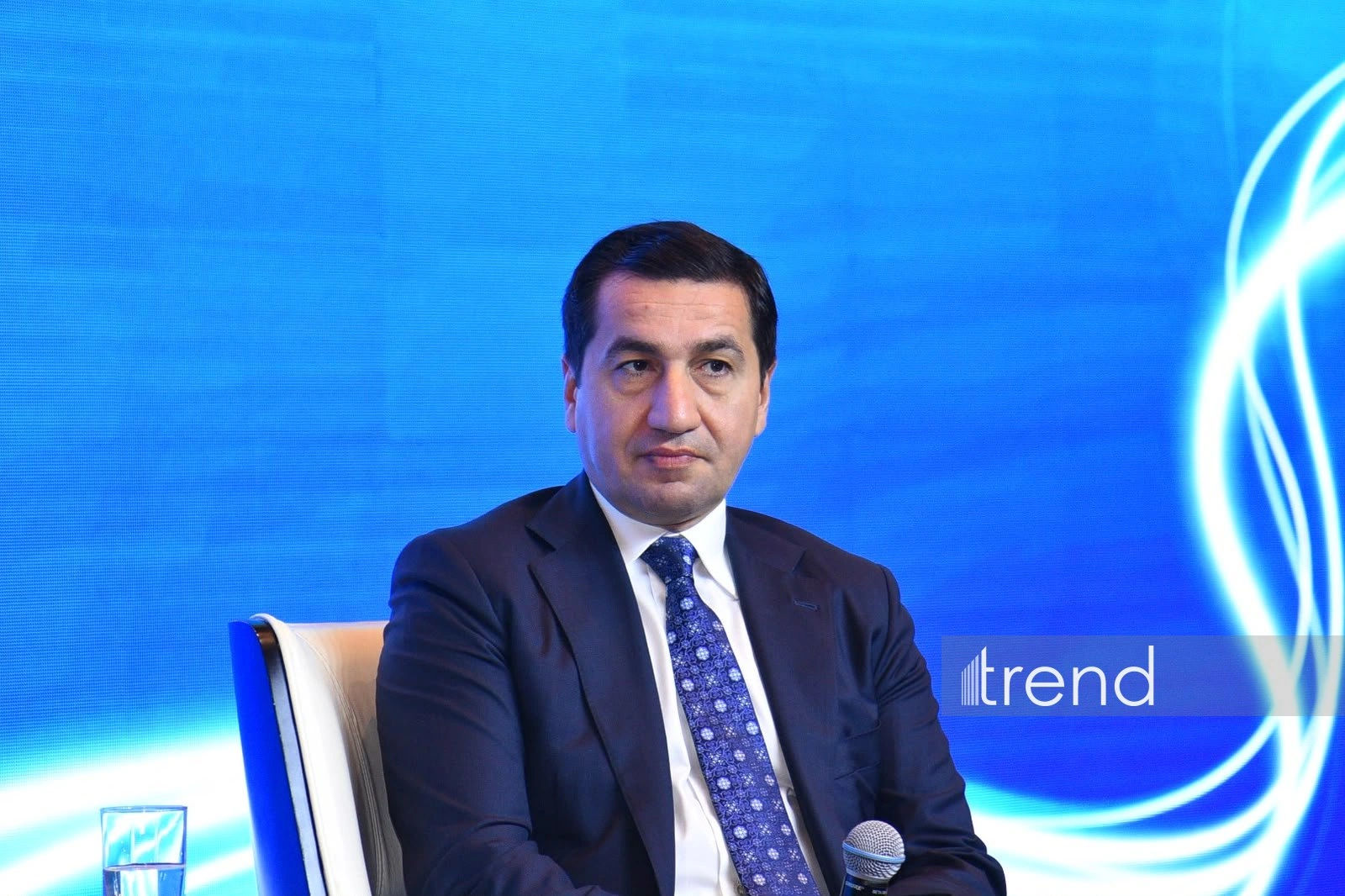
BAKU, Azerbaijan, October 2. Azerbaijan and the
Central Asian countries are forming a new geopolitical and
geoeconomic space in Eurasia, with a particular focus on developing
ties and transportation connectivity, Hikmet Hajiyev, Assistant to
the President of the Republic of Azerbaijan and Head of the Foreign
Policy Department of the Presidential Administration, said on
Friday, on the second day of the CAMCA regional forum in Baku,
Trend's correspondent
reports from the event.
According to him, the decision by Central Asian countries to
accept Azerbaijan as a participant in the Consultative Meeting of
the Heads of State of the region reflects a new stage of
cooperation between Azerbaijan and Central Asia. Azerbaijan’s
integration into the Central Asian space represents a form of
integration, and Azerbaijan is returning to its roots.
He noted that Azerbaijan and Central Asia together form the
broader Caspian region and a new geopolitical and geoeconomic
identity for the region.
According to H. Hajiyev, the key areas of cooperation are
political relations, the economy, trade, business, and, above all,
connectivity. “Azerbaijan, like the countries of Central Asia, is a
landlocked region, and we are actively working to establish new
connections,” he noted.
The Presidential Aide emphasized that Azerbaijan and the Central
Asian countries are striving to transform the transportation and
communications landscape of Eurasia.
H. Hajiyev noted that for Azerbaijan and Central Asia,
connectivity is not limited to the transportation of goods but also
has geopolitical significance.
According to him, Azerbaijan and the Central Asian countries,
located at the heart of the Eurasian continent, are forging new
links between the East and the West. “At the very heart of the
broader Eurasian continent, Azerbaijan and Central Asia are forging
new connections, stretching from China to the West and in the
opposite direction — from East to West,” H. Hajiyev said.
He also highlighted the region’s young demographics and
strategic resources, including energy resources and critical
minerals, as factors determining the region’s significance.
Hajiyev added that the Organization of Turkic States also plays
an important role in this context, noting the complementary nature
of the two formats of cooperation.