BAKU, Azerbaijan, October 1.
President of Tajikistan Emomali Rahmon visited the Gorno-Badakhshan
Autonomous Region (GBAO), where a range of new projects spanning
industry, energy, transport, tourism, and the social sector were
presented, alongside priorities for the region’s further
socio-economic development.
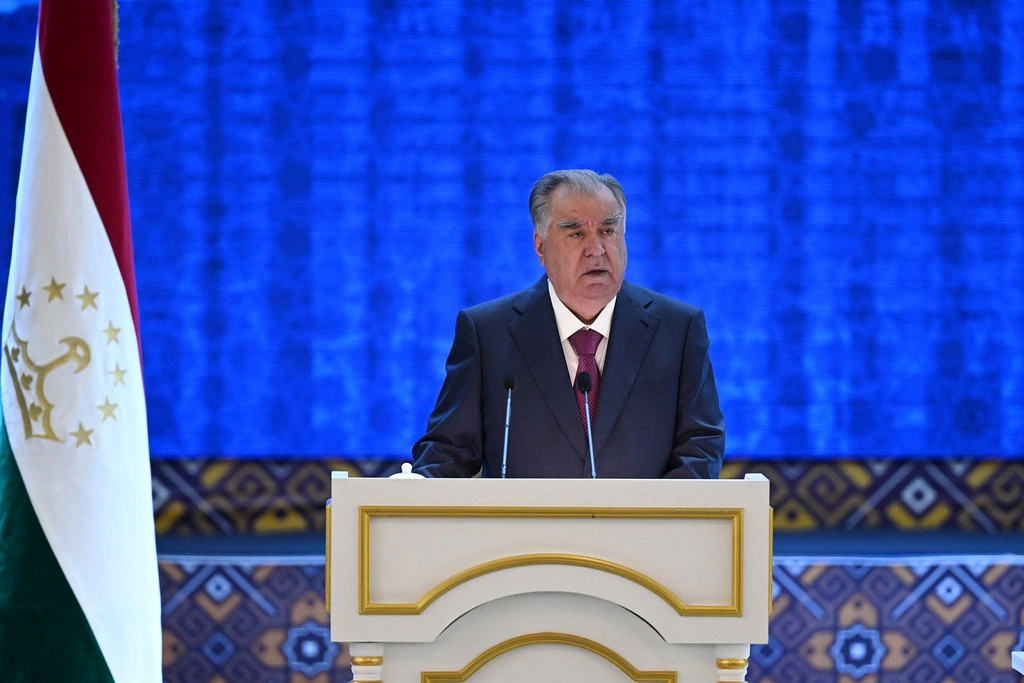
During his visit to Khorog, Emomali Rahmon
commissioned several facilities, laid the foundations for new
projects, and remotely commissioned 87 facilities across various
districts of GBAO. Consequently, many of the initiatives presented
during the visit are associated not only with ongoing construction,
but also with the establishment of an infrastructure base intended
to support the subsequent development of industry, energy,
transport, tourism, and the social sector in the region.
The broader economic impact of these projects will
depend primarily on the extent to which the newly established
infrastructure is integrated with private investment and productive
economic activity. In his address at a meeting with the heads and
activists of GBAO, Emomali Rahmon identified industrial processing,
investment, and job creation among the principal priorities for the
region’s further development.
“The main objective should be to ensure that the share
of industry in the region’s economy steadily increases, while its
natural resources are processed as deeply as possible domestically
and transformed into competitive products with high added value
aimed at exports,” Emomali Rahmon said.
GBAO’s industrial base is already showing notable expansion.
According to data cited by the head of state, the region currently
has 202 industrial enterprises, compared with 13 in 1991. More than
190 new production enterprises have been established during the
period of independence, including 54 enterprises that started
operations in 2025 and another 21 during the first five months of
2026. Industrial output increased from 62 million somoni ($6.73
million) in 1993 to 337 million somoni ($36.6 million) in 2025,
while the range of products expanded from 10 to 75 types.
Energy could become another driver of development. More than 3.4
billion somoni ($369.16 million) has been allocated to the energy
sector of GBAO since independence, while 134 state investment
projects worth 2.3 billion somoni ($249.73 million) have been
implemented. Another 16 projects worth about 400 million somoni
($43.43 million) are currently underway. Installed generation
capacity increased from 10.4 MW in 1991 to 75 MW in 2026. At the
same time, 227 kilometers of transmission lines and 560 kilometers
of new electricity networks were built in the region.
For the regional economy, this creates an opportunity for a
gradual transition from addressing basic electricity supply needs
to using electricity as a factor in industrial and digital
development. This could be particularly important for agricultural
processing enterprises, tourism infrastructure and small-scale
production facilities in remote areas.
"The ultimate goal should be for the energy sector to continue
serving as a reliable foundation for the development of industry,
entrepreneurship, tourism, the digital economy, as well as
improving the level and quality of life of the region’s
population," Emomali Rahmon said.
Transport infrastructure is of particular importance for GBAO.
During the period of independence, 13 state investment projects in
the transport sector worth 2.3 billion somoni ($249.73 million)
were implemented in the region, resulting in the construction and
commissioning of 266 kilometers of roads, 32 bridges and two
tunnels. In the coming years, work is expected to continue on the
Rushon-Varshez, Varshez-Kulma-Karasu, Khorog–Ishkashim and
Khorog–Roshtkala routes.
In particular, $22 million has been allocated for the
reconstruction of the 90-kilometer Murghab–Kulma road and the
restoration of the Kulma-Karasu border crossing, with construction
work scheduled to begin in 2027. In addition, five state investment
projects for the construction and reconstruction of roads and
bridges, with a total value of about 6 billion somoni ($651.47
million), are planned. If these projects are implemented
consistently, transport connectivity between GBAO, other regions of
Tajikistan and external markets could expand, while creating
conditions for increased freight transportation, trade and tourism
flows.
Tourism is another area where infrastructure changes could have
a long-term effect. GBAO currently has 52 large hotels, 79 small
hotels and more than 2,100 service facilities. In 2025, more than
51,000 domestic and foreign tourists visited the region, while in
the first half of 2026, more than 23,000 tourists visited, almost
30 percent more than in the same period of the previous year.
At the same time, further growth in tourism activity will depend
on the quality of roads, access to remote sites, connectivity and
internet availability, digitalization of services, training of
guides and the ability of local businesses to attract investment.
It is precisely the combination of transport, energy and tourism
infrastructure that could determine how quickly tourism becomes a
source of new jobs and income for the population.
"The Gorno-Badakhshan Autonomous Region has broad opportunities
for the development of mountaineering, ecological, historical and
cultural, medical and wellness tourism thanks to its unique nature,
Ismoil Somoni Peak, the Pamir mountain ranges, Tajik National Park,
the international Pamir Highway, the Wakhan Valley, Sarez and
Karakul lakes, healing springs, as well as historical and cultural
monuments," Rahmon said.
Social infrastructure remains an important part of the region’s
development program. Over the past 20 years, more than 2.3 billion
somoni ($249.73 million) has been allocated from the state budget
to education in GBAO, while 426 million somoni ($46.25 million) has
been earmarked for 2026. During the years of independence, 226
general education institutions with more than 44,000 student places
were built, while another 10 facilities with capacity for 2,500
students are under construction. In healthcare, the region’s budget
exceeds 206 million somoni ($22.37 million) in 2026, while more
than 1.2 billion somoni ($130.29 million) has been allocated to the
sector over the past 20 years.
In the broader economic context, GBAO also has a growing base of
income and employment. According to the data cited, the region’s
gross product increased 93-fold over the past 25 years and reached
3 billion somoni ($325.73 million) in 2025. More than 120,000 jobs
have been created during the years of independence, while more than
27,000 residents have received free vocational training and
acquired various professional skills.
The further development of GBAO is likely to take shape across
several interconnected areas. The expansion of the industrial base
could receive additional momentum from new investment agreements,
deeper processing of local raw materials and increased energy
capacity. At the same time, the implementation of major road
projects, including the routes to Kulma-Karasu, Khorog-Ishkashim
and Khorog-Roshtkala, could improve the region’s transport
connectivity with other parts of Tajikistan and external markets,
creating additional conditions for growth in freight
transportation, trade and transit.
Against this backdrop, improvements in transport and energy
infrastructure could support the development of tourism,
agriculture and related services. The expansion of hotel
infrastructure, improved connectivity and training of specialists
could increase the participation of local businesses in the tourism
value chain, while the development of agricultural logistics and
processing could reduce agricultural losses and enhance the market
attractiveness of local products.
Taken together, this model implies mutually reinforcing
infrastructure and economic projects. Energy and transport create
the basic conditions for industry, agricultural processing and
tourism, while investment and human capital development determine
the pace of their implementation. At the same time, actual results
will depend on the volume of investment attracted, the completion
timelines for infrastructure projects, the efficiency of new
production facilities, and the ability of enterprises to expand
their presence in domestic and external markets.