BAKU, Azerbaijan, September 30. Uzbekistan is
working to strengthen the Trans-Caspian Transport Corridor (TCTC)
as a safe, efficient and competitive route connecting Europe and
Asia, with a focus on logistics infrastructure, digitalization and
international investment, Transport Minister Ilhom Makhkamov said
today, during the TCTC Conference in Tashkent.
This was reflected in the statement by the Ministry of Transport
of Uzbekistan.
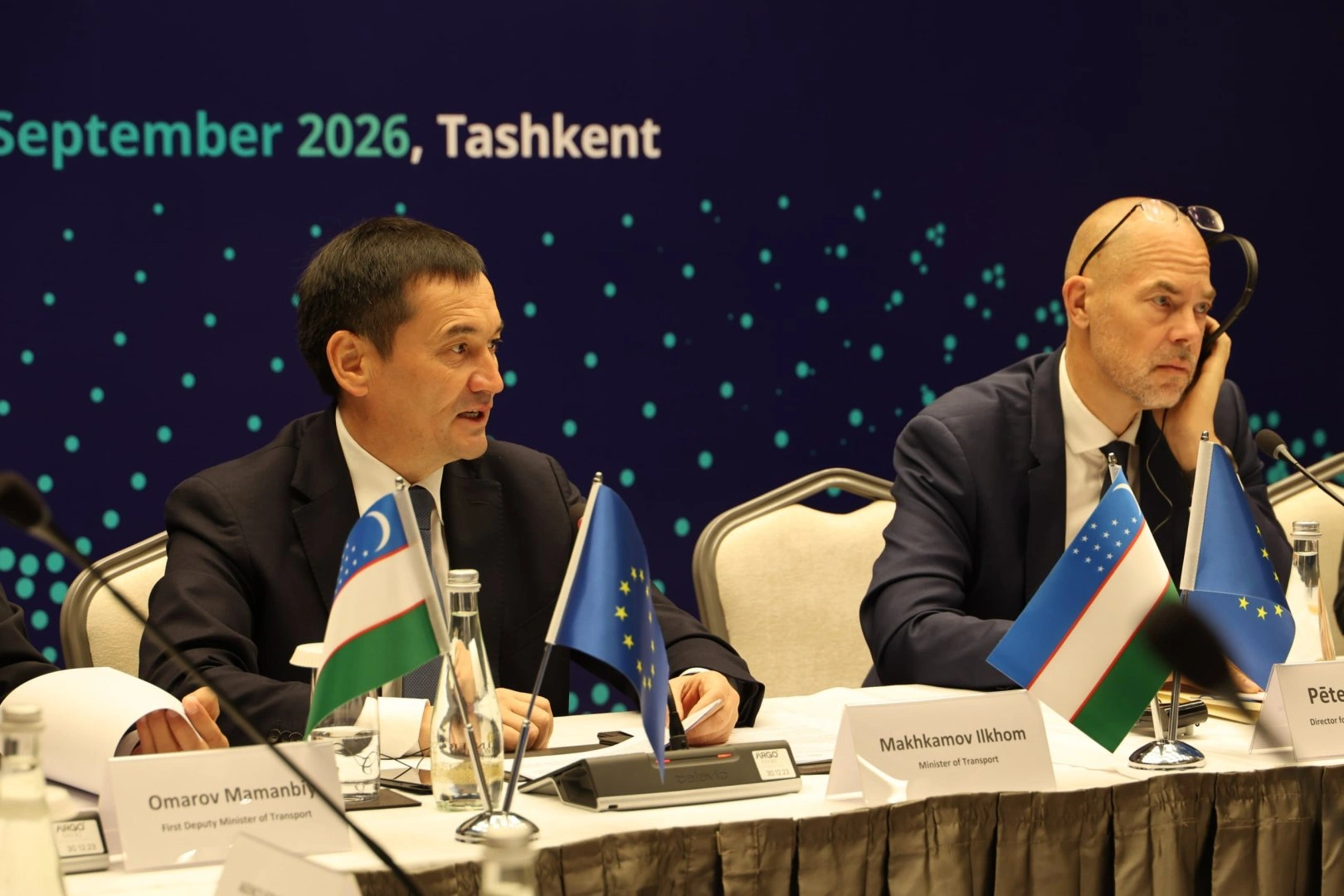
Speaking at a national conference on the TCTC in Tashkent,
Makhkamov said Uzbekistan sees expanded cooperation with the
European Union and international financial institutions as
important to attracting investment and advancing the corridor.
“A modern transport corridor is not only about quality roads. It
is, above all, about prompt decision-making and a barrier-free
environment,” Makhkamov said.
The minister said the sustainable development of the TCTC
requires integrating rail and road networks into a unified system,
with modern logistics infrastructure serving as a key
component.
Uzbekistan is also working to strengthen its position as a
regional transit hub by developing a network of modern logistics
centers and warehouses, he said.
Makhkamov highlighted several projects aimed at expanding
Uzbekistan’s connectivity along the corridor, including the
construction of an Uzbek terminal at Georgian ports, the
establishment of a joint venture with Azerbaijani partners to
increase cargo transportation capacity in the Caspian Sea, the
acquisition of new cargo vessels and an increase in shipping
frequency.
He also noted that a 70% discount on rail transportation under
the multimodal CASCA+ route is creating additional opportunities
for freight operators and businesses.
According to Makhkamov, the digitalization of transport and
customs processes, stronger regional integration, the use of
international experience and closer cooperation with the private
sector will be critical to improving the efficiency and
competitiveness of the TCTC.
The minister said these measures are part of Uzbekistan’s
broader efforts to strengthen its role in regional transit and
develop more efficient connections between Central Asia, the South
Caucasus and European markets.