BAKU, Azerbaijan, September 30. The
international course on sustainable development and management of
the Caspian Sea has fostered dialogue and professional ties among
regional specialists.
The International Ocean Institute’s (IOI) Managing Director,
Antonella Vassallo, and Director of the Caspian Sea Institute (CSI)
of Turkmenistan, Murad Atajanov, said this in a joint exclusive
interview to Trend,
assessing the course’s contribution to Caspian governance and
regional cooperation.
"The Ashgabat training programme has become an important
regional expression of International Ocean Institute’s (IOI) wider
mission and global capacity-development work," they said.
According to Vassallo and Atajanov, the programme has brought
together mid-career practitioners from the Caspian littoral states
since 2013, giving them an opportunity to examine shared
challenges, exchange national and professional perspectives and
establish lasting working relationships.
"From the perspective of the IOI, the Ashgabat training
programme has been a valuable expression of our mission in the
Caspian region — a mission rooted in promoting the peaceful and
sustainable use of ocean services and resources, and in upholding
the principle of the common heritage of mankind," they said.
According to the statement, the programme is also connected to
IOI’s wider international capacity-building network, with
participants from Ashgabat joining a global community of
practitioners working in ocean governance and related fields.
"This regional contribution forms part of IOI’s global portfolio
of training programmes, through which more than 2,400 alumni
worldwide have been trained in ocean governance and related
fields," they said.
The organizers noted that the programme has also helped
strengthen a regional network focused specifically on the
sustainable development and governance of the Caspian Sea.
"The programme introduces participants from the coastal Caspian
states (including Azerbaijan) to subjects including the concepts of
sustainable development, marine spatial planning, the Tehran
Convention and its protocols, relevant IMO conventions, pollution
prevention, biodiversity protection and conflict resolution," they
noted.
The programme also provides a platform for discussions on
emerging regional concerns, including marine litter and changing
environmental conditions, while contributions from UNDP, IMO and
IOC/UNESCO connect participants with broader international
experience.
At the same time, the organizers stressed that the programme’s
contribution should not be linked directly to individual policy
decisions or national initiatives.
"We would not attribute a particular policy decision or national
initiative solely to the programme. Its contribution is cumulative
and can be seen in the stronger shared understanding of governance
frameworks among Caspian specialists, the professional
relationships developed through successive editions, and the
opportunities it creates for continued regional dialogue and
cooperation on emerging issues," they said.
The organizers said they are pleased that the programme has
provided a sustained contribution to regional cooperation and
capacity building in the Caspian region.
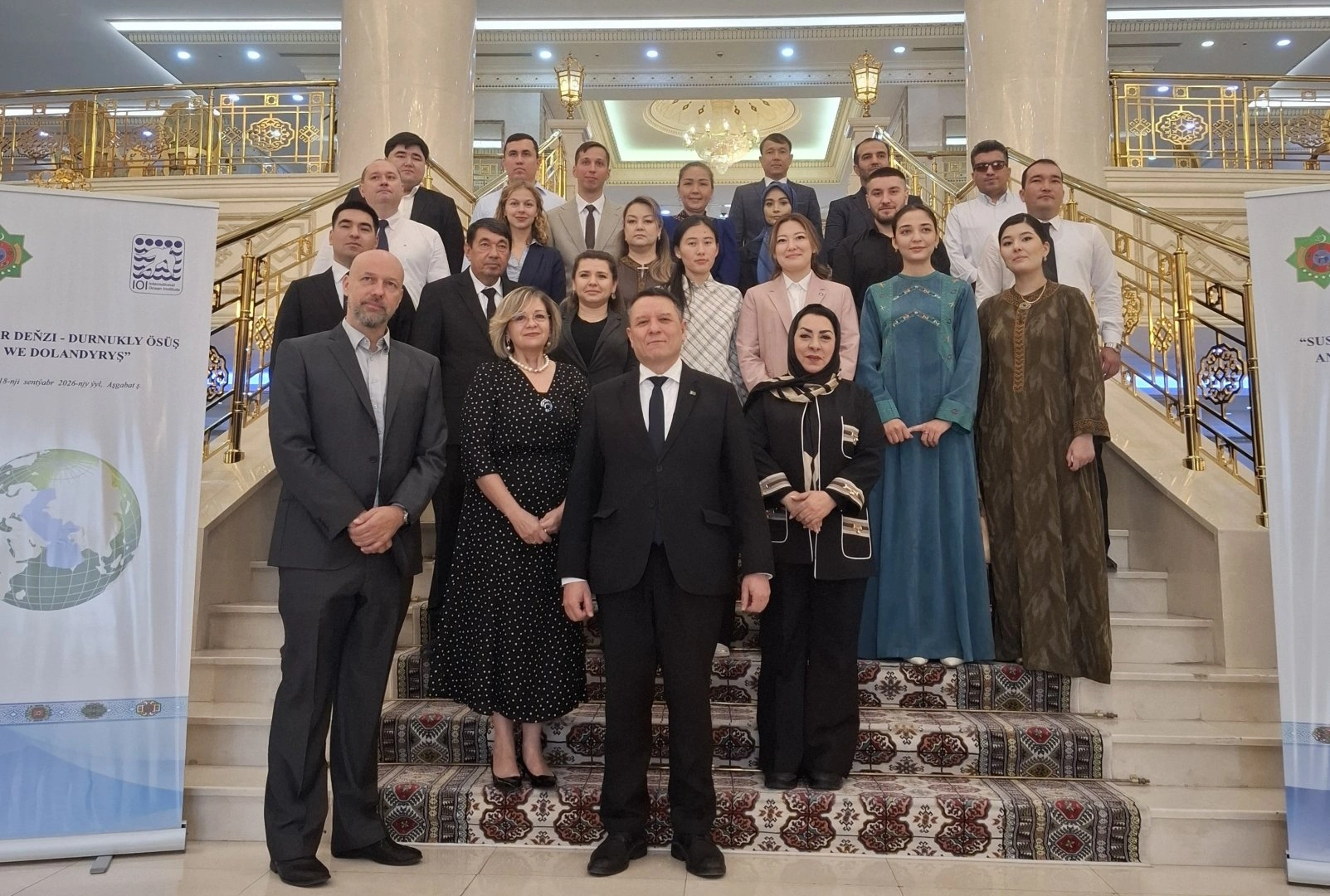
For reference, the 11th International Training Course "Caspian
Sea – Sustainable Development and Management" was held in Ashgabat
from September 7 to 18, 2026. The course was organized by the
Ministry of Foreign Affairs of Turkmenistan, the Caspian Sea
Institute and the International Ocean Institute.
The opening ceremony brought together representatives of
international organizations and specialists working on Caspian
issues, including UN Resident Coordinator in Turkmenistan Xiaojuan
Grace Wang, International Ocean Institute Managing Director
Antonella Vassallo, Course Director Parvin Farshchi, marine spatial
planning expert Andrey Abramich and Caspian Sea Institute Director
Myrat Atajanov.
According to the Turkmen Foreign Ministry, 175 specialists from
Turkmenistan, Azerbaijan, Iran, Kazakhstan, Russia and China have
completed the programme since its launch in 2013. The programme
also incorporates practical and collaborative exercises on
negotiation, conflict resolution, marine spatial planning and
policymaking. Participants work together on Caspian-focused
scenarios, applying the knowledge gained during the course to
consider cooperative approaches to regional governance.
The 2026 edition placed particular emphasis on the environmental
state of the Caspian Sea and issues related to its shallowing.
The International Ocean Institute (IOI) is an independent,
non-governmental, non-profit organization focused on ocean
governance, training and capacity development. Its headquarters and
secretariat are located at the University of Malta in Msida, Malta,
where the institute’s Managing Director Antonella Vassallo is
based.
The IOI runs training programmes on ocean governance in
different regions and lists Turkmenistan as an IOI Training
Partner. Its global programme portfolio includes the "Sustainable
Development and Governance of the Caspian Sea" course, organized in
partnership with the Caspian Sea Institute.
The Caspian Sea Institute was established in Turkmenistan in
2019 to promote cooperation in the Caspian region, conduct marine
scientific research and contribute to the development of
international and national legal documents related to the Caspian
Sea. It also reviews the implementation of relevant international
agreements concerning the Caspian.
The institute is headed by Myrat Atajanov, who was appointed its
director in August 2019. According to the press service of the
Turkmen government, the institute also works on marine studies,
methodological and informational materials and cooperation on
Caspian issues.