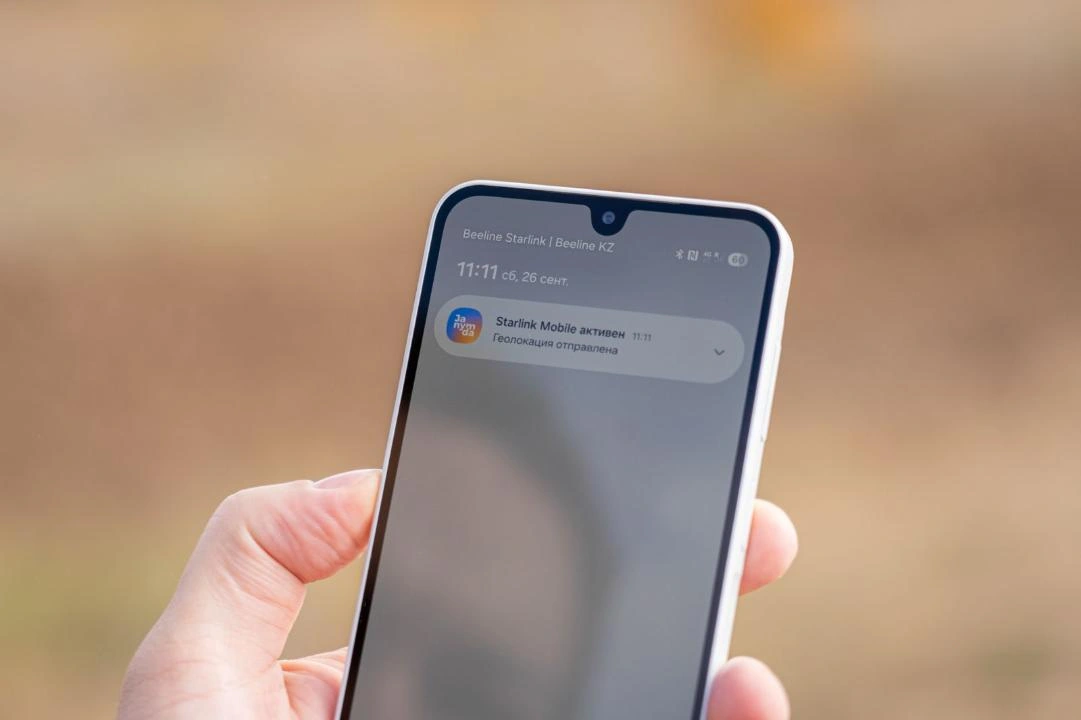
BAKU, Azerbaijan, September 28. With the
support of the Ministry of Artificial Intelligence and Digital
Development of Kazakhstan, Beeline Kazakhstan, jointly with
Starlink Mobile, has launched satellite mobile connectivity using
Direct to Cell technology, according to the ministry.
The service will allow users to access selected communication
services on smartphones outside the coverage of terrestrial mobile
networks.
The introduction of Starlink Mobile follows agreements reached
during President Kassym-Jomart Tokayev’s official visit to the
United States in 2025. In November of the same year, the ministry
and Beeline Kazakhstan signed a memorandum of cooperation on the
introduction of Direct to Cell technology, while the first
practical tests were conducted in December.
“Last autumn, during President Kassym-Jomart Tokayev’s official
visit to the United States, Kazakhstan reached an agreement on the
introduction of Starlink Mobile satellite connectivity (Direct to
Cell). Today, we see how this agreement is becoming a reality.
Kazakhstan has become the first country in Central Asia where
Direct to Cell has undergone practical testing and is now moving to
the user service level. It is important for us that advanced
technologies are becoming not just part of international
agreements, but are beginning to work here in Kazakhstan and bring
tangible benefits to people,” Deputy Prime Minister and Minister of
Artificial Intelligence and Digital Development Zhaslan Madiyev
said.
The technology enables a compatible smartphone to connect
directly to Starlink Mobile satellites (Direct to Cell) without a
dedicated satellite phone, external antenna or additional
equipment. Users will be able to send and receive messages and
access basic internet services in areas where terrestrial mobile
networks are completely unavailable.
Satellite connectivity complements terrestrial mobile
infrastructure and expands communication capabilities in remote
areas, on highways outside cities and in mountainous areas.
Connection is possible when terrestrial coverage is unavailable and
conditions allow a connection to be established with a
satellite.
The technology creates additional opportunities for sending
messages from hard-to-reach areas, as well as in situations where
terrestrial infrastructure has been damaged. It can be useful for
tourists, residents of remote settlements, road and utility
workers, and specialists working away from populated areas.
The project is being implemented jointly by the ministry,
Beeline Kazakhstan and Starlink. An additional basis for the
cooperation is a global framework agreement between Starlink and
VEON Group, which holds a controlling stake in Beeline
Kazakhstan.