BAKU, Azerbaijan, September
25. Leadership and reforms, financial buffers,
targeted development, and partnerships play a crucial role in
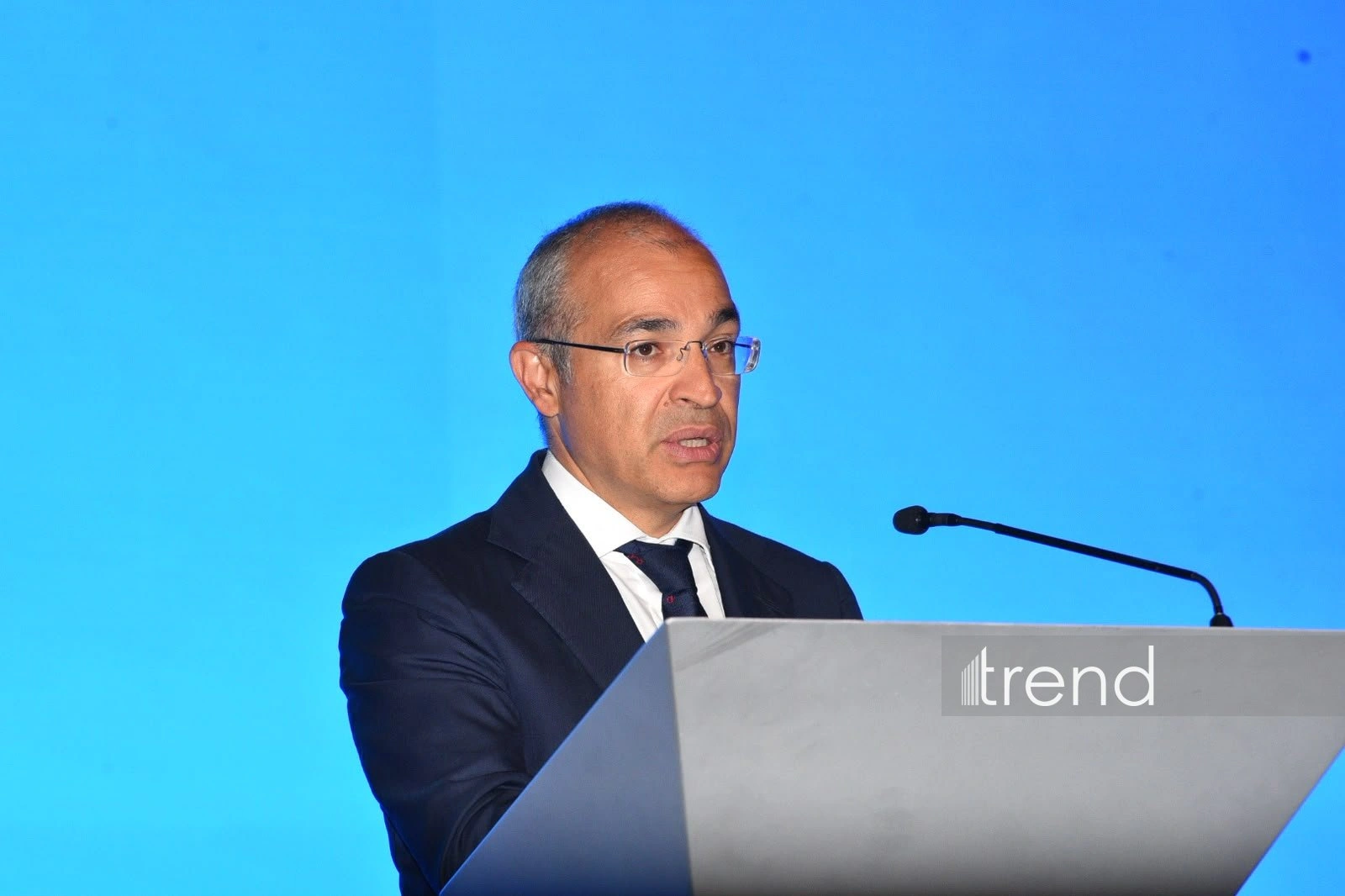
Azerbaijan's economic development and crisis management, Minister
of Economy Mikayil Jabbarov said at the 2nd Azerbaijan
International Investment Forum held in Baku today, Trend's correspondent
reports from the event.
The minister noted that when facing crises, it’s essential to
consider future expectations alongside the work already
accomplished.
"Thanks to the vision and leadership of President Ilham Aliyev,
significant steps have been taken to diversify the economy,
increase state revenues from non-oil and gas sectors, reform the
civil service and compensation systems, and ensure macroeconomic
and fiscal stability," Jabbarov pointed out.
According to him, the financial buffers established by the
country played a crucial role in managing the external impacts
Azerbaijan encountered.
"Azerbaijan faced impacts stemming from regional
interdependencies not only in 2016 but also in 2022. However,
existing financial buffers enabled the country to maintain its
development trajectory," the minister emphasized.
Jabbarov highlighted that during the period when energy prices
reached record levels, Azerbaijan pursued a more prudent fiscal
policy and reduced the share of transfers from the State Oil Fund
to the state budget by more than 4.5%. The minister stated that
digitalization, digital development, and the strengthening of human
capital hold a special place in Azerbaijan's development
agenda.
"We must respond to the challenge of job displacement caused by
artificial intelligence. Even if we are not the ones creating the
technology, we aim to become a country that actively utilizes it -
an AI taker," he added.
According to him, Azerbaijan is also focusing on
industrialization and increasing non-oil exports by leveraging the
country's natural advantages - its geographic location, energy
potential, and transport connections.
Jabbarov noted that expanding Azerbaijan's regional and
international partnerships is also significant for economic
development.
"We are expanding our trade and investment ties, particularly
with Central Asian and Gulf countries. Our state and private
companies act not only as sources of capital but also as exporters
of knowledge and experience—that is, know-how," the minister
said.
He emphasized that investment agreements based on mutual trust
play a crucial role in shaping long-term economic partnerships.