BAKU, Azerbaijan, September 24. Harmonization
and digitalization are important factors for investment decisions
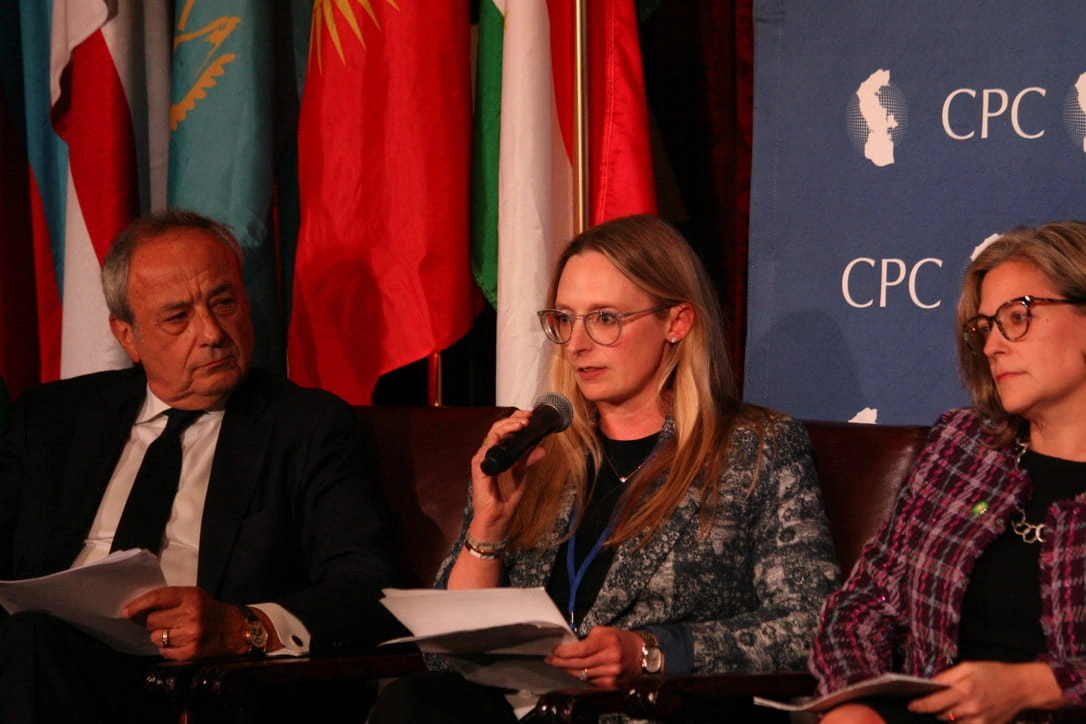
along the Middle Corridor, said Claire Kaiser, Head of Strategy and
Senior Managing Director, Eurasia, at McLarty Associates.
She made the remarks during the seventh annual Caspian Business
Forum held by the Caspian Policy Center (CPC) in New York.
She discussed how recent geopolitical shocks have simultaneously
increased investor caution and underscored the importance of the
Caspian region for diversified supply chains and connectivity.
“The war in Ukraine, the war in Iran, external shocks of these
magnitudes push foreign investors towards caution, necessarily so,”
Kaiser said. “However, they also work to underscore the urgency and
importance that this region’s role could really play in terms of
supply chain and transit diversification, digital connectivity, and
many other sectoral needs.”
Kaiser stressed that the challenge now is translating growing
political and commercial attention into viable investments. “The
real question is whether the region and its partners can convert
this enthusiasm and optimism into concrete and bankable positions
before the very unique geopolitical inflection point we find
ourselves in,” she said.
Drawing on the development of the Baku-Tbilisi-Ceyhan pipeline,
Kaiser noted that major regional projects have historically
required political vision before investment followed. “The vision
came first; the capital followed,” she said, arguing that the
region can draw on those lessons today. Kaiser also highlighted
harmonization and digitalization along the expanding Middle
Corridor as increasingly important factors in facilitating
investment decisions.
The Middle Corridor is a transport and trade route passing
through a number of countries in the region and connecting Asia
with Europe. It serves as an alternative to the traditional
Northern and Southern Corridors. The route begins in China and runs
through the countries of Central Asia. It then crosses the Caspian
Sea, Azerbaijan, Georgia, and Türkiye, before reaching Europe. The
Middle Corridor is a land route that bypasses longer sea routes,
connecting eastern regions of Asia, including China, with
Europe.