BAKU, Azerbaijan, September 23. The Trump Route
for International Peace and Prosperity (TRIPP) shouldn’t be viewed
as a separate or competing corridor, said Berris Ekinci, Deputy
Minister of Foreign Affairs of Türkiye.
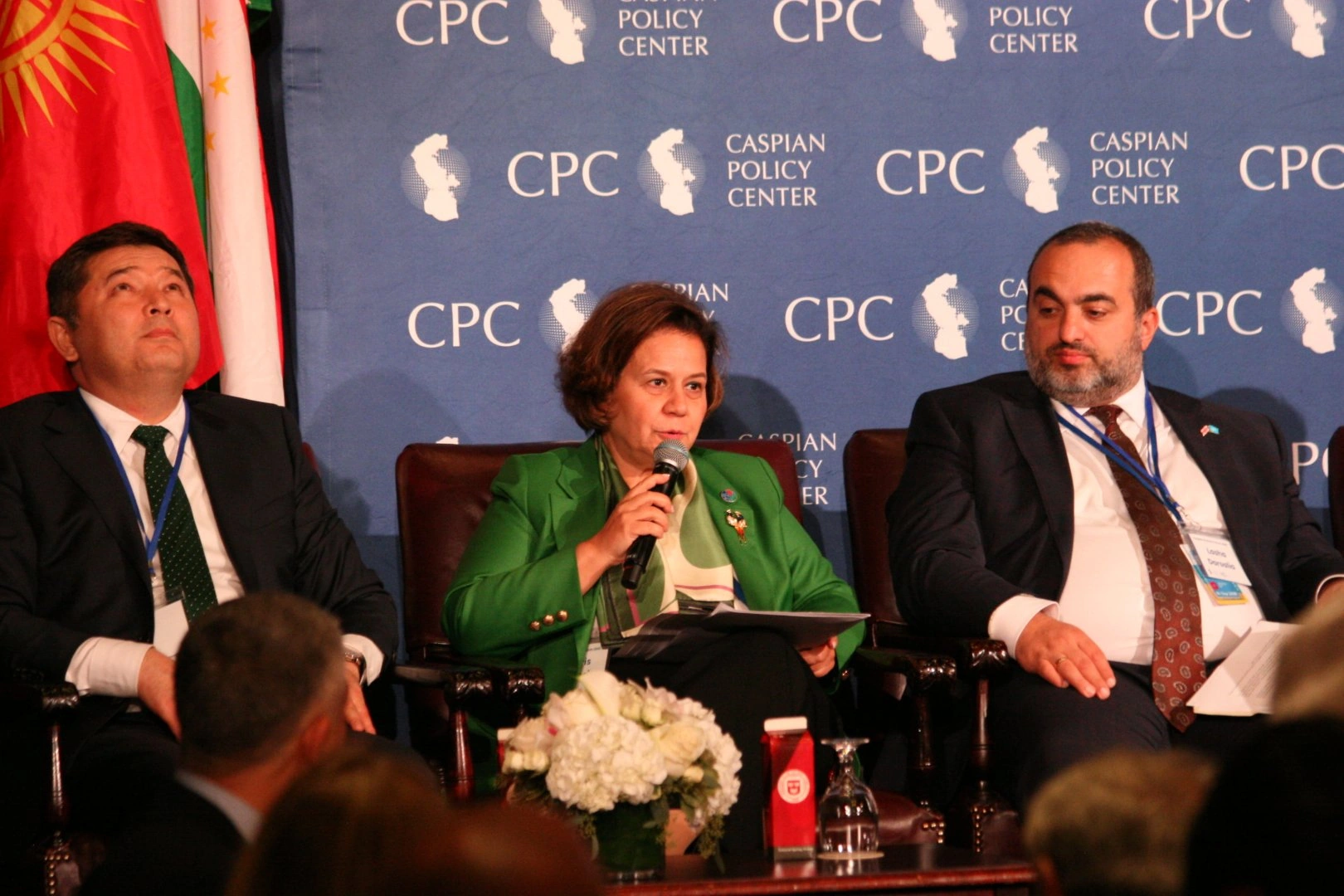
He made the remarks during the seventh annual Caspian Business
Forum held by the Caspian Policy Center (CPC) in New York.
He highlighted the need to view connectivity as extending beyond
physical transport infrastructure. “Connectivity should no longer
be simply understood as a network of railways and ports. It’s
evolving into a broader architecture, bringing together transport,
energy, digital infrastructure, logistics, finance, customs, and
regulatory coordination,” Ekinci said.
Ekinci stressed that TRIPP should complement rather than compete
with existing regional routes. “TRIPP shouldn’t be viewed as a
separate or competing corridor. Its value lies in how it connects
with and complements the existing regional transport network,
especially Türkiye’s existing railway, road, and port
infrastructure,” she said.
“For Türkiye, the objective is not simply to establish another
road, but to build a genuinely interconnected regional system in
which different initiatives strengthen one another,” Ekinci
added.
On August 8, 2025, following a trilateral meeting with U.S.
President Donald Trump in Washington, President of Azerbaijan Ilham
Aliyev and Prime Minister of Armenia Nikol Pashinyan signed a joint
declaration on establishing peace between Baku and Yerevan and
restoring transport connectivity between mainland Azerbaijan and
its Nakhchivan Autonomous Republic. The project was named the
"Trump Route for International Peace and Prosperity."
Armenian Foreign Minister Ararat Mirzoyan and U.S. Secretary of
State Marco Rubio met in Washington this year and presented a
framework program for the implementation of the TRIPP project.