BAKU, Azerbaijan, September 18. Dialogue on
security issues among Turkic States in Azerbaijan takes on new
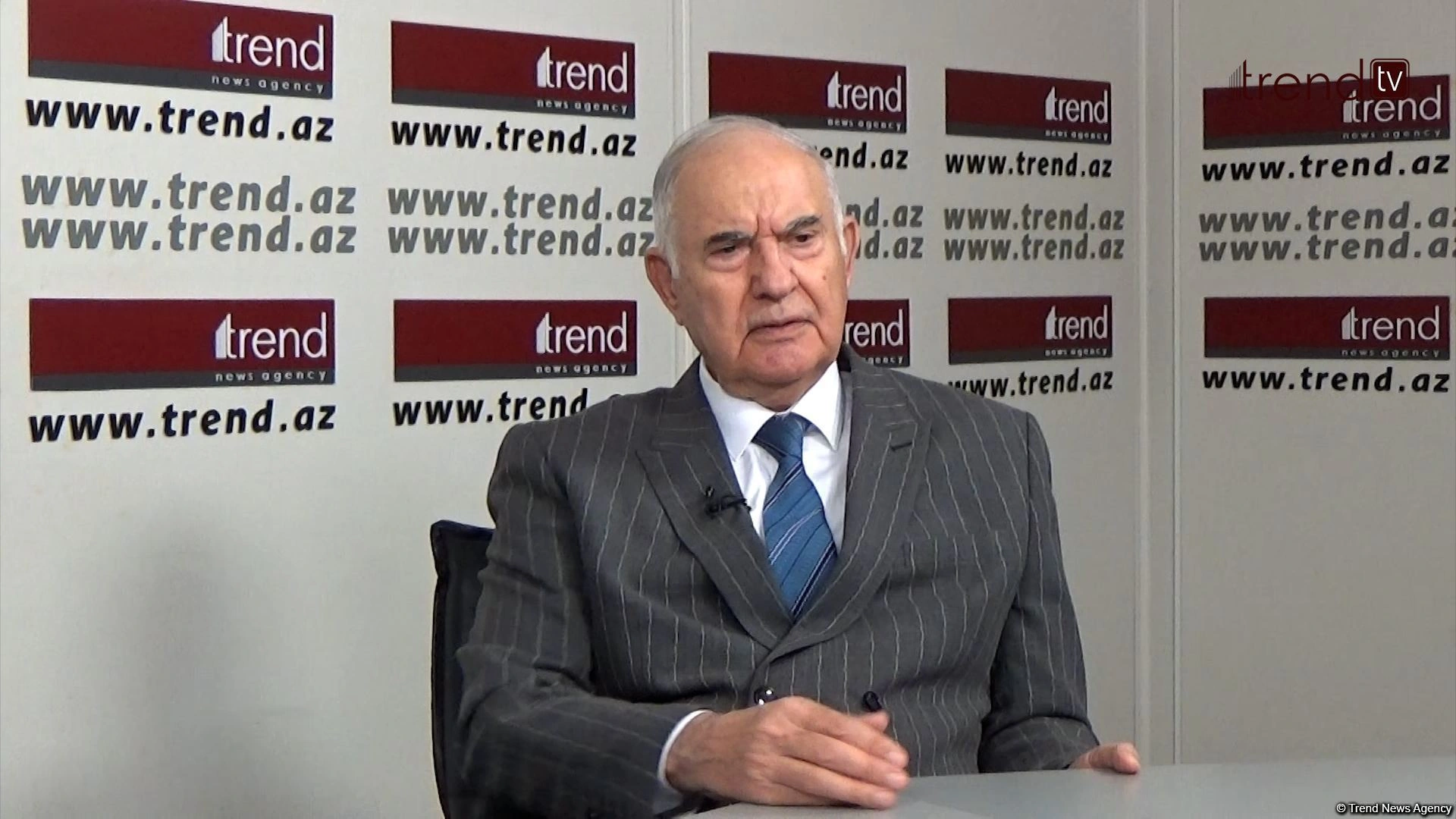
meaning, the political scientist Azer Garayev told Trend.
"In today’s international relations, security issues are no
longer problems that can be resolved solely within the borders of
individual states. Regional conflicts, terrorism, transnational
crime, cyber threats, the protection of critical infrastructure,
and energy and transportation security require closer coordination
among states. Under these circumstances, the institutionalization
of security cooperation among the member states of the Organization
of Turkic States (OTS) takes on particular significance. It is from
this perspective that the fifth meeting of the secretaries of the
Security Councils of the OTS member states, held on September 17 in
Baku, attracts special attention," he noted.
He noted that holding the event in Azerbaijan is also one of the
factors demonstrating Baku’s role as a key center for dialogue on
security issues in the Turkic world.
“The location of the meeting also underscores its political and
institutional significance. The participation of representatives
from Türkiye, Uzbekistan, Kazakhstan, and Kyrgyzstan, as well as
the Turkish Republic of Northern Cyprus and the Secretariat of the
Organization of Turkic States, demonstrates that security issues
among Turkic states are being discussed in an increasingly broad
framework. At the meeting, chaired by the Secretary of the Security
Council of Azerbaijan, Colonel General Ramil Usubov, participants
exchanged views on regional security issues, developments in the
Middle East, national development opportunities in the field of
artificial intelligence, and other pressing issues,” he noted.
The political analyst emphasized that it is precisely this broad
agenda that allows for a clearer understanding of Azerbaijan’s role
within the OTS.
“In recent years, Baku has taken a proactive stance toward
fostering political dialogue, economic cooperation, and strategic
partnerships among Turkic states. One of the key factors
strengthening Azerbaijan’s position in this process is the
country’s geostrategic location. In addition to its location at the
crossroads of Europe and Asia, Azerbaijan plays an important role
in the development of transportation and energy links between
Central Asia and Türkiye. This feature enhances Azerbaijan’s
strategic importance within the Turkic-speaking region.
Azerbaijan’s role in exporting energy resources to international
markets and in supplying Central Asian resources to global markets
via the Caspian Sea enhances the country’s strategic importance.
The fact that Baku is hosting a meeting to discuss security issues
demonstrates the country’s importance not only in terms of
political dialogue but also in terms of regional ties,” he
said.
The political scientist noted that the ongoing wars in various
regions of the world, the expansion of the geography of conflicts,
and the emergence of new threats require a more flexible and
coordinated approach by states to security issues.
“It is particularly important for the member states of the
Organization of Turkic States, which are spread across a vast
territory, to closely monitor regional developments and take
preventive measures against potential risks.
Azerbaijani President Ilham Aliyev, while hosting the heads of
security agencies from the OTS member states, stated in his speech:
“Once again, the advantage of our countries is that across this
vast geography, the situation regarding public order and various
terrorist threats remains under control, but that does not mean we
should let down our guard. Wars are raging around us, and there is
no end in sight to these conflicts. The geography of the wars is
expanding. Mutual hostility between the warring parties is taking
on a pronounced character. All of this can lead, and in fact is
leading, to the expansion of conflict zones along the perimeter of
our countries. In our case, speaking of Azerbaijan, our neighbors
to both the north and the south are warring nations. In this
context, issues related to regional security naturally become of
paramount importance.”
This reality calls for further strengthening of security
cooperation among the Turkic states. The timely identification of
existing risks, the expansion of information sharing, and the
strengthening of coordination among law enforcement agencies are of
great importance for maintaining regional stability, he said.
Garayev added that holding regular meetings at the security council
level among the participating countries of the Turkic Council
creates an opportunity to expand the exchange of information and
experience among government agencies.
Azerbaijani President Ilham Aliyev emphasized the importance of
this issue and stated: “In this context, coordination between the
services responsible for state security is extremely important.
Information sharing, exchange of operational information, joint
action, and strengthening coordination in countering – and, most
importantly, preventing – potential threats are, I believe, vital
for all of us.”
The inclusion of the issue of artificial intelligence on the
meeting’s agenda reflects a shift in the nature of the security
concept. New technologies, in addition to creating broad
opportunities for economic development and public administration,
also pose new risks in the field of information security and other
areas. “Therefore, it is important for the participating countries
not only to respond to existing threats but also to formulate
common approaches by anticipating future challenges,” Garayev
noted.
The political scientist said that current global developments,
including the wars in northern and southern Azerbaijan, make it
necessary to pay constant attention to security issues.
“The intelligence agencies of the Turkic states also take
existing geopolitical realities into account in their activities,
jointly discuss emerging threats, and exchange information and
expertise in the field of security. To this end, regular meetings
between the heads of intelligence agencies, as well as the mutual
exchange of views and information, have already become one of the
key areas of cooperation. A clear example of this is the 28th
session of the Conference of Special Services of Turkic-Speaking
States, held on September 17 in Kazakhstan. At the meeting,
attended by a delegation led by the head of the State Security
Service of the Republic of Azerbaijan, Colonel General Ali Nagiyev,
it was emphasized that among the threats to regional security,
alongside international terrorism, religious extremism, the
activities of transnational criminal groups, and the illicit
trafficking of narcotics and weapons—there are also modern forms of
cybercrime and other threats targeting critical infrastructure. “Of
particular concern is the possibility that criminal and terrorist
groups could use modern information technologies to disrupt the
operation of transportation, communications, and other vital
infrastructure facilities,” Garayev added.
He noted that, in this context, the fifth meeting of the
secretaries of the Security Councils of the OTS member states, held
in Baku, and the 28th conference of special services, held in
Kazakhstan, demonstrate the continuation of a unified security
agenda at various institutional levels.
“On the one hand, strategic approaches and common challenges are
discussed at the level of the states’ security councils; on the
other hand, the special services exchange views on specific
threats, information sharing, and practical cooperation. This is an
important factor indicating that security cooperation among Turkic
states is becoming consistent and multifaceted,” the political
scientist stated.