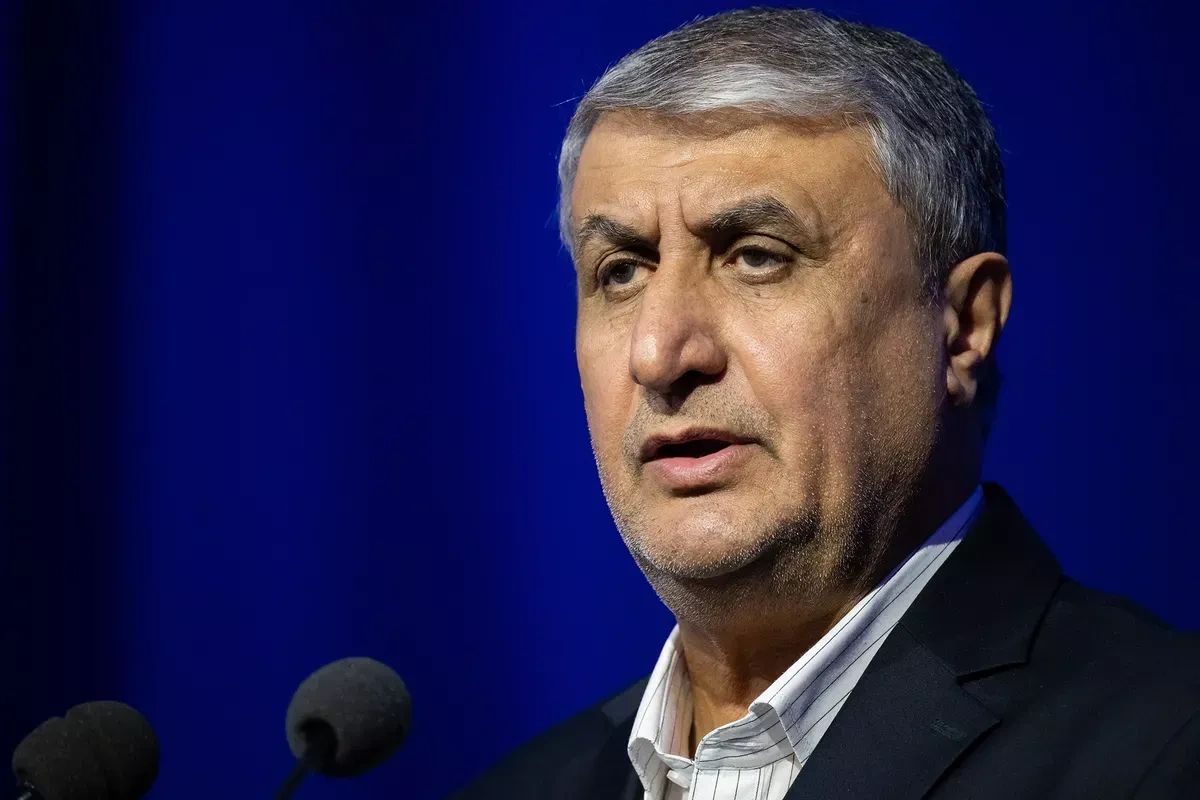
Iran’s vice president for nuclear affairs, Mohammad Eslami, has been blocked from addressing the International Atomic Energy Agency’s general conference in Vienna after pressure from the Trump administration, Bloomberg reports.
Eslami, who heads Iran’s Atomic Energy Organization, had been due to address the UN nuclear watchdog on September 14, according to a US official.
Austria denied him entry after refusing a UN-requested sanctions waiver that would have allowed him to travel to the country, the official said.
The US official, who spoke on condition of anonymity, said Washington had urged Austria to deny the waiver. Iran’s Mehr News Agency reported on September 12 that Eslami had left Tehran to attend the conference.
An Austrian government spokeswoman referred questions to the Foreign Ministry, which did not immediately respond to a request for comment.
A lower-level Iranian representative may address the conference later in the week, but Eslami’s absence means Tehran’s top nuclear official will not speak at the opening of the gathering.
The decision comes seven months into the US and Israeli war with Iran. US President Donald Trump has said the conflict is necessary to prevent Iran from obtaining a nuclear weapon.
US Energy Secretary Chris Wright is expected to use the conference to reinforce Washington’s position, saying that “Iran must never develop or obtain a nuclear weapon”.
Wright is also expected to call on Iran to co-operate fully with the IAEA, meet its safeguards obligations and provide the agency with the access it needs to carry out its work.
His planned address follows an IAEA warning that it had observed construction activity at Iran’s Pickaxe Mountain, a heavily fortified site suspected of being linked to nuclear-related activity.
Mr Trump referred to “a little activity at Pickaxe” on September 9 and warned Iran not to “get cute”, saying the US would have to respond “very hard”.
Wright is also expected to stress the IAEA’s role in nuclear safeguards and the peaceful use of nuclear technology, while calling for greater operational efficiency within the agency.
The Trump administration is simultaneously seeking to expand nuclear power to meet rising electricity demand. In July, the US and Saudi Arabia finalised a nuclear technology-sharing agreement that could allow US companies to build reactors in the kingdom.
By Aghakazim Guliyev