BAKU, Azerbaijan, September 12. Azerbaijan's
green energy policy opens up new options linking Caspian, Central
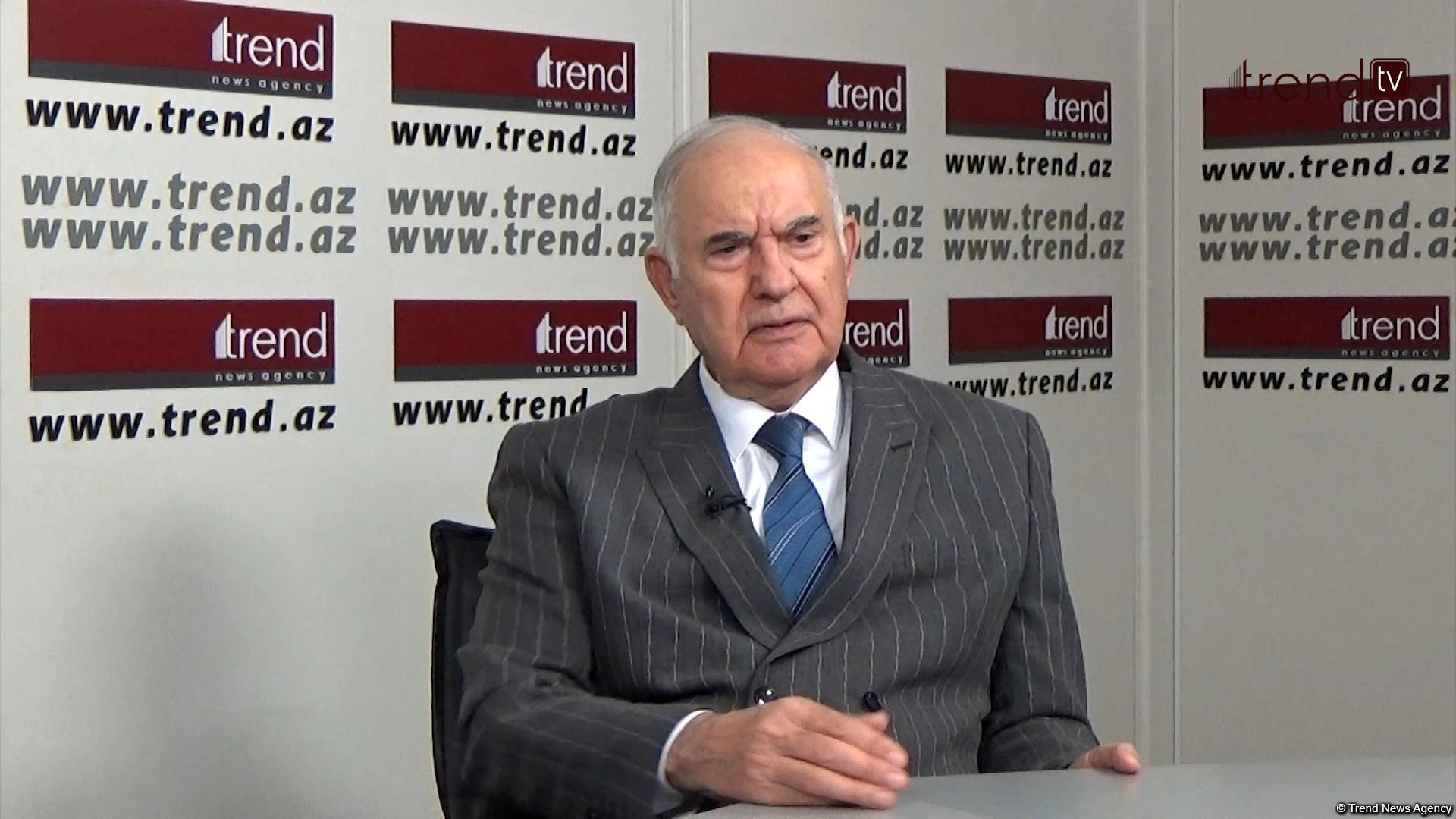
Asia, and Europe, political analyst Azer Garayev told Trend.
According to Garayev, the 4th Climate Week, held in Baku from
September 7 through 11, served as further evidence of Azerbaijan's
growing role in the global climate agenda in recent years.
He said that one of the event's key messages was the need to
accelerate the transition from climate commitments to concrete
action. In this context, Climate Week wasn't merely an
international discussion platform for Baku; it also provided an
opportunity to showcase initiatives taking shape ahead of COP29 in
2024 and to highlight the next phase of Azerbaijan's green energy
policy.
"Namely COP29 was one of pivotal starting points for
strengthening Azerbaijan's position on the climate agenda. At the
conference held in Baku in November 2024, an agreement was reached
to increase climate finance for developing countries to $300
billion annually by 2035. Simultaneously, a call was made to scale
up public and private financing from all sources to $1.3 trillion
per year. Another significant outcome of COP29 was the agreement on
key mechanisms for carbon markets under Article 6 of the Paris
Agreement.
However, in its post-COP29 activities, Azerbaijan is focusing
not only on international climate diplomacy but also on
transforming its own energy system. For many years, Azerbaijan has
been known as an oil and gas exporter. Now, it is striving to
develop 'green energy' alongside traditional energy by rapidly
increasing the share of renewable sources in its energy strategy,"
he noted.
According to him, the figures illustrate the scale of this
transformation.
"Azerbaijan's onshore technical potential for renewable energy
sources is estimated at 135 GW. Meanwhile, the technical potential
for offshore wind energy in the Azerbaijani sector of the Caspian
Sea stands at 157 GW. Currently, renewable energy plants with a
total capacity of 2,070 MW are in operation across the country. Of
this total, 1,443.5 MW comes from hydroelectric plants, 306.5 MW
from wind, 278.2 MW from solar, 37 MW from bioenergy, and 7.3 MW
from hybrid plants.
The targets for the coming years are even more ambitious. Based
on signed projects, plans are in place to establish 6 GW of solar
and wind energy capacity by 2030 and 8 GW by 2032. A target of 8 GW
of renewable energy capacity has also been set for 2035, with the
intention of utilizing this potential to meet both domestic demand
and export needs," the analyst mentioned.
Garayev pointed out that a key aspect of this policy is
transforming Karabakh and East Zangezur into a green energy
zone.
"The restoration of the liberated territories is not limited
merely to rebuilding infrastructure; alongside new settlements and
industrial and agricultural facilities, a more resilient energy
system is being established there. Hydropower, in particular, is a
key area of focus for Karabakh and East Zangezur. Over the past
five years, nearly 40 small hydroelectric power plants have been
constructed in the region using state funds, with a combined
capacity exceeding 300 MW. New projects in this sector are
currently underway. In July 2026, the Aghbulag-1, Aghbulag-2, and
Sheylanli hydropower plants—with a total capacity of 32.95 MW—were
commissioned on the Hochaz river in Lachin. Plans are in place to
further expand small-scale hydropower in the region and to harness
a significant portion of this potential for electricity generation
through future projects," he explained.
The analyst emphasized that one of the major advantages of
Azerbaijan's green energy strategy is the creation of opportunities
not only to generate electricity but also to export it to foreign
markets. To this end, several regional energy corridors are being
developed in parallel.
"One of the most significant of these is the Caspian Sea–Black
Sea–Europe Green Energy Corridor. Also known as Black Sea Energy,
this project envisages transporting Azerbaijan's renewable energy
potential to Europe via Georgia and across the Black Sea. A key
element of the project is an underwater electricity cable planned
to be laid beneath the Black Sea. A strategic partnership agreement
regarding this initiative was signed between Azerbaijan, Georgia,
Romania, and Hungary in 2022.
The first and second phases of the project have been included in
the 2026 development plan portfolio of the European Network of
Transmission System Operators for Electricity (ENTSO-E). The
project has now entered the development phase. Establishing this
infrastructure is considered a key avenue for bringing Azerbaijani
green energy to the European electricity market," he noted.
According to him, another important initiative is the Central
Asia–Azerbaijan Green Energy Corridor. In 2024, within the
framework of COP29, Azerbaijan, Kazakhstan, and Uzbekistan signed
an agreement on a strategic partnership for the development and
transmission of green energy. Subsequently, the operators of the
three countries' energy systems has established a joint venture,
and work on the project's feasibility study has commenced.
"The scope of this initiative extends across a broader
geography. Central Asia's solar and wind energy potential could be
transported to Azerbaijan via the Caspian Sea and subsequently to
European markets through the South Caucasus and Türkiye. Thus,
Azerbaijan is positioning itself not merely as an energy producer
but as a key link in the transit of 'green energy' between Central
Asia and Europe. The project's potential to create additional
opportunities for developing energy connections along the Middle
Corridor further enhances its strategic significance.
Furthermore, the electricity interconnection being established
along the Azerbaijan–Georgia– Türkiye–Bulgaria route could expand
the geographical reach of future energy exports. Rather than
remaining isolated initiatives, these projects are gradually
evolving into components of a unified regional energy network. This
marks a fundamental shift in Azerbaijan's energy strategy: the
country is no longer solely establishing export routes for oil and
gas but is also building infrastructure for the future export of
electricity—specifically green energy," the analyst said.
Garayev noted that the potential of the Caspian Sea warrants
special attention within this process.
"The existence of a technical wind energy potential of 157 GW in
Azerbaijan's sector of the Caspian Sea offers the country
significant opportunities in the long term. Naturally, fully
realizing this figure requires substantial investment in
technology, infrastructure for the grid and exports, and other
areas. However, it's precisely this potential that places
Azerbaijan among the countries capable of becoming a major regional
producer of green energy in the future.
On the other hand, simply building new power plants is not
enough to integrate growing renewable energy capacities into the
system; modernizing energy grids and establishing energy storage
systems are also essential. Azerbaijan has already begun developing
battery-based energy storage systems. This represents a crucial
step toward managing the variability inherent in solar and wind
energy generation," he noted.
The analyst stressed that, against the backdrop of Baku Climate
Week, the path ahead for Azerbaijan is quite clear. While COP29 has
secured the country a more prominent role in the global climate
agenda, the next phase involves translating this political and
diplomatic capital into concrete energy projectsş
"The creation of green energy zones in Karabakh and East
Zangezur, the harnessing of the Caspian's wind potential, the rapid
expansion of solar and wind power plants, the establishment of
energy connections with Central Asia, and the development of routes
to Europe via the Black Sea are ushering in a new phase in
Azerbaijan's energy policy.
The defining characteristic of this phase is that Azerbaijan is
shaping its energy map not merely around the resources it extracts,
but also around the destinations and infrastructure used to deliver
the electricity it generates. Thus, a new map is emerging within
the country's energy strategy: 'green energy' links stretching from
the Caspian to Karabakh, and from Central Asia to the Black Sea and
on to Europe, are becoming the key projects that define
Azerbaijan's future role in the energy sector," added Garayev.