BAKU, Azerbaijan, September 12. Uzbekistan and
Kazakhstan are working to strengthen environmental regulation and
accelerate the adoption of best available technologies (BAT) in
industry.
This was reflected in the statement by the National Committee on
Ecology and Climate Change of Uzbekistan.
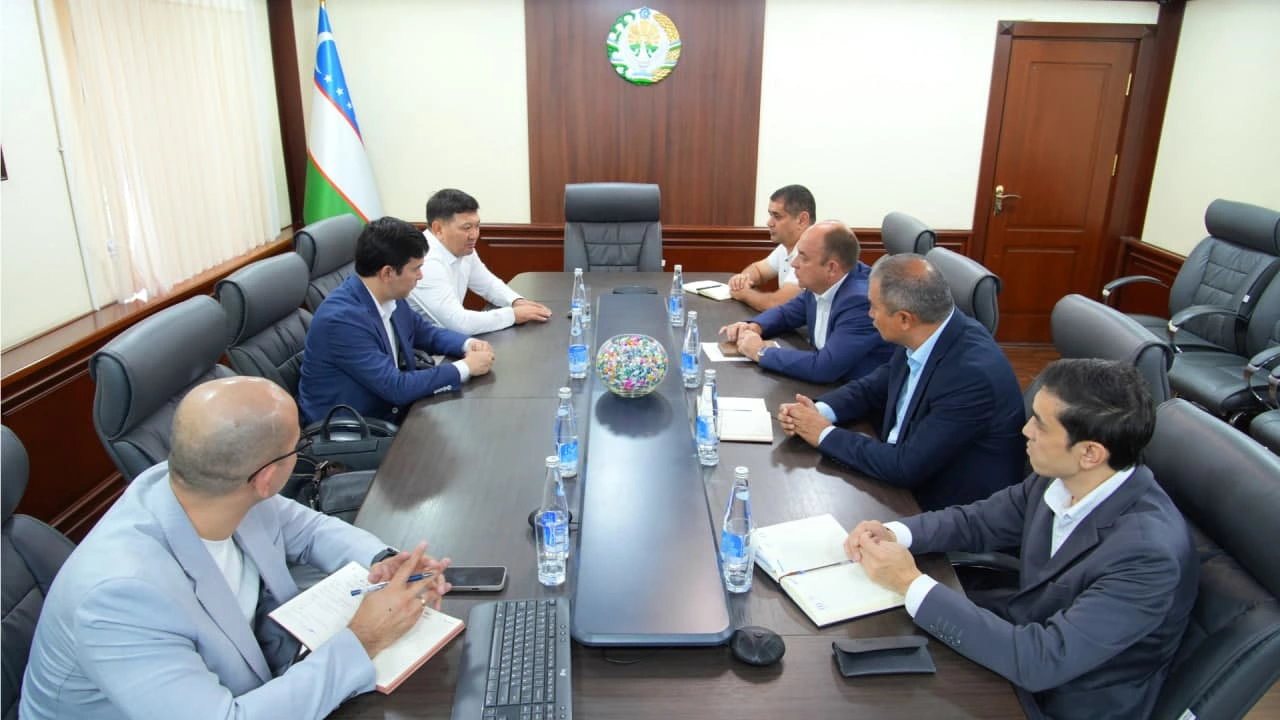
The discussions took place at Uzbekistan’s State Center for
Environmental Expertise, under the National Committee for Ecology
and Climate Change, with the participation of Kazakh environmental
specialists, represented by K.B. Masenov, managing director and
head of the Bureau of Best Available Technologies at the
International Green Technologies and Investment Projects Center,
and Abilaykhan Talgatov, head of the Department for Monitoring,
Analysis and Integrated Environmental Permits.
The Kazakh delegation presented its practical experience in
transitioning industrial enterprises toward BAT principles,
including comprehensive technological audits, the collection and
analysis of sector-specific data, and the development and
application of BAT reference documents.
The sides also discussed approaches to determining technological
and environmental performance indicators for different industrial
sectors and using them to modernize enterprises and reduce their
environmental impact.
“Experience gained in Kazakhstan can help Uzbekistan build its
national best available technologies system around practical
solutions that support both environmental protection and industrial
modernization,” the committee said.
Uzbekistan presented its ongoing efforts to improve
environmental impact assessment and state environmental review
procedures, as well as establish national mechanisms for
introducing BAT across industry.
A key focus of the meeting was a joint project to develop a
digital BAT platform. The sides discussed a potential
implementation framework that would include a unified database of
technological information, digital BAT reference documents and
tools for comparing technologies used by industrial
enterprises.
The proposed platform is expected to help organize data on
industrial processes and environmental performance, improve the
quality of regulatory decisions and provide a digital foundation
for wider BAT adoption.
The working program continued at Green University, where
specialists and industry experts exchanged views on the broader
role of BAT in environmental regulation and industrial
development.
Participants emphasized that BAT should not be viewed solely as
a regulatory tool, but also as a mechanism for technological
modernization, improved resource and energy efficiency, lower
emissions and wastewater discharges, and reduced waste
generation.
The exchange of experience with Kazakhstan is expected to help
Uzbekistan incorporate proven approaches as it develops its
national BAT framework and moves toward a more technology-driven
and preventive model of environmental regulation.