BAKU, Azerbaijan, September 10. The State Oil
Fund of the Republic of Azerbaijan ("SOFAZ"), China Investment
Corporation ("CIC"), Thailand Government Pension Fund, Khazanah
Nasional Berhad, Kumpulan Wang Persaraan (Diperbadankan) and
Indonesia Investment Authority ("INA") have established the
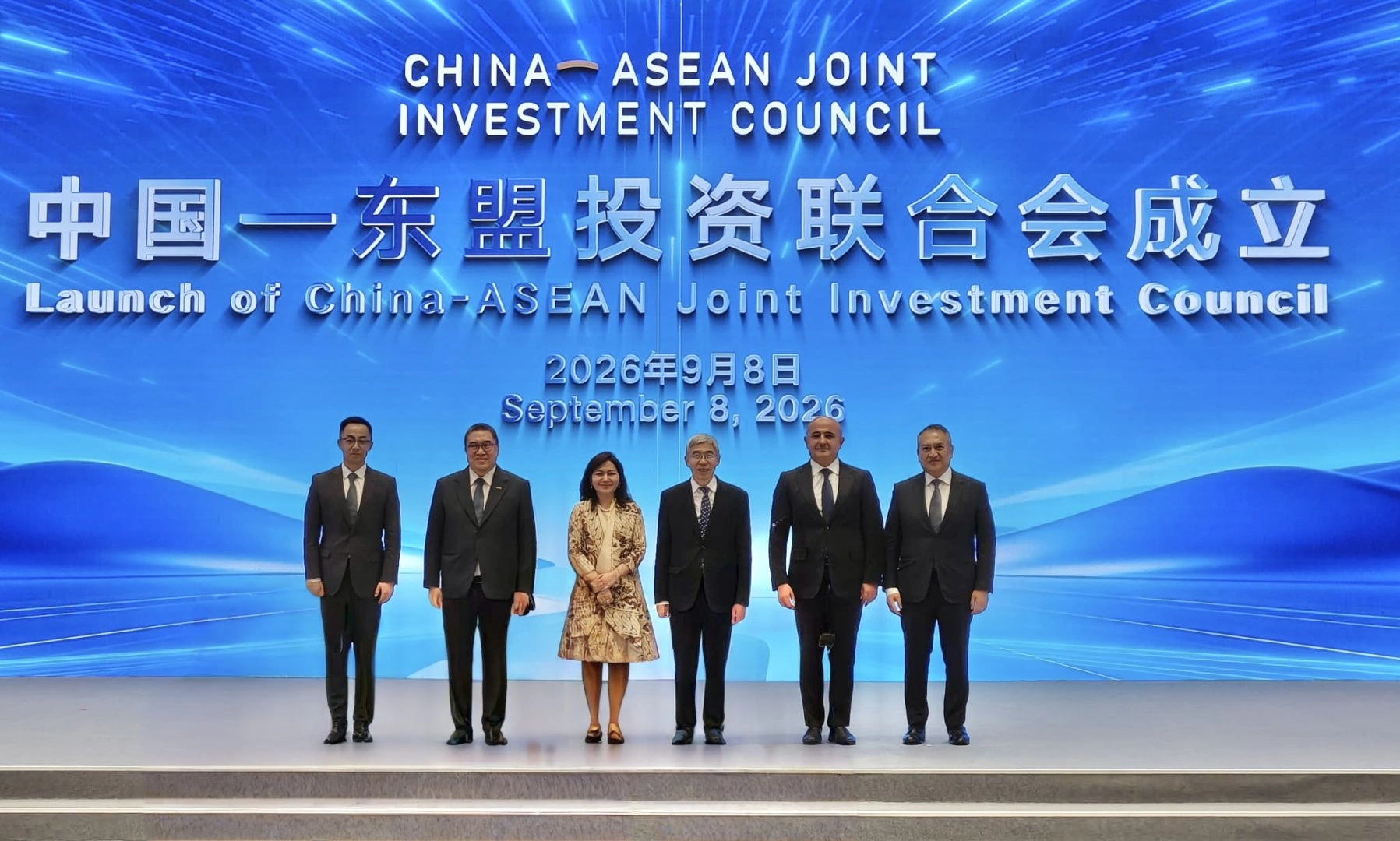
China-ASEAN Joint Investment Council ("CAJIC" or "the
Council").
This was reflected in the statement published by SOFAZ.
The establishment of the Council was announced at the 26th China
International Fair for Investment and Trade ("CIFIT") in Xiamen,
China.
Convened by CIC, with CGS International Securities Pte. Ltd.
serving as Secretariat, CAJIC brings together sovereign wealth
funds and other leading institutional investors to strengthen
long-term relationships, exchange investment perspectives and
explore opportunities for bilateral and multilateral cooperation
across China and Southeast Asia. As a member-led institutional
platform, the Council’s activities will focus on three areas:
People, through investment forums, roundtables and executive
programmes; Insights, through research and knowledge-sharing; and
Capital, through separately governed investment initiatives pursued
where there is mutual interest.
For SOFAZ, the establishment of CAJIC represents a further step
in the evolution of its investment engagement in the region.
Building on more than a decade of investment experience in China,
the Fund has progressively expanded its institutional relationships
with leading Chinese partners. In April 2025, SOFAZ and CIC signed
a Memorandum of Understanding that established a strategic
framework for deeper investment cooperation, knowledge exchange and
the development of mutually beneficial initiatives.
This cooperation moved into a new phase in April 2026, when
SOFAZ, CIC and INA jointly established the Galaxy Orientis
China-ASEAN Investment Program (CAIP). The sovereign-led private
equity platform reached a first close of approximately US$520
million, with a target size of US$1 billion, and is focused on
long-term investment opportunities linked to the growing economic
and industrial integration between China and Southeast Asia. The
Program targets opportunities across sectors including industrials,
healthcare, consumer, business services and technology.
CAIP and CAJIC are separate but complementary initiatives. While
CAJIC provides a broader institutional platform for developing
relationships, sharing insights and identifying areas of
cooperation, CAIP provides a jointly governed mechanism through
which participating sovereign institutions can deploy capital into
specific investment opportunities. Through CAJIC, SOFAZ is also
connected with a wider group of sovereign and long-term investors,
creating additional channels for market insight, relationship
building and the identification of future investment partnerships.
CAIP operates under governance arrangements separate from
CAJIC.
This progression also has a wider strategic dimension. As the
Middle Corridor strengthens physical connectivity between Asia and
Europe, Azerbaijan’s position as a link between the two regions is
becoming increasingly important. In parallel, SOFAZ’s engagement
with leading Asian sovereign and long-term investors is
strengthening the financial and institutional ties that complement
these physical connections. For SOFAZ, CAIP and CAJIC provide
practical channels through which these relationships can develop
over time.
As one of the founding members of CAJIC, SOFAZ will contribute
its experience as a global institutional investor while continuing
to deepen relationships with leading sovereign investment
institutions across the region. For a long-term investor, trusted
partners, local market knowledge and the ability to invest
alongside strong institutions can be as important as access to
capital itself. Participation in the Council therefore complements
the Fund's long-term approach to portfolio diversification and
partnership building, and supports its objective of accessing
high-quality investment opportunities through strong institutional
networks and aligned long-term capital.