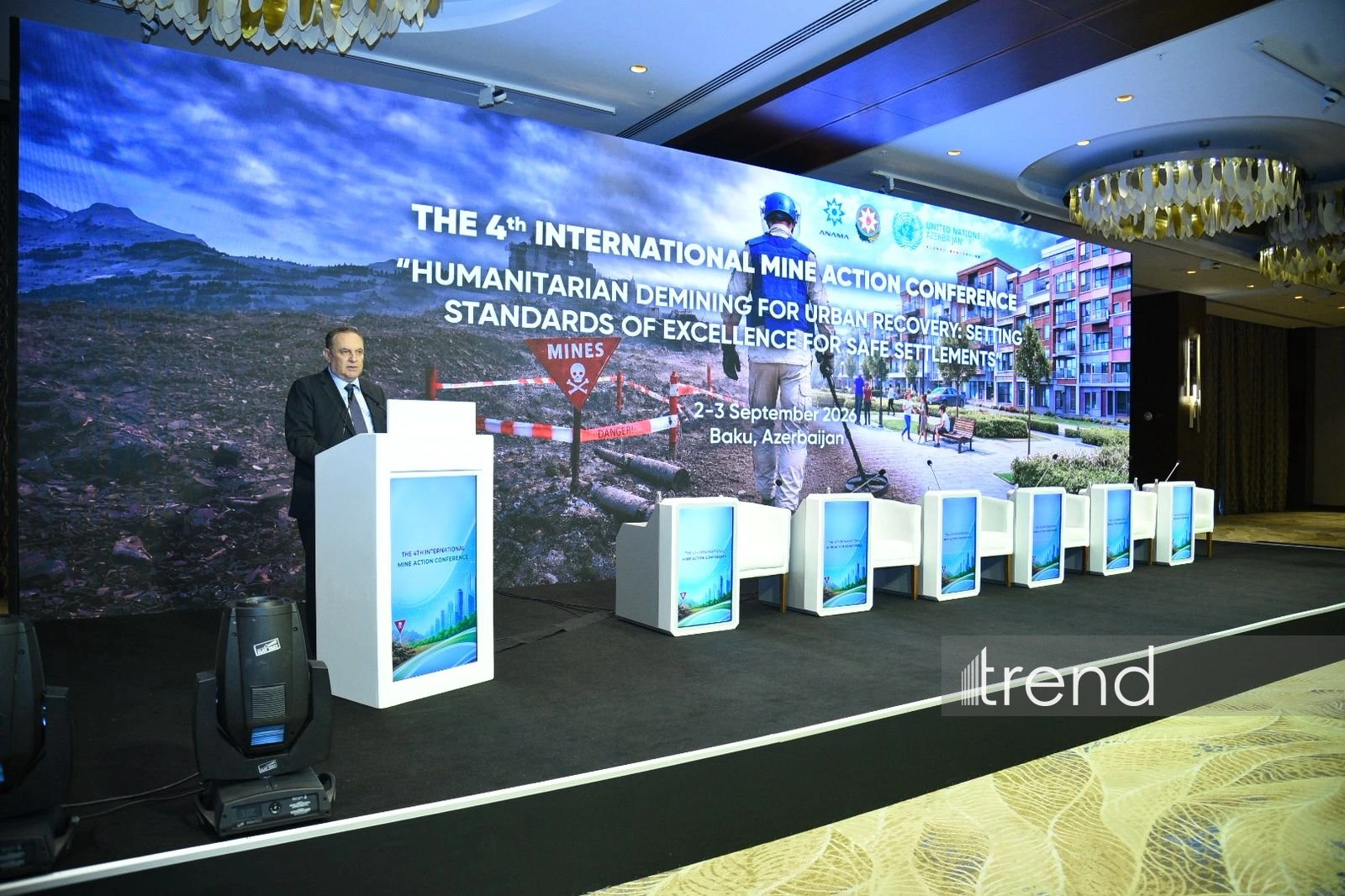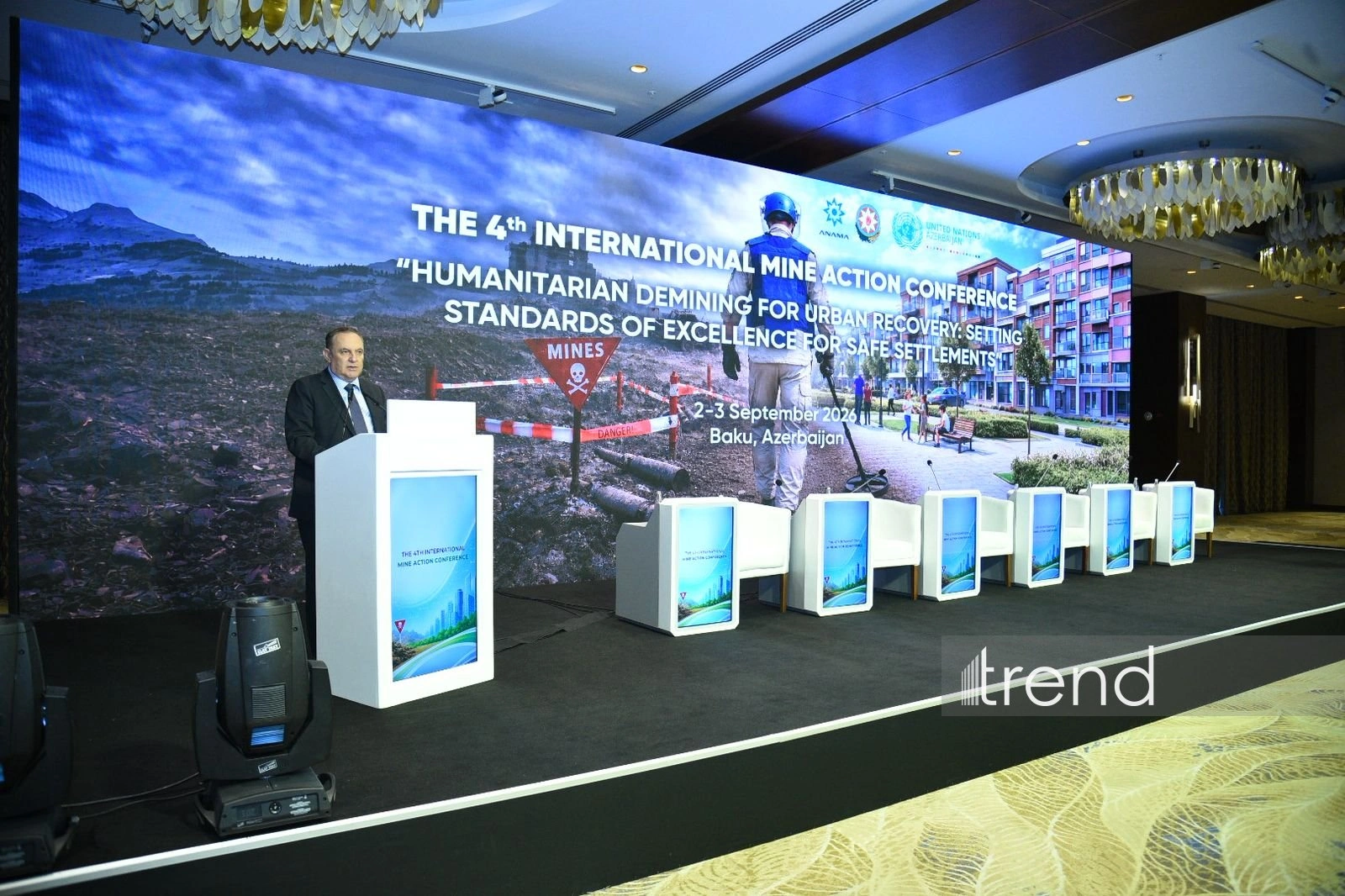
BAKU, Azerbaijan, September 3. The 4th
International Mine Action Conference, themed “Humanitarian Demining
for Urban Recovery: Setting Standards of Excellence for Safe
Settlements,” has adopted a final statement, Trend’s correspondent
reports from the event.
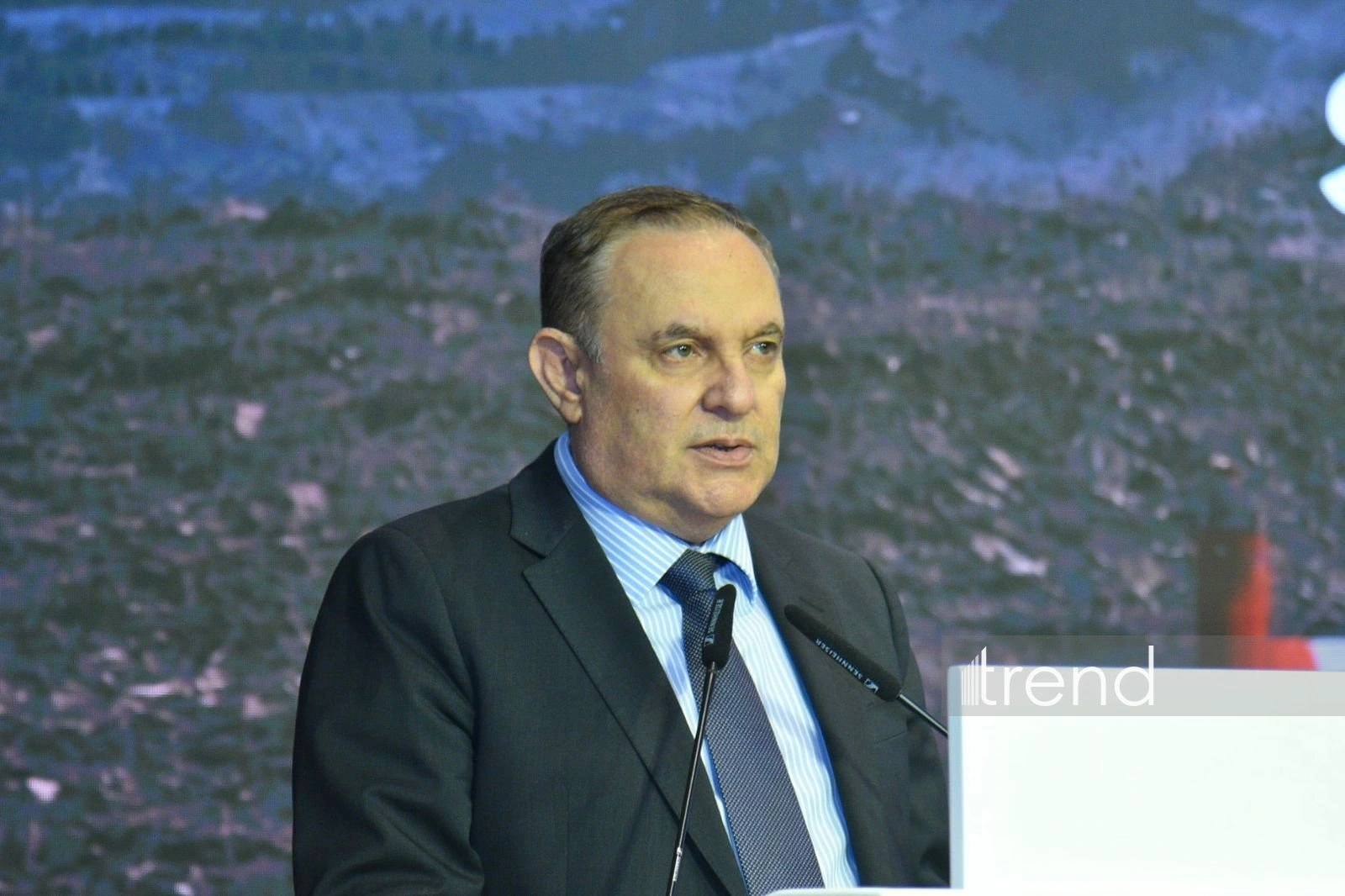
The statement was delivered by Shamil Rzayev, First Deputy
Chairman of the Board of the Azerbaijan National Agency for Mine
Action (ANAMA).
“We, the participants of the 4th International Mine Action
Conference, held on 2–3 September 2026, have convened and
delibarated on the role of humanitarian demining in enabling urban
recovery, safe return, resilient communities and sustainable
developmentin mine-affected territories.
In this regard, we,
Expressing deep concern with the devastating and indiscriminate
impact of landmines and explosive remnants of war that continue to
kill, injure and traumatize civilians, including children, women
and other non-combatants;
Recognizing that landmine and explosive ordnance contamination
remains a serious obstacle to safe return, reconstruction, urban
recovery, infrastructure development, agriculture, livelihoods and
broader socio-economic progress;
Acknowledging that humanitarian demining is an essential
precondition for the restoration of cities, towns and villages
affected by conflict, and for the creation of safe, resilient and
sustainable settlements;
Stressing that safe land is the foundation for the return of
displaced populations, the reconstruction of housing and public
infrastructure, the reopening of roads, schools, hospitals and
essential services, and the revival of social and economic
life;
Sharing the principles and values of the existing international
legal instruments that regulate or ban the use of landmines,
cluster munitions and other explosive remnants of war, while
encouraging all to take steps towards formal adherence to these
instruments;
Recalling resolution No. 2365 (2017) of 30 June 2017 of the
United Nations Security Council and all its previous resolutions on
mine action;
Recalling also the resolution No. A/RES/80/74 of 5 December 2025
of the United Nations General Assembly and all its previous
resolutions on assistance in mine action;
Welcoming the UN Human Rights Council resolution titled “The
impact of anti-personnel mines on the full enjoyment of all human
rights” No. 58/22, adopted on 4 April 2025;
Taking note of UN Secretary-General's report titled “Assistance
in Mine Action” No. A/80/272, issued on 28 July 2025, in which the
long-term risks presented by urban contamination are
recognized;
Taking note of the United Nations Mine Action Strategy and the
United Nations Policy on Victim Assistance in Mine Action;
Taking note of the International Mine Action Standards as an
important framework for safe, effective, accountable and
quality-assured mine action operations;
Emphasizing the importance of integrating mine action into
national recovery, reconstruction, urban planning, infrastructure
development and sustainable development policies;
Recognizing the humanitarian mine action as an enabler of
peacebuilding, reconciliation and rehabilitation in post-conflict
territories;
Acknowledging the growing role of technology, innovation,
artificial intelligence, geographic information systems, mechanical
assets, animal detection systems and other advanced approaches in
improving the safety, efficiency and effectiveness of humanitarian
demining;
Emphasizing the importance of making mine action part of the
international peace agenda;
Expressing concern over the serious and lasting humanitarian,
social and economic consequences of landmines and explosive
remnants of war on civilian populations and mine-affected
communities;
Stressing the need to ensure comprehensive assistance to mine
victims, including medical care, rehabilitation, psychosocial
support, social protection and socio-economic reintegration;
Commending the previous International Conferences on Mine Action
held in Azerbaijan in 2022, 2023 and 2024 and their outcome
documents;
1. Call for the full integration of humanitarian mine action
into urban recovery, reconstruction, safe return and sustainable
development processes in mine-affected countries;
2. Emphasize that demining should be considered one of the first
and most important conditions for the restoration of safe
settlements, the rebuilding of destroyed cities and villages, and
the return of displaced populations to their places of origin;
3. Encourage affected States, relevant United Nations agencies,
regional organizations, international partners, donors,
non-governmental organizations and other stakeholders to strengthen
coordination between mine action authorities, urban planners,
infrastructure agencies, local administrations, construction
companies, environmental specialists and affected communities;
4. Stress the need to be better aligned with donor support with
recovery and reconstruction priorities so that humanitarian mine
action operations can more effectively accelerate safe return,
infrastructure development, economic recovery and the restoration
of essential public services;
5. Encourage the wider application of innovative technologies
and modern operational approaches, while ensuring that all new
tools and methods are adapted to national contexts, field
realities, safety requirements and international standards;
6. Stress the urgent need for comprehensive measures to prevent
further incidents caused by landmines and explosive remnants of
war, including expanded explosive ordnance risk education,
community awareness, and targeted preventive measures for returning
population, construction workers, farmers and other high-risk
groups;
7. Call for robust and people-centered support to mine victims,
including emergency medical assistance, long-term rehabilitation,
prosthetics, psychological support, inclusive employment
opportunities and full reintegration into society;
8. Emphasize the importance of mainstreaming mine action into
the implementation of the 2030 Agenda for Sustainable Development,
recognizing that mine action contributes directly to human
security, poverty reduction, safe settlements, infrastructure
development, food security and sustainable livelihoods;
9. Recognize the experience of Azerbaijan in integrating
humanitarian demining into large-scale reconstruction,
infrastructure development and the return of former internally
displaced persons, and welcome the opportunity to share lessons
learned with other mine-affected countries;
10. Express solidarity with Azerbaijan, as well as with all
mine-affected countries, in addressing the immense humanitarian,
social and economic consequences of landmine contamination, and
call on the international community to further support humanitarian
mine action efforts;
11. Express gratitude to the Government of the Republic of
Azerbaijan, the Mine Action Agency of the Republic of Azerbaijan
and the United Nations Azerbaijan for the generous support,
excellent organization and hospitality in the conduct of this
Conference;
12. Reaffirm our shared commitment to advancing humanitarian
mine action as a foundation for safe return, resilient communities,
sustainable urban recovery and long-term peace," the statement
said.