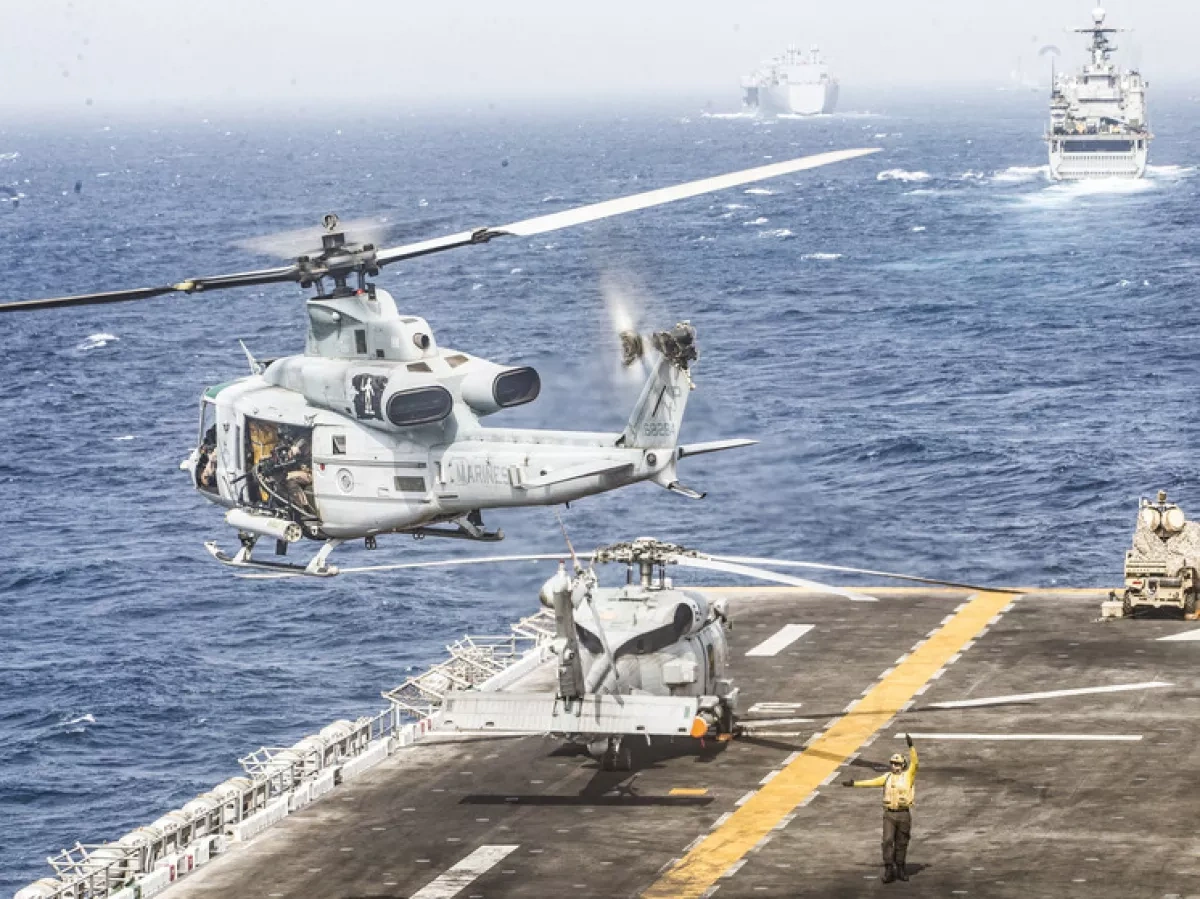
US forces escorted 40 commercial vessels carrying about 18 million barrels of oil through the Strait of Hormuz on Tuesday, September 1, marking the largest such wartime operation since the conflict with Iran began more than six months ago, according to US officials cited by CNN.
The operation came amid renewed US-Iran hostilities and involved a combination of American air, naval and space capabilities aimed at protecting commercial shipping through the strategically vital waterway.
Before the war, roughly 20 million barrels of oil passed through the Strait of Hormuz each day. The 18 million barrels escorted on Tuesday therefore represented close to a normal pre-war day of oil flows, despite the severe disruption to shipping caused by the conflict.
US forces simultaneously carried out strikes against Iranian military capabilities that Washington said posed a threat to commercial shipping. Targets included air-defence systems, radar installations, maritime assets, mine-laying capabilities and communications facilities. American forces also fended off waves of Iranian drone attacks during the escort operation.
The US military also neutralised anti-ship cruise missiles during the operation, according to reports citing officials familiar with the mission.
The record oil movement comes as maritime traffic through the strait remains sharply below pre-war levels. Preliminary Kpler data showed only four commodity vessels transited the waterway on Tuesday, compared with a 10-day average of about 13. The figures may underestimate actual traffic because some ships have switched off their transponders.
The Strait of Hormuz accounted for nearly one-fifth of global oil shipments before the conflict and remains a critical chokepoint for international energy markets. Iran has continued to threaten commercial shipping, while the US has sought to restore freedom of navigation through military operations and escorts.
The latest escalation has also affected oil markets. Brent crude was trading around $95 a barrel on Thursday, while renewed restrictions and attacks on shipping have heightened concerns over the security of Middle Eastern energy supplies.
By Tamilla Hasanova