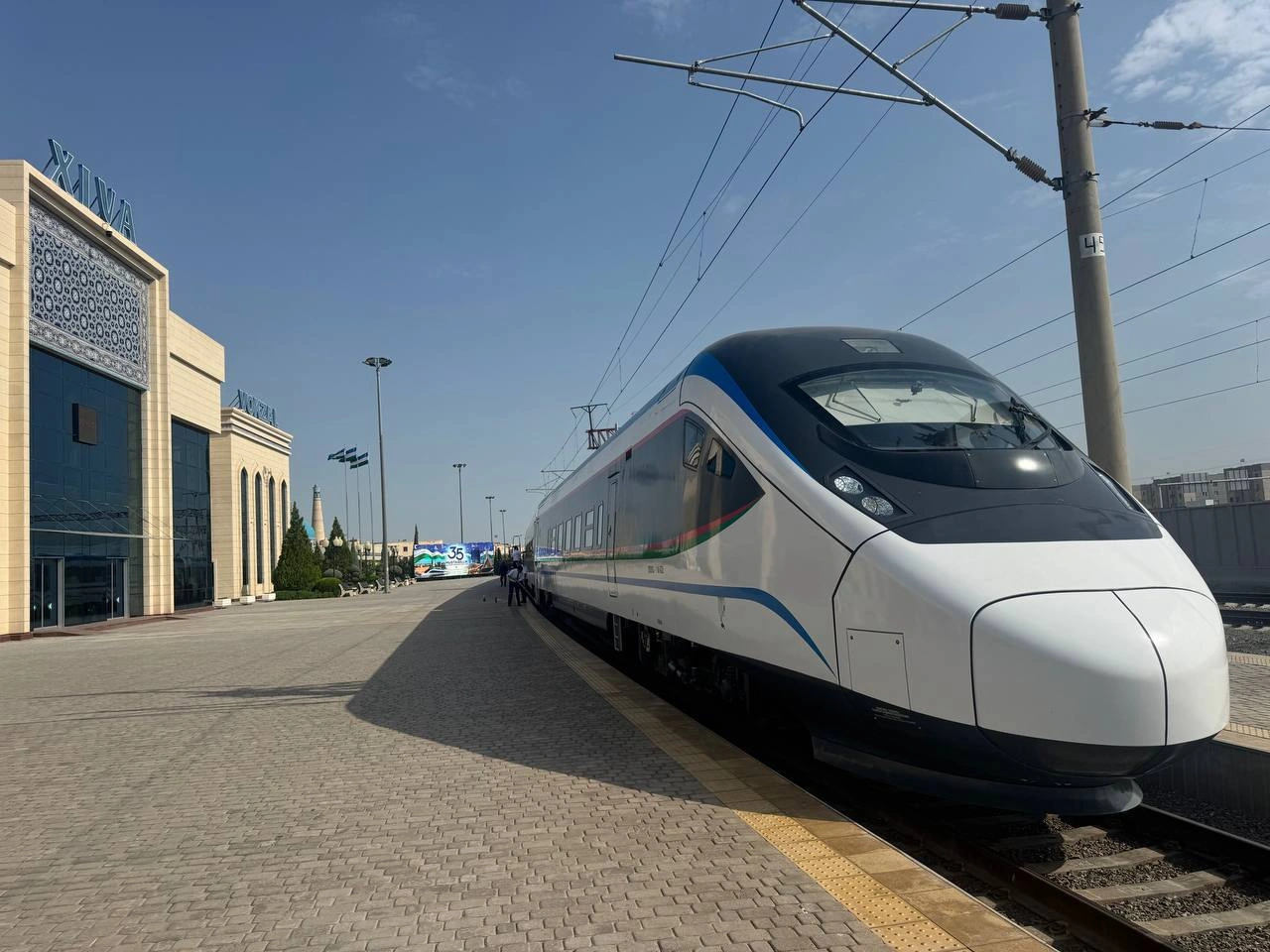
BAKU, Azerbaijan, September 3. Modern CR200J
high-speed electric trains manufactured by China’s CRRC Dalian Co.,
Ltd. have begun carrying passengers on the Urgench-Khiva route in
Uzbekistan’s Khorezm region, introducing upgraded rail services
between Urgench Airport, Urgench and the historic city of
Khiva.
This was reflected in the statement by the Ministry of Transport
of Uzbekistan.
“The launch of the modern electric train is aimed at providing
passengers with more comfortable, convenient, and high-quality
transportation services,” Uzbekistan’s ministry said.
According to the information, the trains are equipped with
Economy-class seating, with each seat featuring a USB charging
port. The passenger cars are also fitted with climate-control
systems designed to maintain comfortable temperatures throughout
the journey.
The six-car electric train can accommodate up to 415 passengers
and has a maximum operating speed of 160 kilometers per hour.
Specially designated spaces are available for passengers with
disabilities, according to the information provided.
Train No. 7055 operates from Urgench Airport to Khiva, departing
the airport at 8:40 a.m. and arriving in Khiva at 9:22 a.m. The
train makes a stop in Urgench from 8:59 a.m. to 9:02 a.m.
The return service, Train No. 7058, departs Khiva at 9 p.m.,
reaches Urgench at 9:20 p.m. and departs at 9:23 p.m., before
arriving at Urgench Airport at 9:42 p.m.
The ticket price is set at 25,000 soums (about $2) for adults
and 14,000 soums (around $1.2) for children, based on an exchange
rate of around 12,500 soums per dollar.
The launch adds a modern rail option for passengers traveling
between Urgench and Khiva and is particularly relevant for tourism,
given Khiva’s status as one of Uzbekistan’s major historical
destinations.
The service also strengthens transport connectivity between
Urgench Airport and Khiva, allowing passengers to travel directly
between the airport and the tourist center by rail. The combination
of a 160-km/h operating speed, passenger amenities and relatively
low fares could make the service an attractive alternative to road
transportation along the route.