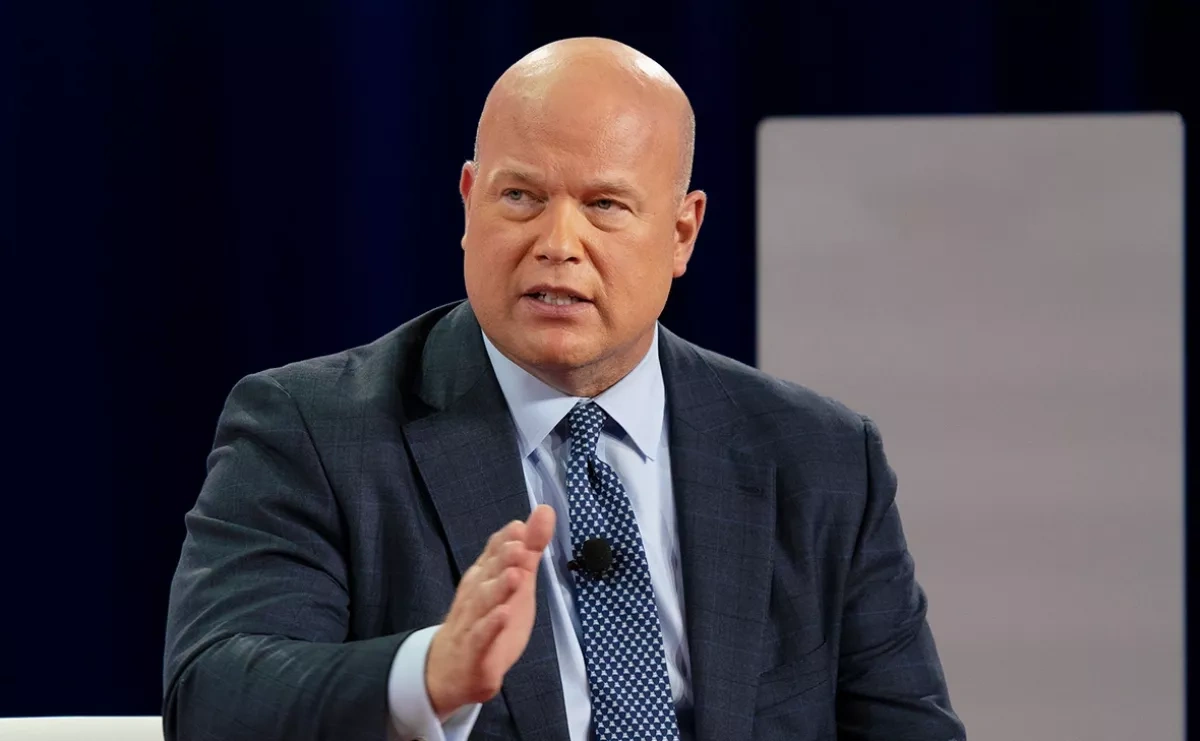
US Ambassador to NATO Matthew Whitaker said Russia’s ability to threaten the alliance in the near term remained limited because its forces were still heavily engaged in Ukraine.
“They’re bogged down right now in Ukraine. They can’t make any progress on the front there, and so their threat to NATO in the near term is low,” Whitaker said in an interview with Fox Business.
However, he warned that Russia’s past actions made it difficult to rule out further confrontation.
“That aggressive action, that invasion of Ukraine, the prior annexation of Crimea, that leads us to believe they can be unpredictable and they could be willing to take action against a NATO country,” he said.
His comments came as concerns grew in Europe over what US officials describe as a widening Russian drone campaign and other potential threats to NATO members. Germany has accused Russia of attempting an explosive drone attack at an airport, prompting expressions of solidarity from the alliance.
Whitaker sought to reassure European allies that NATO remained committed to collective defence, while arguing that European countries needed to strengthen their own military capabilities.
“We remain committed to NATO’s collective defence but we’re pushing our allies in Brussels to increase capabilities to deter these types of threats,” he said.
The warning comes amid continued efforts by Washington to pressure Moscow economically while keeping open the possibility of negotiations to end the war.
US Treasury Secretary Scott Bessent has said there will be “no economic relief, no agreements until this war ends”, while arguing that diplomacy remains necessary to resolve the conflict.
Whitaker echoed that position, saying the United States was prepared to help bring the war to an end but that both sides would have to engage in negotiations.
“The United States stands ready, willing and able to help bring peace in that conflict but it’s going to take both sides, the Ukrainians and the Russians to come to the table and roll up their sleeves and negotiate a resolution,” he said.
He added that recent statements from Russian President Vladimir Putin had not given him much confidence that Moscow was ready for such an outcome.
“The recent statements by the Russian president don’t lead me to be optimistic in that,” Whitaker said.
Whitaker nevertheless said Washington did not expect the United States to be drawn directly into military action in Europe, arguing that NATO’s growing strength should serve as a deterrent.
“What they would find if they did that would be a very strong and capable alliance that is every day getting stronger,” he said.
He also stressed the importance of ensuring Ukraine could withstand continued Russian pressure while diplomatic efforts remained stalled.
“We need to make sure that Ukraine can defend itself as long as it takes them until we can get that war to end,” Whitaker said.
By Aghakazim Guliyev