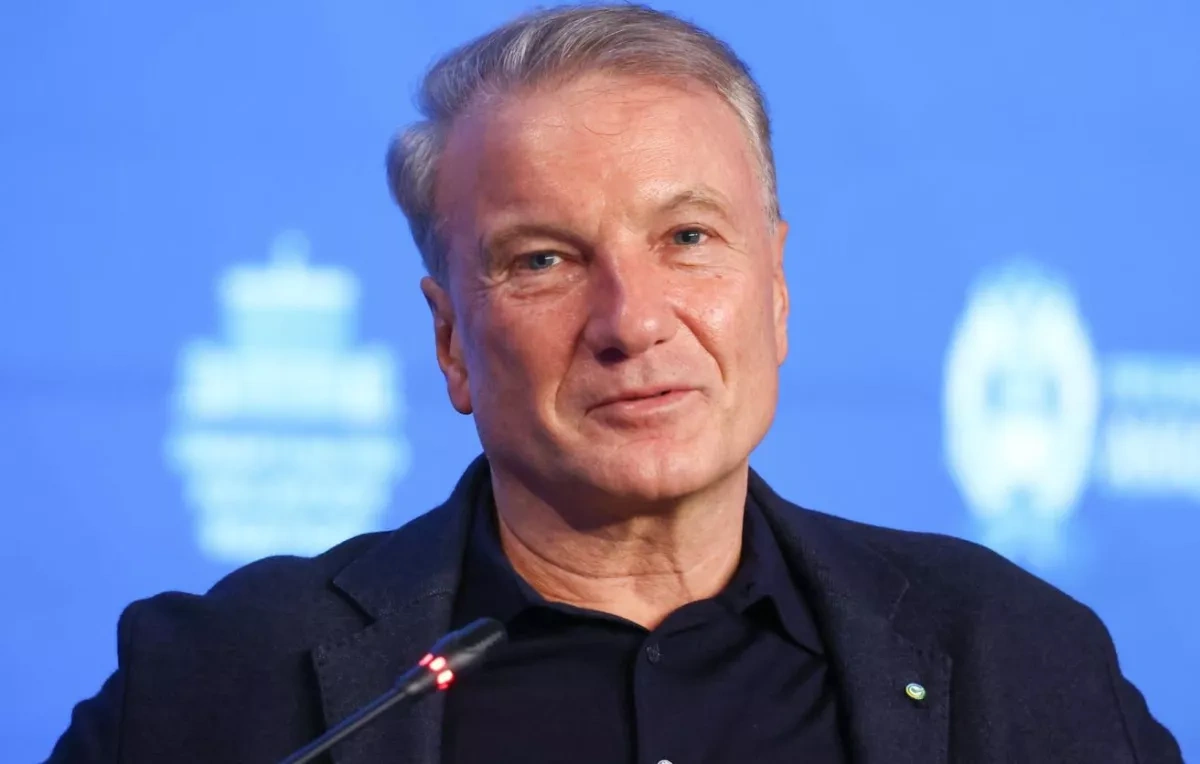
The Russian economy has entered a state of “overcooling,” with several key macroeconomic indicators pointing to a sharper-than-expected slowdown, Sberbank CEO German Gref said on the sidelines of the Eastern Economic Forum.
“I think it is already obvious,” Gref said, noting that while the Central Bank describes the situation as a gradual slowdown, Sberbank considers it “cooling — and now, overcooling.”
Gref pointed to Russia’s GDP growth of just 0.6% in the first half of the year, well below the economy’s estimated potential growth rate of 1.5–2.5% cited by the Central Bank. He also highlighted a deterioration in the business climate, as well as trends in unemployment and consumer spending, as signs of mounting economic weakness.
According to Russia’s Ministry of Economic Development, GDP increased by 0.6% year-on-year in July, down from 1.7% growth in June. For the January–July period, economic growth also stood at 0.6%.
Gref said a meaningful turning point would be unlikely until market interest rates decline to between 10% and 12%.
“We will not see a turning point until market interest rates normalise and fall within the 10–12% range,” he said, stressing that businesses need greater support amid the current macroeconomic conditions.
The comments come as Russia continues to grapple with high borrowing costs and slowing economic activity. Prime Minister Mikhail Mishustin has said he expects the economy to return to sustainable and balanced growth in 2027.
However, the Central Bank has recently taken a more cautious view. In its latest consensus forecast, it lowered its 2027 GDP growth projection from 1.3% to 1.2% and raised its forecast for the average key interest rate from 12.2% to 12.4%. Economists have also revised their expectations for the ruble exchange rate downward.
By Vugar Khalilov