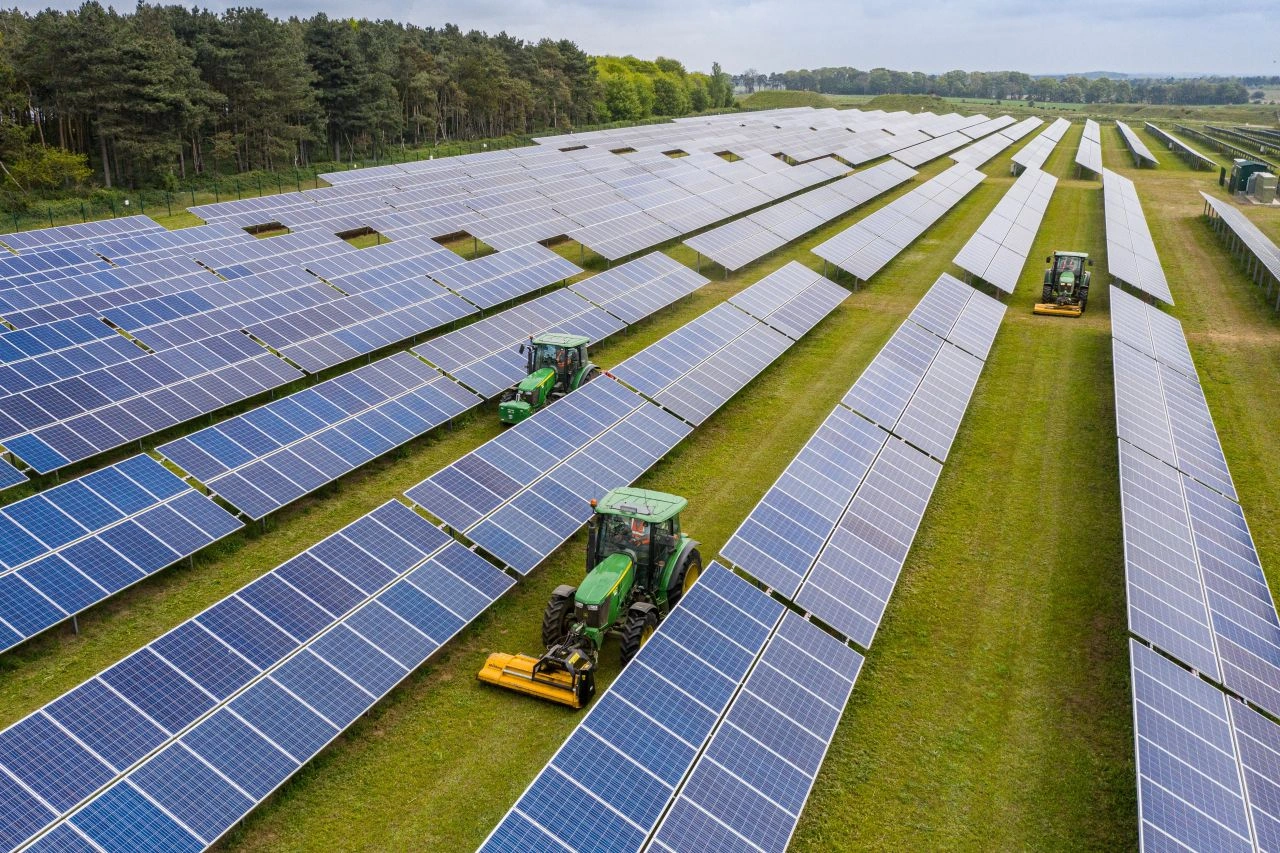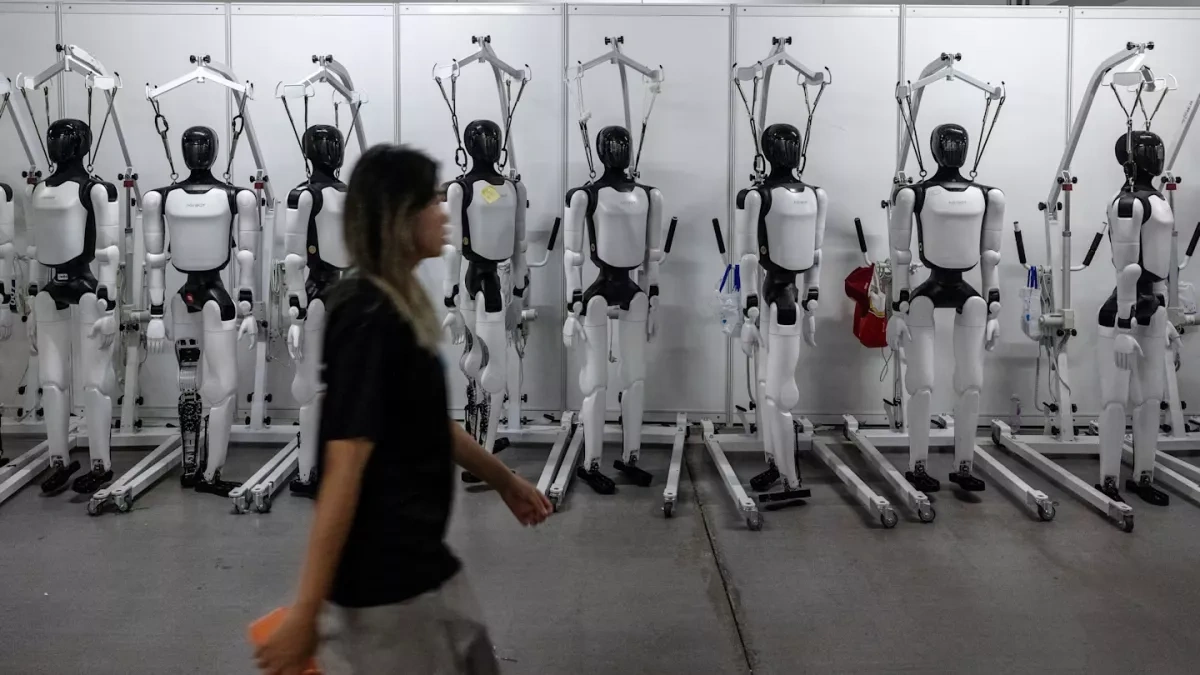
China’s humanoid robots may be grabbing global attention with backflips, kung-fu demonstrations and awkward performances, but the country’s more consequential robotics revolution is taking place largely out of the spotlight — in factories, warehouses, hospitals and ports.
Recent humanoid competitions held alongside a robotics conference in Beijing highlighted both the rapid progress and current limitations of the technology. Robots stumbled, misjudged obstacles and struggled with basic tasks, creating spectacular demonstrations that nevertheless helped fuel investor enthusiasm. Chinese humanoid maker Unitree, whose robots went viral for performing backflips and martial-arts moves, went public last month at a valuation that exceeded 1,200 times its trailing earnings by the end of its first trading day, according to Financial Times.
But China’s industrial robotics sector offers a more practical picture of what automation can already achieve.
Chinese companies installed around 295,000 industrial robots domestically in 2024, accounting for 54 per cent of global installations, according to the International Federation of Robotics. China already operated more than 2 million industrial robots two years ago — roughly 4.5 times Japan’s total.
The country’s robotics industry generated more than Rmb300 billion ($44 billion) in revenue last year, with average annual growth of more than 20 per cent over five years, according to China’s Ministry of Industry and Information Technology. Industrial robot exports grew 49 per cent in 2025, making China a net exporter for the first time.
Chinese manufacturers have also overtaken foreign competitors in their domestic market, which was previously dominated by Fanuc, ABB, Yaskawa and KUKA.
The applications are increasingly visible. Autonomous mobile robots are being deployed in warehouses, robotic surgical systems in hospitals and specialised cleaning machines in high-rise buildings. BYD’s major Xi’an manufacturing facility uses thousands of robotic arms on electric-vehicle assembly lines, while Shanghai’s Yangshan Port operates the world’s largest automated terminal with automated guided vehicles and remotely controlled cranes.
The logic behind this expansion is straightforward: most industrial tasks do not require machines that resemble humans. They require robots designed to perform specific jobs efficiently and repeatedly.
That raises a fundamental question about the billions being invested in humanoids. The human shape may be emotionally appealing, but it can also introduce unnecessary complexity. Bipedal movement requires sophisticated software, motors and balancing systems that can make humanoids far more expensive than specialised machines.
Still, proponents have two important arguments. First, human environments are already designed around the human body. A humanoid could potentially operate existing tools and navigate spaces without expensive infrastructure changes.
Second, advances in artificial intelligence could make humanoids more versatile. AI systems capable of understanding and predicting physical environments could allow robots to learn multiple tasks, while their human-like form could enable them to learn from enormous amounts of video showing people performing those tasks.
That combination could eventually produce a major breakthrough in robotics.
For now, however, the gap between impressive demonstrations and reliable commercial deployment remains substantial. China’s experience suggests that the biggest robotics transformation may not come from machines that look like people, but from specialised robots quietly performing useful jobs at enormous scale.
Robots may be the future — but for now, that future looks far less humanoid than the hype suggests.
By Sabina Mammadli