BAKU, Azerbaijan, September 2. A thorough,
hard-headed look at UN programs and agencies is needed, former U.S.
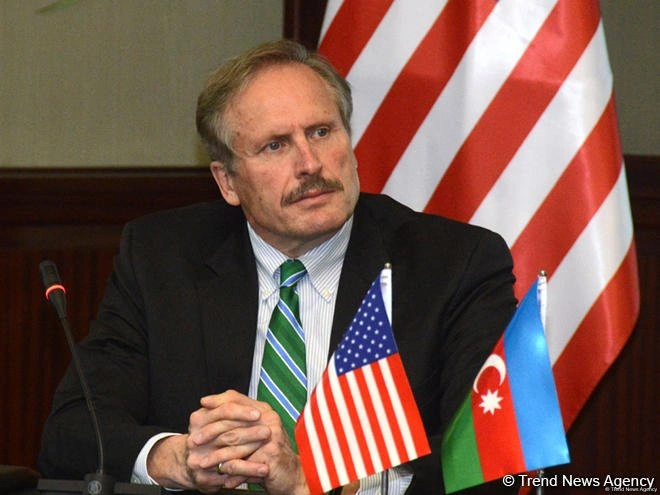
ambassador to Azerbaijan Robert Cekuta told Trend.
The former ambassador emphasized that there is a strong sense
around the world that the UN needs reform and needs it now.
“The problem is a lack of agreement on what exactly to tackle
and how to do so. The United Nations has severe budgetary problems.
Some countries want changes to the Security Council. There is also
the reality that the UN is really subject to the will of its member
countries, not the other way around. And there is the reality that
countries enjoying certain roles and prerogatives today do not want
to give them up,” he explained.
According to Cekuta, widespread recognition of the problems
facing the UN and the multilateral system today, and the election
of a new secretary-general, means there might be a chance for
meaningful, concrete reforms/changes.
“But we have to be realistic in terms of what to expect and to
what we can try to tackle.
With those thoughts in mind, I would suggest a thorough,
hard-headed look at UN programs and agencies. Most, if not all,
were created because members wanted them; but numerous experts
complain there are often a number of agencies doing the same thing,
that some are more efficient/effective than others, and that some
may have outlived their usefulness. Secretaries-general themselves
have said this. So, tackle this situation first,” he added.
The former U.S. ambassador believes it is necessary to show
member countries measurable progress.
“Putting the UN’s financial situation in order could create the
conditions for more extensive and far-reaching—and, most
importantly, absolutely necessary—structural reforms,” he
concluded.
During the “SCO Plus” meeting held on September 2 in Bishkek,
the capital of the Kyrgyz Republic, the necessity of reforming the
UN was widely discussed.
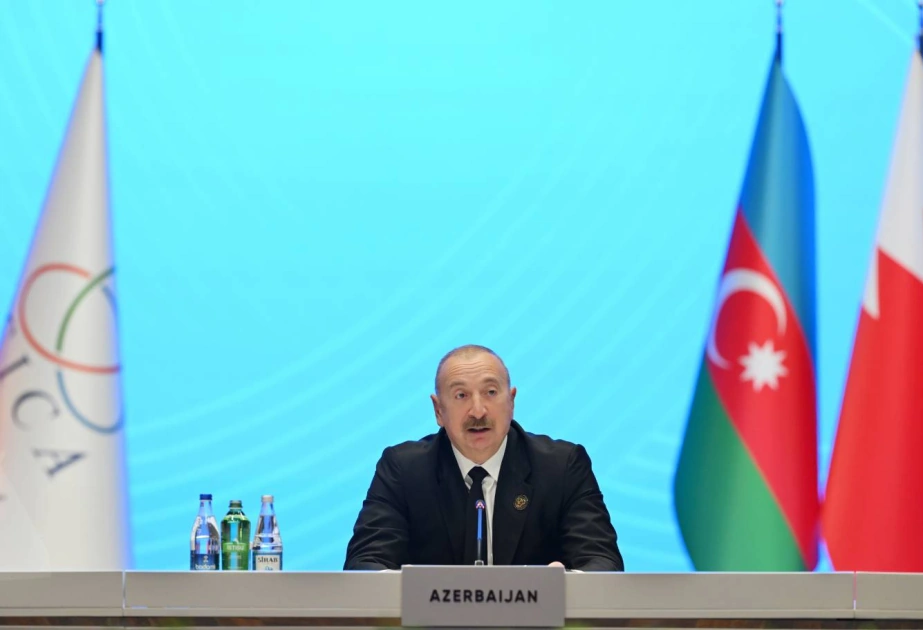
Speaking at the event, President of the Republic of Azerbaijan
Ilham Aliyev emphasized that the development of appropriate
mechanisms is required for the swift implementation of UN Security
Council resolutions.
“A little over a year ago, Azerbaijan and Armenia initialed the
text of the peace agreement, putting an end to a 30-year conflict.
Thus, the South Caucasus region, which was a long-standing conflict
zone, is becoming a zone of peace.
Four resolutions adopted by the UN Security Council in 1993 were
implemented three years ago, 30 years later. Azerbaijan is already
supplying petroleum products to Armenia and providing transit for
third-country cargo. Together with Armenia, we are working to
increase the volume of mutual trade, expand the range of goods, and
create new overland transport links. However, unfortunately, the UN
played no role in the implementation of these resolutions.
Azerbaijan entirely restored its sovereignty and territorial
integrity on its own. The development of appropriate mechanisms is
required for the swift implementation of UN Security Council
resolutions. If implemented, this would serve to enhance the UN's
prestige and the organization's role in conflict resolution,” the
head of state said.
In addition, Kyrgyz President Sadyr Japarov stated that existing
shortcomings in the work of the United Nations should not serve as
a pretext for weakening its role or bypassing the organization.
According to him, on the contrary, they underscore the need to work
together to strengthen the UN, enhance its effectiveness, and
improve its mechanisms in line with contemporary realities.
“Kyrgyzstan supports the reform of the United Nations, including
its Security Council. Such reform must be carried out through broad
consensus,” Japarov said.
Kazakh President Kassym-Jomart Tokayev also emphasized the need
to strengthen the organization and enhance its effectiveness,
noting that the UN must remain the core of the international
system, and its Charter—the universal foundation of international
law. According to him, amid acute geopolitical tensions, it is
particularly important to preserve and strengthen the UN’s central
coordinating role.
Russian President Vladimir Putin also stated the need to improve
the UN’s effectiveness, expand representation in its
bodies—including the Security Council, to include countries from
the Global South and East, and adapt the organization to
fundamental changes in global politics and the economy.
Pakistani Prime Minister Shehbaz Sharif was even more
unequivocal: “Today, the UN is in dire need of reform. It must
become more accountable and more responsive.”
UN Secretary-General António Guterres, for his part, has
repeatedly spoken of the need for international institutions to
adapt to modern realities.
"Our relationships are changing, but multilateral organizations
still largely reflect the realities of 1945. We must reform our
multilateral institutions, including the United Nations and the
Bretton Woods system, so that they reflect today’s realities and
increase the representation and influence of developing countries
in order to build a just world order,” he said.