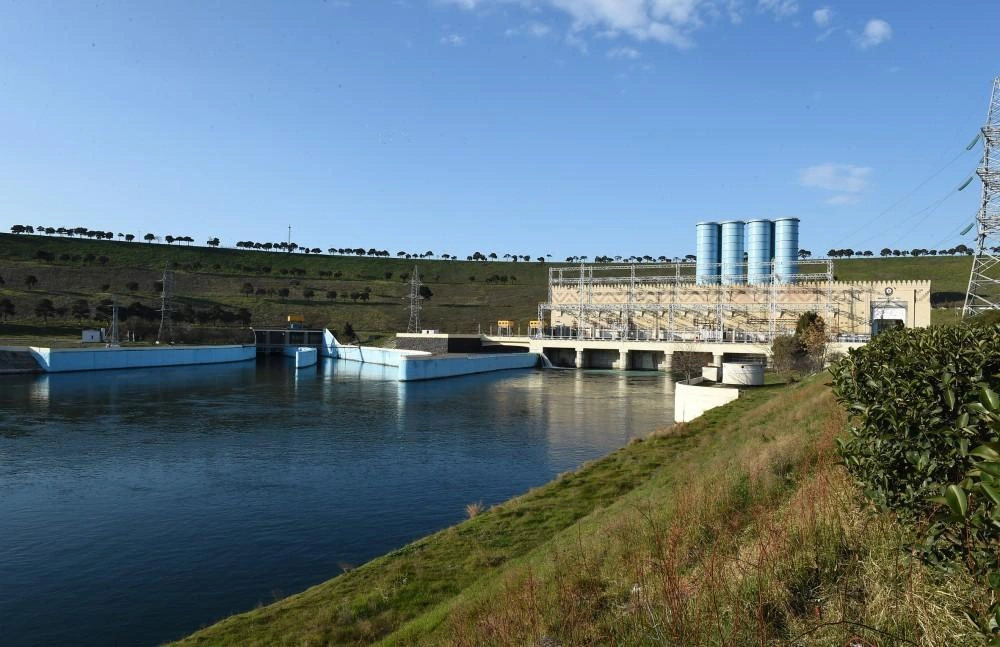
BAKU, Azerbaijan, September 2. The Toganali
small hydropower plant, with a total capacity of 4.1 megawatts,
generated 27.2 million kilowatt-hours of electricity from the date
it was commissioned through August this year.
The Ministry of Energy said this in a statement.
The Toganali small hydropower plant, located on the Kurekchay
River in Azerbaijan’s Goygol district, was commissioned two years
ago, on Sept. 2, 2024.
“The operation of hydropower plants not only contributes to the
development of ‘green energy,’ but also helps reduce greenhouse gas
emissions and protect the environment,” the statement said.
Azerbaijan is implementing large-scale projects to increase
electricity generation and diversify its energy system. In
particular, the development of renewable energy sources is one of
the key priorities of the country’s energy strategy. Large
investment projects to build solar and wind power plants are
currently being implemented in cooperation with BP, Masdar, ACWA
Power, China Gezhouba Group Overseas Investment, SOCAR Green and
other partners. As a result of these projects, thousands of
megawatts of new generation capacity are expected to be added to
Azerbaijan’s energy balance in the coming years, reducing domestic
demand for natural gas and allowing more gas to be exported.
According to Energy Minister Parviz Shahbazov, these projects
are expected to increase the share of renewable energy sources in
Azerbaijan’s energy balance to around 43% by 2035.
The minister said Azerbaijan is implementing strategic projects
aimed at establishing a new energy and investment platform between
Central Asia and neighboring regions. According to him, one of the
key initiatives is the Central Asia-Azerbaijan Green Energy
Corridor project.
“The creation of a Trans-Caspian energy corridor that will
connect the electricity systems of Azerbaijan, Kazakhstan and
Uzbekistan is part of the strategic vision of our countries. This
project also creates broad opportunities for the development of the
Middle Corridor, which will serve as a green energy bridge between
Europe, Asia and China via the Caspian Sea,” Shahbazov
emphasized.
According to the minister, the Green Corridor Alliance joint
venture, based in Baku, is already operating and coordinating
feasibility studies financed by the Asian Development Bank and the
European Bank for Reconstruction and Development.
At the same time, intensive work is continuing on the
Caspian-Black Sea-Europe Green Energy Corridor, the
Azerbaijan-Türkiye-Europe and Azerbaijan-Georgia-Türkiye-Bulgaria
energy interconnectors.
Shahbazov said that “green energy corridors are shaping the
geoeconomic map of the future,” adding that these initiatives will
stimulate not only energy exports but also the development of
digital connectivity, fiber-optic infrastructure and regional
economic cooperation.