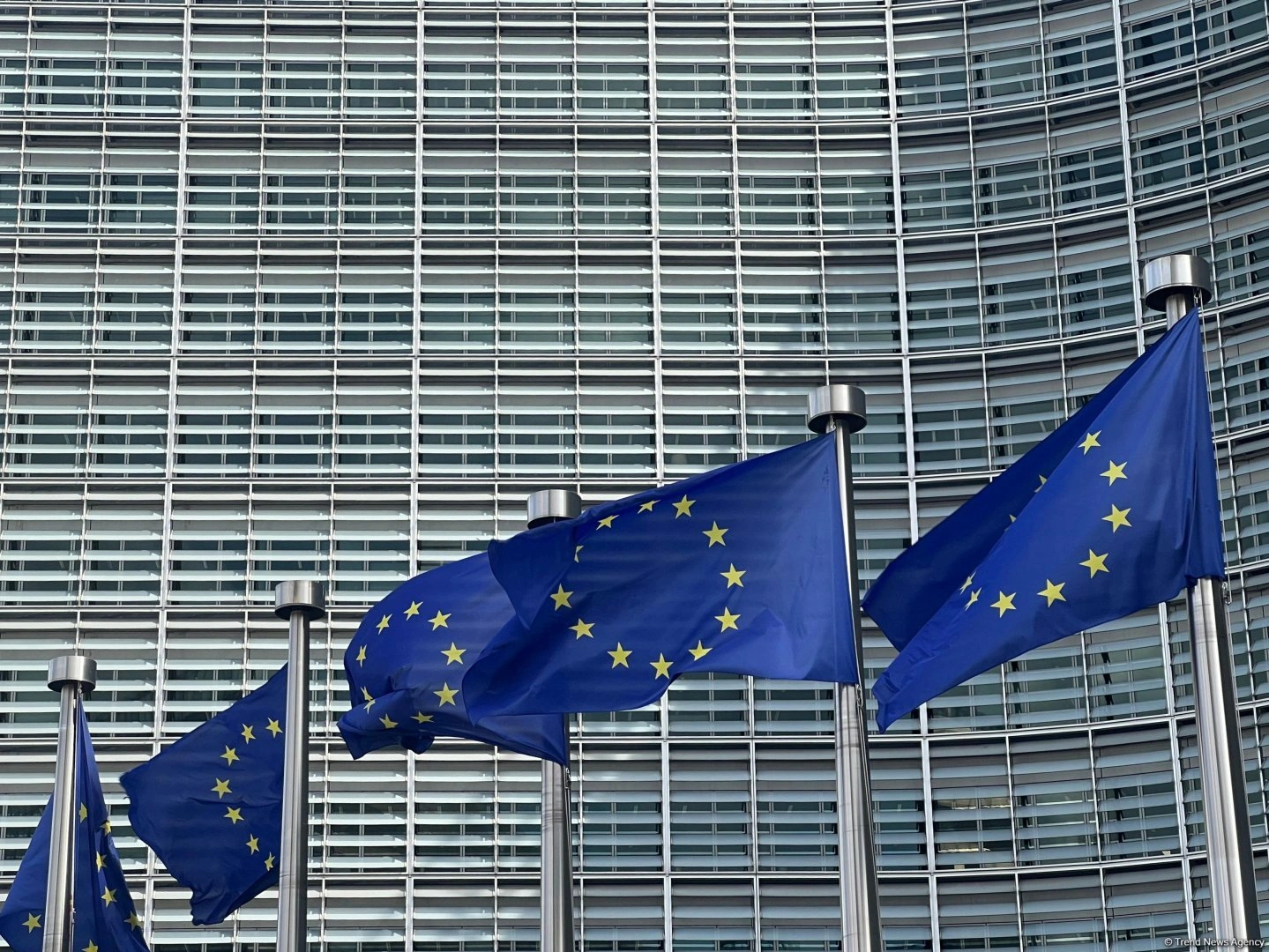
Despite its status as the biggest example of regional
integration, the European Union remains greatly affected by
internal divisions. These continue to threaten the EU’s pursuit of
strategic actorness, a complex process the primary aim of which is
to establish Brussels as an autonomous decision-maker on the
international stage. Divisions between member states are
wide-ranging, affecting multiple policy areas. Whether regarding
the EU’s still-evolving enlargement agenda or the extent of its
engagement with partners such as Türkiye, member state divergences
threaten to undermine the EU’s ability to act swiftly and
strategically in the most crucial and pressing moments. Given the
scale of unpredictability which characterizes contemporary affairs,
and also the considerable ground the EU must still make to close
the capabilities gap with other major global powers, this
uncertainty threatens to further weaken the EU’s global
influence.
The fragmentation which is regularly assigned to the EU’s
actorness can be placed in two overarching categories. The first
concerns strategic divergence between key member states on several
essential aspects of EU policy, including defence and security,
enlargement and even migration. The second factor concerns internal
dynamics in leading EU countries, which could alter the EU’s
overall course and nature as an institution. In addition to
present-day disagreements between key members on existing policy
issues, the EU faces equally challenging long-term obstacles in the
face of domestic political uncertainty experienced by its leading
actors. This deserves just as much recognition as the ongoing
divisions between key EU leaders.
External partners – the Türkiye case
Disagreements between member states continue to span a range of
areas. One of the most notable and consequential examples for the
EU’s status as an actor are its relations with states which are not
members but widely considered to be indispensable partners. The
relationship with Türkiye is a useful and prominent example. For
several years, the EU and its member states have struggled to voice
a unanimous and clear-cut position on its relationship with Ankara.
Even if officials in Brussels publicly recognize Ankara’s strategic
importance for the European continent and voice support for closer
ties, it is apparent that this remains a relationship with
considerable untapped potential. Altering dynamics in the
transatlantic relationship and the United States’ reconsideration
of its role in NATO have urged the EU to reexplore some of its
other important relationships. Nevertheless, in the case of
Türkiye, this has not occurred in line with a consistent strategy.
For instance, the backbone of the relationship remains the
EU-Türkiye Customs Union, which since entering into force in
December 1995 has not been modified or upgraded. Undeniably, the
two sides are major economic partners, with Ankara ranking as the
EU’s fifth-largest
trading partner in the second quarter of 2026. However,
politically and institutionally, the relationship remains
underexplored. Over the course of recent years, the EU’s political
approach to Türkiye has failed to reflect the magnitude of their
economic ties and Ankara’s growing geopolitical significance for
the European continent. On the one hand, there is recognition that
without Türkiye’s involvement in key defence and security
programmes, the EU will be unable to achieve the operational
independence it desires. This stems from both Ankara’s status as
NATO’s second-largest military power and its highly influential
position in various regions of the world, making it an
indispensable partner at this moment in time. However, in practice,
member state opposition to Türkiye’s involvement in schemes such as
SAFE (Security Action for Europe) demonstrates that the EU remains
insufficiently united on the Türkiye matter. Certain individual
leaders, namely French President Emmanuel Macron, have on multiple
occasions adopted highly confrontational positions which have
attempted to depict Türkiye as a negative force for NATO and other
Western institutions. Moreover, France’s involvement in matters
directly relating to Türkiye’s national interests, most notably in
Ankara’s relations with Greece and Cyprus, has served as a step
directly undermining the broader EU-Türkiye relationship.
Internal dynamics – persisting and wide-ranging
division
Relations with external partner states are just one example of
the underlying dynamic. EU member states, including those
considered as the most powerful and influential, regularly disagree
and fail to align in the most critical moments. The recent
migration crisis that affected Spain, when hundreds of migrants
crossed the border from Morocco into Ceuta, Spain’s North African
exclave, was another demonstration. First, diplomatic tensions
erupted as several member states, including France, criticized
Spain for its management of its border security and reinstated
border checks on travel to and from the country. Further examples
of disjointed responses to crises include the war in Ukraine, where
issues such as the use of frozen Russian assets regularly cause
public disagreements between member states. Only recently, four
member states (the Netherlands, Spain, Poland and Sweden) proposed
to reopen conversations on using the frozen assets for sending
support to Ukraine. However, only last year, Belgium firmly
rejected the idea due to potential legal complications. This
reignites the decades-long conversation about the nature of the EU
as an actor, which focuses on the complex balance between state
sovereignty and national interests and the ‘sacrifices’ which come
with regional integration.
Another recent example of this tension concerns the EU’s budget,
the expansion of which is another major topic for debate. Only
recently, it was reported that six member
states (Germany, Denmark, the Netherlands, Austria, Finland and
Sweden) called for the EU’s budget to be scaled down from what they
consider to be excessive spending commitments. This particularly
concerns areas like security cooperation and migration, which place
additional pressure on already strained national budgets. In
addition to budgetary issues, conversations about structural reform
of the EU’s diplomatic
service have also been on the agenda. This is another issue
characterized by disagreement, with different member states
proposing different models. Some proposals included shifting all
foreign policy responsibilities to the European Commission, while
another suggests a greater role for the EU’s High Representative
for Foreign Affairs and Security Policy. Hence, one can reasonably
conclude that, despite the geopolitical environment facing the EU,
which a priori should have resulted in more unity and less
fragmentation has instead affected multiple levels of the
institution. In addition to member state division on ad-hoc issues,
there is also uncertainty surrounding the EU’s broader
institutional structure.
Divisions between member states affect more than just projects
at the EU level, as they also have implications for bilateral
initiatives which are designed to enhance Europe’s overall defence
readiness. One such example is the failed FCAS (Future Combat Air
System) project between France and Germany. The programme, of which
the agreement to develop a joint fighter jet formed an integral
part, was launched in 2017 and described as important for the reset
of Franco-German relations. However, the project’s development
stalled due to
disagreements between French and German industry representatives
over technical implementation and, crucially, the leading role in
the process. This points to a deeper issue: two countries
considered integral to the EU’s pursuit of autonomous defence
capabilities have adopted divergent approaches. In France’s case,
deeper integration under the EU umbrella and greater leadership in
advancing the European defence sector are currently among the
country’s key foreign policy priorities. In Germany’s case, the
country is prioritizing strengthening its national defence industry
and boosting its conventional military capabilities. This,
logically, may come at the expense of regional integration
projects. Hence, even though the geopolitical environment calls for
more EU-level unity, member states continue to prioritize their
individual agendas, which may ultimately prove incompatible.
Domestic considerations
For various member states, fragmentation also concerns the
domestic political arena, which inevitably is linked to a state’s
foreign policy. The fragility that characterizes the domestic
politics of some leading EU member states threatens to further
deepen the EU’s battle with internal fragmentation. Governments in
leading countries like France and Germany face imminent challenges
from rising political forces, with the AfD’s (Alternative for
Germany) rise in the latter developing particularly rapidly. In
France, the steady rise of the National Rally, which opposes
European integration and criticizes the EU and NATO, is a similar
issue. With elections due in 2027, the French political landscape
and the subsequent implications for the EU remain unclear. In
addition to leading European states, there are several other
influential member states which also face defining periods for
their domestic political environments. In 2027, general or
parliamentary elections are expected in countries like Italy, Spain
and Poland, all of which are influential member states in their own
right. Therefore, the year ahead promises to be another important
test for the EU and particularly its ability to withstand internal
pressures and continue its pursuit of strategic autonomy. Electoral
results in various key member states will serve as a timely litmus
test of the state of European integration.
Implications for the South Caucasus
Despite all the issues discussed, the EU continues to possess
major levers of influence and is rightly considered an influential
actor in different regions. This extends to the South Caucasus,
where the EU undoubtedly has an important role to play. This
involves supporting the new regional order being established, at
the core of which is the normalization of relations between
Azerbaijan and Armenia and the consolidation of respect for
sovereignty and territorial integrity as the principal norm guiding
inter-state relations. The EU, should it make the right choices,
has both the financial and diplomatic capability to support these
regional processes and ensure their acceleration for the benefit of
lasting peace and stability. Politically, institutions in Brussels
appear to be more determined than in previous periods to act in
accordance with new regional realities. This includes treating
actors more equally, accepting new and evolving regional dynamics,
and refraining from interfering in bilateral processes that require
support rather than one-sided intervention. However, the EU’s track
record in the region brings one back to the challenges and
inconsistencies which have been discussed above. Too often in
previous instances, the divisive and damaging positions of either
individual member states or individual politicians undermined
regional stability and upheld an already confrontational
environment. Given the EU’s recent track record of disagreement and
fragmentation, both internally and in its relations with external
partners, there is work to be done if it wishes to consolidate
itself as an influential player in the region. The South Caucasus
is fundamentally different from what it was a decade ago, which is
a reality external actors must accept. The EU, despite various
efforts to do so, still faces an array of challenges which might
prevent it from becoming a genuine contributor to long-term
stability in a rapidly changing region.
Author: Huseyn Sultanli, Advisor at the Center for
Analysis of International Relations and Multiculturalism (AIR
Center)