BAKU, Azerbaijan, August 30. Participation in
the Shanghai Cooperation Organization (SCO) supports Kyrgyzstan’s
multi-vector foreign policy by bringing together key Eurasian
states, including China, Russia, India and the Central Asian
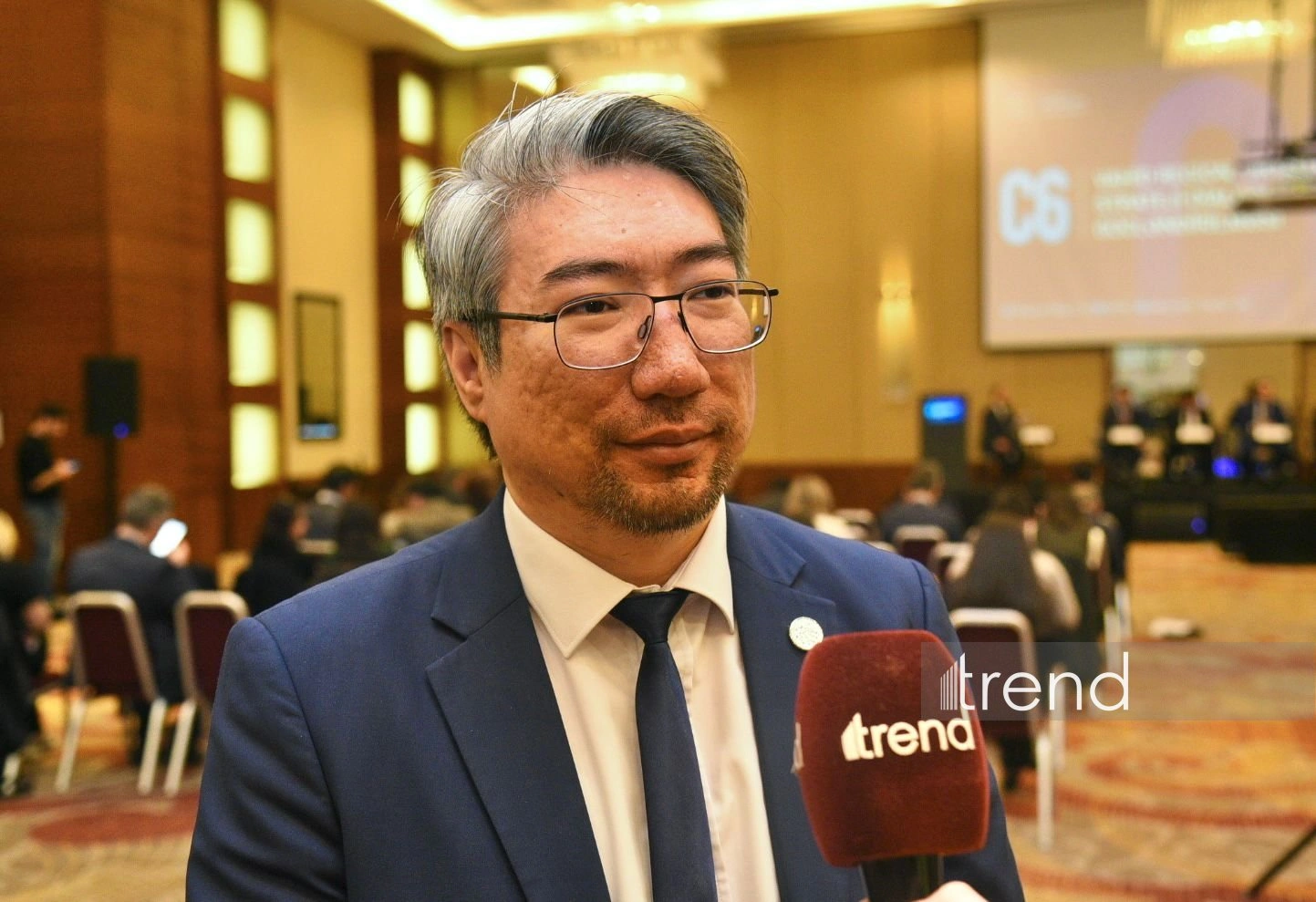
countries, Temirlan Razbaev, chief expert at the Analytics and
Coordination Department of the National Institute for Strategic
Initiatives under the President of the Kyrgyz Republic, told
Trend.
"The SCO supports Kyrgyzstan’s multi-vector approach, as China,
Russia, India, Pakistan, Iran, Belarus and the four Central Asian
states - Kyrgyzstan, Kazakhstan, Tajikistan and Uzbekistan - are
represented in one format. This allows Bishkek to discuss security,
trade and infrastructure issues simultaneously with key Eurasian
centers of power. A concrete institutional result for Kyrgyzstan is
the establishment in Bishkek of the SCO Center for Combating
Transnational Organized Crime," he said.
According to him, the chronology regarding Azerbaijan is
important: Baku has been an SCO dialogue partner since 2015 and
participated in the SCO Plus meeting in Tianjin in 2025.
"On July 31, 2026, Kyrgyzstan and Azerbaijan signed a Treaty on
Allied Relations and a package of documents covering road
transport, cargo transportation and shipping, energy cooperation
for 2026–2028, cybersecurity, the financial market and precious
metals. It would be incorrect to say that these agreements emerged
solely because of the SCO - they are the result of bilateral
rapprochement. However, the SCO complements bilateral mechanisms
with a common political platform and strengthens Kyrgyzstan’s
positioning as a link between Central Asia and the South Caucasus,"
he added.
Responding to a question about the main expectations for the
upcoming SCO summit, given that Kyrgyzstan is hosting the meeting
this year and that considerable attention is focused on it, he said
the main expectation is to translate political agreements into
implementation mechanisms.
"The meeting of the Council of Heads of State is scheduled for
September 1, 2026, while high-level events in the SCO Plus format
will take place on August 31 and September 1. On July 24, foreign
ministers approved the draft Bishkek Declaration marking the 25th
anniversary of the SCO, thematic statements and other decisions as
a basis for further work. Therefore, the final package of documents
cannot yet be considered approved.
I would assess the outcome based on three criteria:
modernization of the SCO’s legal framework and mechanisms;
practical implementation of the Development Strategy through 2035
and the 2025 agreements on new security structures; and
project-based decisions in transport, digital trade, energy and
investment," he added.
Temirlan Razbaev noted that three interconnected areas are
priorities for Kyrgyzstan.
"The first is security. In Tianjin in 2025, agreements were
signed on the SCO Anti-Drug Center and the SCO Universal Center for
Countering Security Challenges and Threats. The latter is expected
to include a structure in Bishkek for combating transnational
organized crime. This gives Kyrgyzstan not only a political but
also an institutional role in the SCO’s overall security
system.
The second area is trade and transport. From January through
March 2026, China accounted for 31.1 percent of Kyrgyzstan’s
foreign trade turnover, while Russia accounted for 27.1 percent;
together, they represented 58.2 percent. Therefore, even technical
solutions related to customs procedures and logistics have a direct
economic impact on the country. The China–Kyrgyzstan–Uzbekistan
railway project is valued at $4.7 billion. The Kyrgyz section is
more than 304 kilometers long and includes 50 bridges and 29
tunnels with a combined length of about 120 kilometers, meaning
that almost 40 percent of the section will consist of bridges and
tunnels.
The third area is energy, climate and the digital economy. These
sectors are included both among the official priorities of
Kyrgyzstan’s SCO chairmanship and in the documents of the Tianjin
SCO Summit," he added.
He noted that Azerbaijan’s interest emerges at the next stage:
new transport flows could be linked through the transport networks
of Central Asia and the Caspian Sea with the Middle Corridor.
However, this will not happen automatically – it will require
through tariffs, coordinated schedules, digital documents and
faster border-crossing procedures.
The SCO was established in 2001 and initially comprised China,
Russia, Kazakhstan, Kyrgyzstan, Tajikistan and Uzbekistan. Over the
past 25 years, its membership has expanded to 10 countries. The
26th SCO summit will be held in Bishkek on August 31-September 1,
2026, under Kyrgyzstan’s chairmanship. The meeting will focus on
the organization’s further development, strengthening economic and
transport cooperation, and security cooperation. Following the
summit, the leaders are expected to consider a number of documents
related to the development of the SCO’s financial and economic
mechanisms, including initiatives to expand settlements in national
currencies and establish new cooperation institutions.