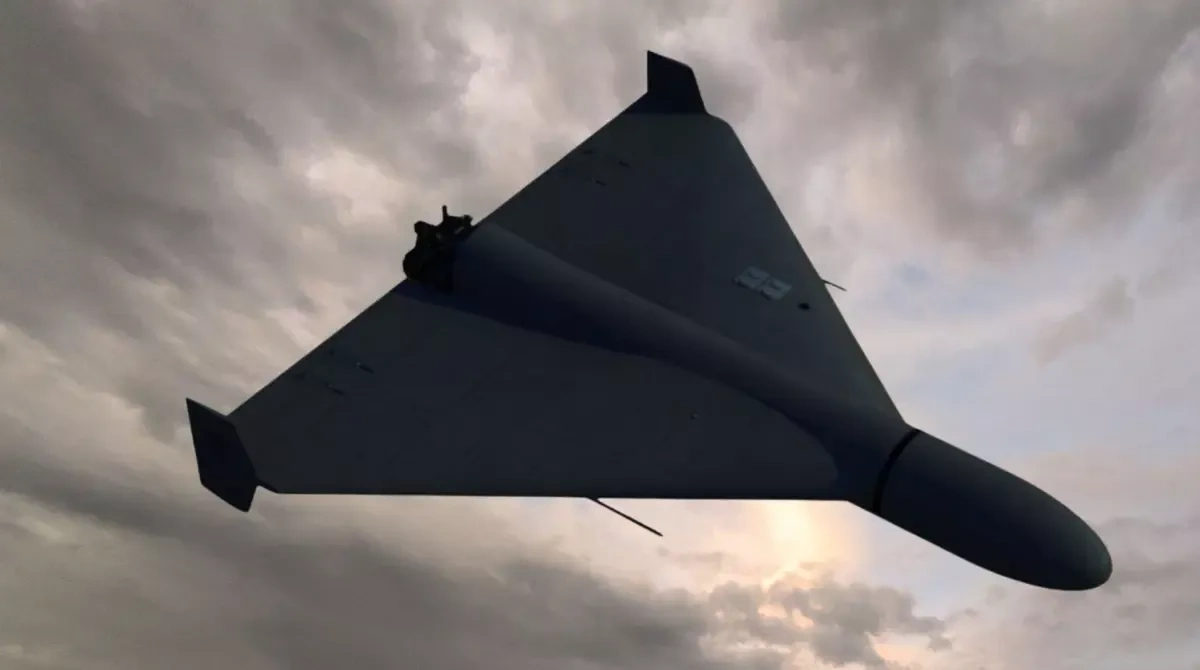
Iran’s Shahed drones have become one of the defining weapons of modern warfare, combining relatively low-cost production with the ability to overwhelm sophisticated air-defence systems.
Widely used by Russia against Ukraine, the drones have evolved significantly since the Shahed-136 first emerged, an American newspaper writes.
Newer versions are faster and more sophisticated, with Chinese-made components increasingly playing a key role, according to Ukrainian officials and analysts.
At the heart of their development is a global supply chain that has allowed Iran and Russia to obtain technology despite Western sanctions.
Iran began developing unmanned aircraft decades ago, partly because sanctions and the aftermath of the 1979 revolution left its conventional air force struggling to obtain modern Western equipment. Its engineers gradually moved towards one-way attack drones: relatively simple aircraft designed to reach a target and detonate.
The Shahed’s design drew on earlier Western drone technology, but producing it required components from around the world. Western-made electronics were initially important, while Chinese companies increasingly became the main route through which Iran could obtain parts.
One crucial example was the engine. Iran obtained German-designed Limbach engines through intermediaries, according to US diplomatic records. A Chinese company later distributed the engines and eventually acquired the German manufacturer. Iran subsequently developed its own engine based on the Limbach design, but US officials say Chinese suppliers continued to provide key components.
The supply chain has become increasingly dependent on China. Investigations have found American and European electronics in Shahed drones, but many were allegedly routed through Chinese and Hong Kong-based companies before reaching Iran or Russia. Over time, Western components have increasingly been replaced by Chinese-made alternatives.
Ukrainian researchers say newer Shaheds contain more sophisticated communications and navigation equipment, including modems, antennae and SIM cards that can help correct their flight
The latest development has been turbojet-powered Shaheds capable of travelling at roughly 300 miles per hour, making them substantially faster than earlier versions. Ukraine says engines used in some of these drones were made by Shenzhen-based Telefly Telecommunications Equipment, which produces small turbojet engines.
The evolution of the Shahed has changed the economics of air defence. Older drones can often be intercepted by cheaper systems, but the newer turbojet models can outrun some Ukrainian interceptor drones, forcing Kyiv to rely on fighter aircraft or expensive surface-to-air missiles.
Russia can also launch the drones in large numbers alongside ballistic and cruise missiles, creating a difficult challenge for defenders. The drones may be far cheaper than the weapons used to destroy them, putting sustained pressure on Ukraine’s stocks of advanced interceptors.
The Shahed has consequently become more than an Iranian weapon. Russia has modified and produced its own versions, while Iran has exported the technology to other countries. China and India have also developed their own variants.
The rise of the Shahed reflects a broader change in military technology. Major weapons programmes once depended largely on powerful states with vast industrial bases. Today, a middle power can combine an existing military design with commercially available components sourced through global supply chains.
China has been particularly important because of its huge manufacturing base and central role in electronics and industrial production. Beijing says it regulates exports of dual-use goods and rejects unilateral US sanctions.
The result for Iran and Russia is a weapon that can be produced and deployed at scale. As the Shahed becomes faster and more capable, its influence is spreading beyond Ukraine, forcing militaries to rethink how they defend against weapons that can cost a fraction of the systems used to intercept them.
By Aghakazim Guliyev