BAKU, Azerbaijan, August 26. Uzbekistan has
called for stronger international financing and the development of
new regional investment mechanisms to address desertification, land
degradation and drought.
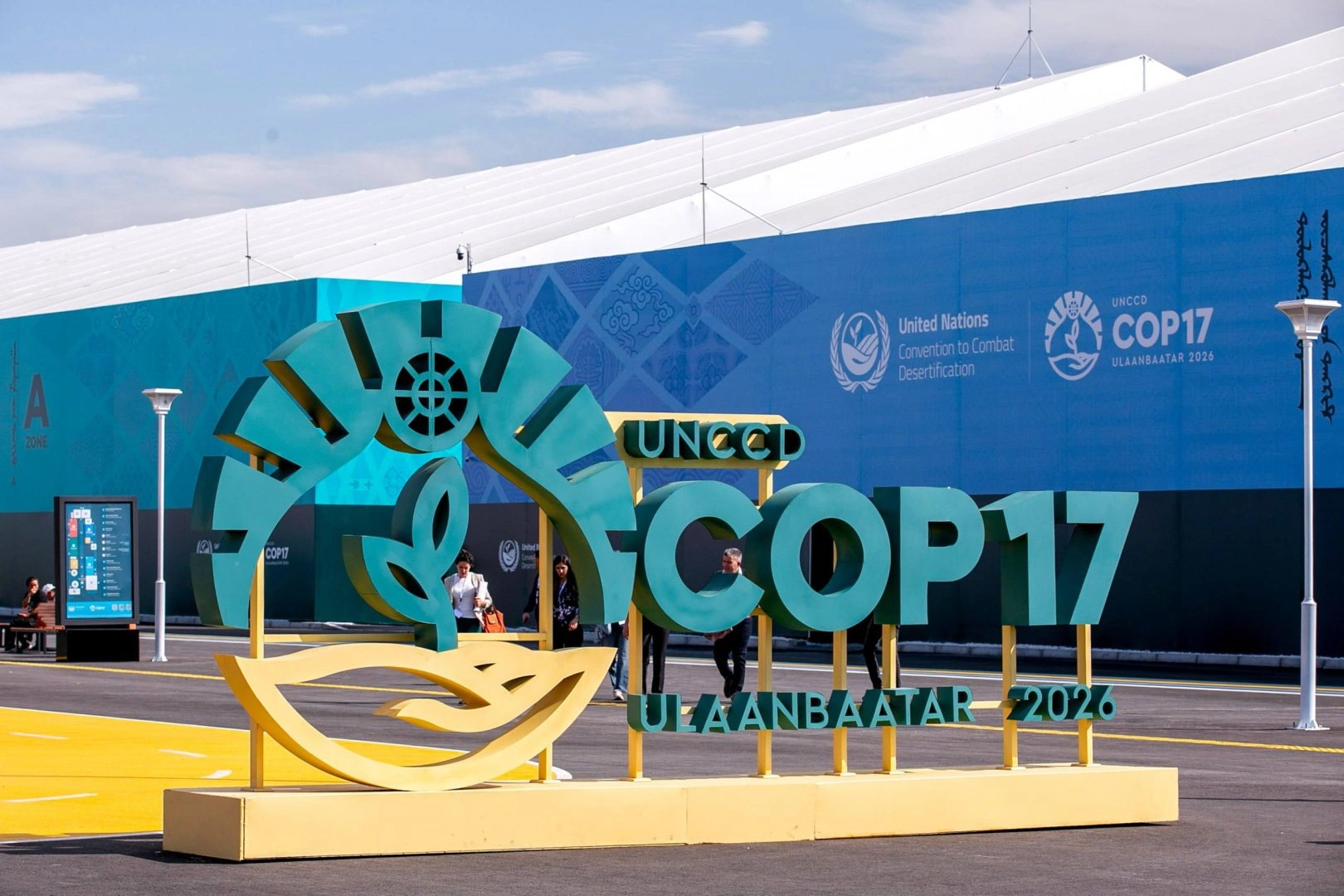
This was stated in a statement by Uzbekistan’s National
Committee on Ecology and Climate Change, released following the
17th session of the Conference of the Parties to the United Nations
Convention to Combat Desertification (UNCCD COP17) in
Ulaanbaatar.
According to the National Committee, the high-level segment
brought together heads of state and government officials,
ministers, representatives of international organizations, and
other participants. The segment was opened by Mongolian President
Ukhnaagiin Khürelsükh and also featured remarks by UN Deputy
Secretary-General Amina J. Mohammed and UNCCD Executive Secretary
Yasmine Fouad.
The discussions focused on accelerating land restoration,
strengthening resilience to drought, improving sustainable pasture
management and expanding financing for the restoration of land and
ecosystems.
A central issue was the global financing gap. According to
figures presented at COP17, the annual funding shortfall for
addressing desertification, land degradation and drought is
estimated at $278 billion, while the annual economic cost of
inaction stands at approximately $878 billion.
Speaking at a ministerial dialogue on innovative financing
mechanisms, Aziz Abdukhakimov, adviser to the President of
Uzbekistan on environmental issues and chairman of the National
Committee for Ecology and Climate Change, noted that land
degradation and drought pose both environmental and socioeconomic
challenges for Uzbekistan.
“For Uzbekistan, land degradation, desertification and drought
are not only environmental challenges, but also social and economic
ones, directly affecting food and water security, the resilience of
rural communities and long-term economic development,” Abdukhakimov
said.
Uzbekistan covers about 45 million hectares, with roughly 30
million hectares consisting of desert and arid landscapes. More
than 11 million hectares are classified as degraded, while about
70% of the country’s territory faces desertification risks.
Pastures cover approximately 26 million hectares, with about 60%
experiencing declining productivity.
The country has expanded restoration efforts, including in the
Aral Sea region, where protective vegetation has been established
across more than 2 million hectares of the dried seabed to help
reduce dust storms and improve regional resilience.
Uzbekistan also highlighted the $153 million RESILAND Uzbekistan
project financed by the World Bank, as well as more than $32
million in grants mobilized in 2025 for environmental stabilization
in the Aral Sea region.
However, Abdukhakimov stressed that international financing
remains insufficient and presented several proposals aimed at
mobilizing investment in Central Asia.
One proposal calls for establishing a Drylands Project Lab under
the Regional Research Institute for Combating Desertification and
Developing Desert Economies at Green University. The platform would
turn scientific research and tested solutions into investment-ready
projects, while a proposed Central Asian Land Project Preparation
Center would provide grants and technical assistance. Uzbekistan
aims to develop the region’s first portfolio of such projects by
2027.
Uzbekistan also proposed creating a dedicated Central Asia
financing window under the UNCCD and its Global Mechanism to
support land restoration, drought resilience and measures against
sand and dust storms through blended-finance mechanisms.
Another proposal calls for establishing a Central Asian Pasture
Data Processing Center, with financing linked to independently
verified environmental and socioeconomic outcomes.
Uzbekistan further proposed working with the UNCCD, UNFCCC, and
relevant international standard-setting organizations to develop a
specialized Carbon Standard for Drylands to measure, report, and
verify carbon sequestration in deserts and other arid
ecosystems.
The proposals reflect Uzbekistan’s push to shift international
financing for land restoration from funding individual activities
toward investment tied to measurable environmental and
socioeconomic results.