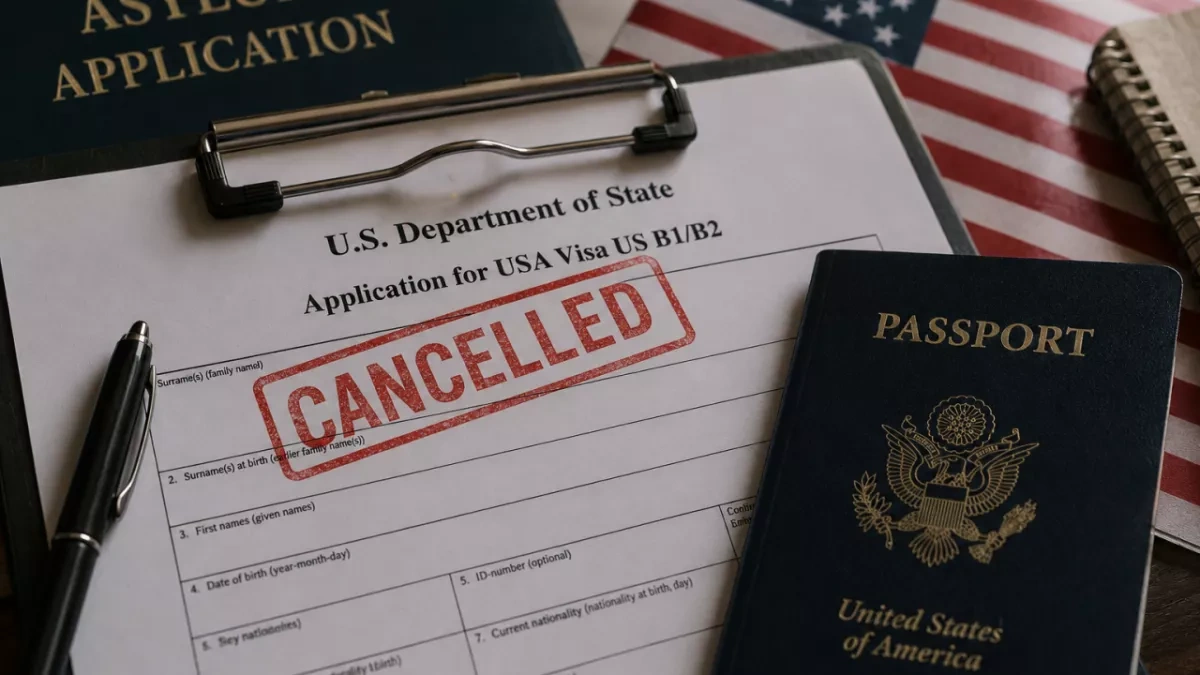
The Trump administration is preparing to revoke the business and tourism visas of as many as 200,000 foreigners who have applied for or are currently seeking asylum in the United States, according to U.S. State Department documents obtained by The Associated Press and two U.S. officials.
If carried out, the measure would represent the largest single mass revocation of U.S. visas in the country’s history and would likely face legal challenges.
Unless the policy is challenged or revised, the State Department is expected to announce in the coming weeks that it will revoke B1 and B2 visas issued between 2016 and 2026 to holders who have sought or are seeking asylum. The action is being coordinated with the Department of Homeland Security.
“We are coordinating with DHS to identify and revoke the nonimmigrant visas of foreigners who have come to the United States claiming to be short-term visitors, but then file for asylum to stay here permanently,” State Department spokesman Tommy Pigott said.
Pigott declined to provide an estimate of how many visas could ultimately be revoked, saying, “as the process will be ongoing, the number of revocations remains dynamic and will be done on a rolling basis.”
The revocations would not necessarily lead to immediate deportation. Most people whose asylum applications are currently pending would instead be recategorized, but would lose their status as business or tourism travelers, according to the officials, who spoke on condition of anonymity because the revocations have not been finalized.
The administration has steadily tightened visa restrictions since President Donald Trump returned to office for his second term last year. Measures have included increased scrutiny of applicants’ social media histories, expensive visa bonds and bans on issuing visas to citizens of certain countries.
Deputy Secretary of State Christopher Landau criticized the use of tourist and business visas to enter the U.S. and subsequently seek asylum.
“People in the US and all over the world are fed up with bogus asylum claims,” Landau wrote Monday on X. “Asylum isn’t supposed to be a loophole to circumvent immigration law.” He cited the case of a Colombian citizen who entered the U.S. on a tourist visa in 2015 and later sought asylum.
B1 visas generally cover business travel, while B2 visas are issued for tourism, family visits or medical treatment. The documents and officials did not immediately establish how many current or former B1 and B2 holders have sought asylum and would be affected.
Applicants for these visas are currently required to affirm that they will not seek asylum in the U.S. and demonstrate an intention to return home.
Over the past 18 months, the State Department has revoked about 175,000 visas from people convicted of or accused of crimes including drunken driving, rape and robbery, as well as individuals who publicly criticised U.S. policies, particularly regarding the Middle East.
The administration has also intensified efforts against so-called birth tourism, which it says involves foreign pregnant women travelling to the U.S. to give birth so their children can obtain birthright citizenship. Trump has repeatedly sought to end birthright citizenship, but courts, including the Supreme Court, have rejected those efforts.
The State Department documents indicate that screening of current B1 and B2 visa holders began after the department received information from U.S. Citizenship and Immigration Services about asylum applications.
By Tamilla Hasanova