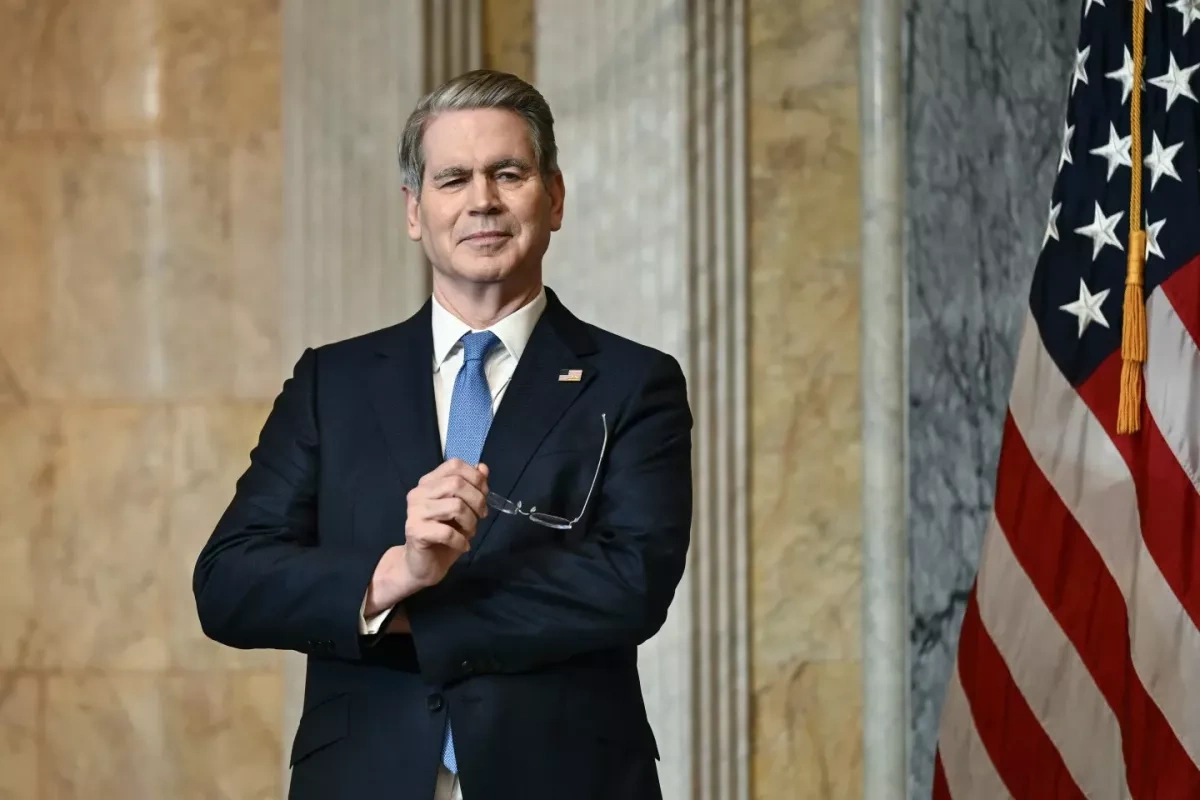
U.S. Treasury Secretary Scott Bessent’s efforts to curb rising government bond yields are putting the Treasury on a collision course with the Federal Reserve while raising questions about the growing political influence over U.S. debt markets, The Economist reports in an analysis.
Bessent announced plans on August 19 for the Treasury to buy back tens of billions of dollars of longer-term government debt, briefly pushing yields lower before they rebounded. The move is intended to address what Bessent has described as a disconnect between Treasury yields and underlying economic fundamentals.
Government bond yields have risen sharply this year as persistent inflation, higher oil prices following the U.S.-Israeli war with Iran and increased private borrowing linked to artificial-intelligence infrastructure have raised the cost of capital.
The rise in yields has also highlighted growing concerns over the United States’ fiscal position. The federal budget deficit is around 6% of GDP, while federal debt has exceeded $40 trillion, or about 130% of GDP, according to the analysis. The Congressional Budget Office expects debt and deficits to continue increasing.
Bessent has set a goal of reducing the deficit to 3% of GDP by 2028, although The Economist said that target appears increasingly difficult to achieve.
The Treasury’s buyback programme will not reduce the overall amount of U.S. government debt, as the purchases will be financed through the issuance of shorter-term securities. The amounts involved are also relatively small compared with the scale of federal borrowing.
Instead, the programme could serve as a signal that the Treasury is prepared to intervene if borrowing costs continue to rise.
The approach differs from the Federal Reserve’s traditional use of bond purchases. The Fed has used programmes such as quantitative easing and Operation Twist to influence financial conditions during periods of economic stress. Bessent’s intervention, however, is focused partly on the government’s borrowing costs.
The move could create tension with Fed Chair Kevin Warsh, who, according to the analysis, has rejected quantitative easing and stressed that policymakers should avoid leaving a heavy footprint in financial markets.
Bessent has previously criticised former Treasury Secretary Janet Yellen for what he described as politicising the Treasury and interfering with the Fed’s work. Yet his own efforts to influence longer-term Treasury yields represent a more active approach to debt-market management.
The Treasury has also taken other steps that could help contain borrowing costs, including measures involving Japan and potential financial arrangements with the United Arab Emirates. Government-sponsored mortgage agencies Fannie Mae and Freddie Mac have meanwhile increased purchases of mortgage-backed securities, which could help put downward pressure on mortgage rates.
The Economist said the measures could modestly lower yields in the short term, particularly ahead of the U.S. midterm elections, when the cost of living and affordability are major political concerns.
But attempts to suppress borrowing costs could have broader consequences. A weaker dollar and rising gold prices following the buyback announcement suggested some investors were becoming more sceptical of U.S. assets.
At the same time, efforts by the Treasury to push yields lower could run against the Federal Reserve’s efforts to keep inflation under control. Lower yields and a weaker dollar would provide economic stimulus similar to an interest-rate cut, even as the Fed remains focused on inflation.
The resulting tension between Treasury policy and monetary policy could become more pronounced in the coming months, particularly as the United States faces growing borrowing needs.
The Economist warned that continued intervention could ultimately undermine confidence in the Treasury market if investors begin to view it as less stable and more politically managed.
By Aghakazim Guliyev