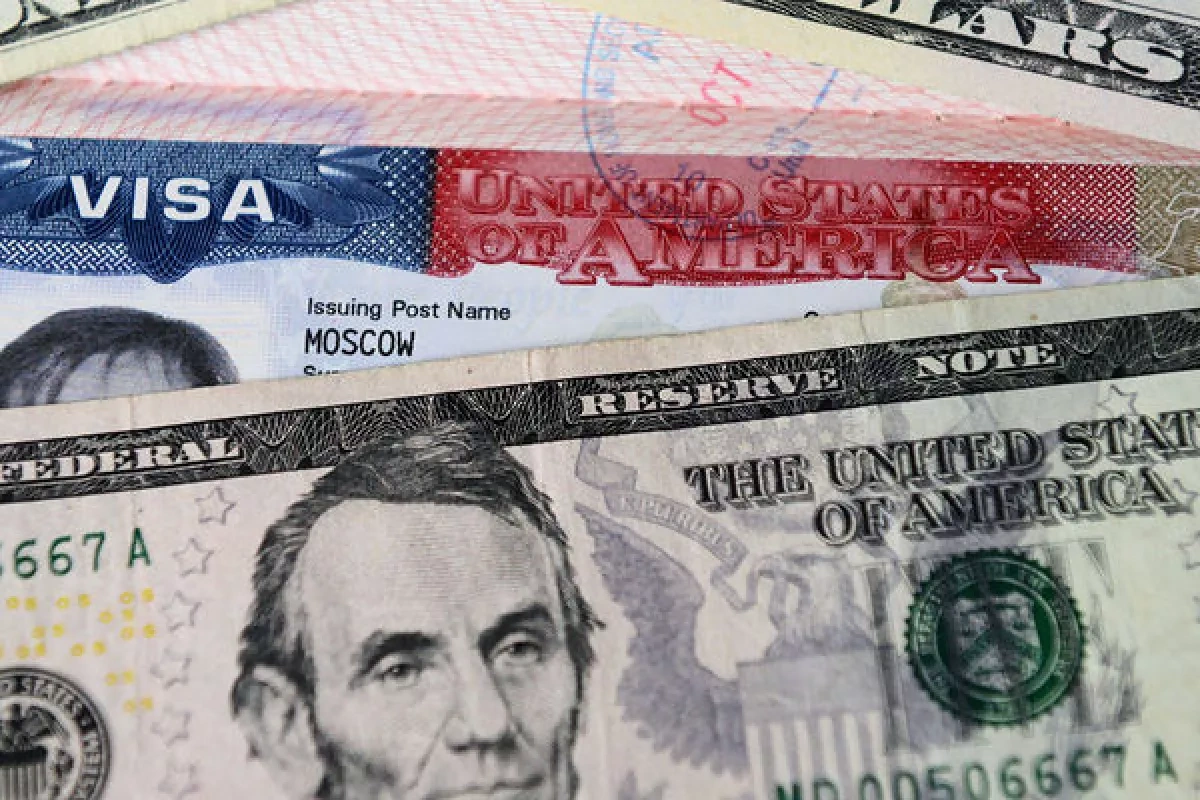
The US Department of Homeland Security (DHS) has proposed raising the H-1B visa fee to $103,265, a move that could significantly increase the cost of employing foreign skilled workers in the United States, with Indian nationals likely to be among those most affected.
The proposed fee was outlined in a regulation published in the Federal Register on Monday. The Trump administration is also considering new fees targeting the H-1B visa and F-1 Optional Practical Training (OPT) programs, Caliber.Az reports, citing foreign media.
The proposed H-1B charge follows last year’s introduction of a $100,000 fee, which was subsequently blocked by US courts.
If implemented, the new measures could increase costs for foreign nationals working in the United States, international students transitioning from universities to employment and companies sponsoring H-1B workers, according to corporate immigration services firm Fragomen.
The proposal is particularly significant for Indian nationals, who account for more than 70% of H-1B beneficiaries. US Citizenship and Immigration Services approved 399,402 H-1B petitions in 2024, with Indian-born beneficiaries accounting for 71% of them.
Fragomen said the proposals have already passed through the White House Office of Management and Budget (OMB).
“A proposed OPT fee rule was sent to the Office of Management and Budget (OMB) on August 20 and is now under review. A proposed rule to impose a fee on certain H-1B petitions was received by OMB and cleared review on the same day, August 19,” the firm said in a note.
Fragomen added that DHS could propose a $100,000 fee on OPT applications, while the proposed H-1B fee could be linked to ongoing litigation over the administration’s previously blocked $100,000 H-1B petition fee.
The details of the proposals remain confidential and are expected to be made public through the formal rulemaking process.
The potential fee increases come alongside other proposed changes to the H-1B program.
Earlier this month, DHS proposed eliminating the existing 60-day grace period for certain unemployed H-1B workers. If finalized, the measure could require affected workers and their dependants to leave the United States almost immediately after their qualifying employment ends.
The proposed rule would remove the current 60-day period available to certain H-1B workers and their dependants when the employment underpinning their immigration status ends before their authorized period of stay expires.
The developments could have a particularly significant impact on the large Indian-American community. More than 5.2 million people of Indian origin live in the United States, according to recent estimates based on US Census data.
By Vafa Guliyeva