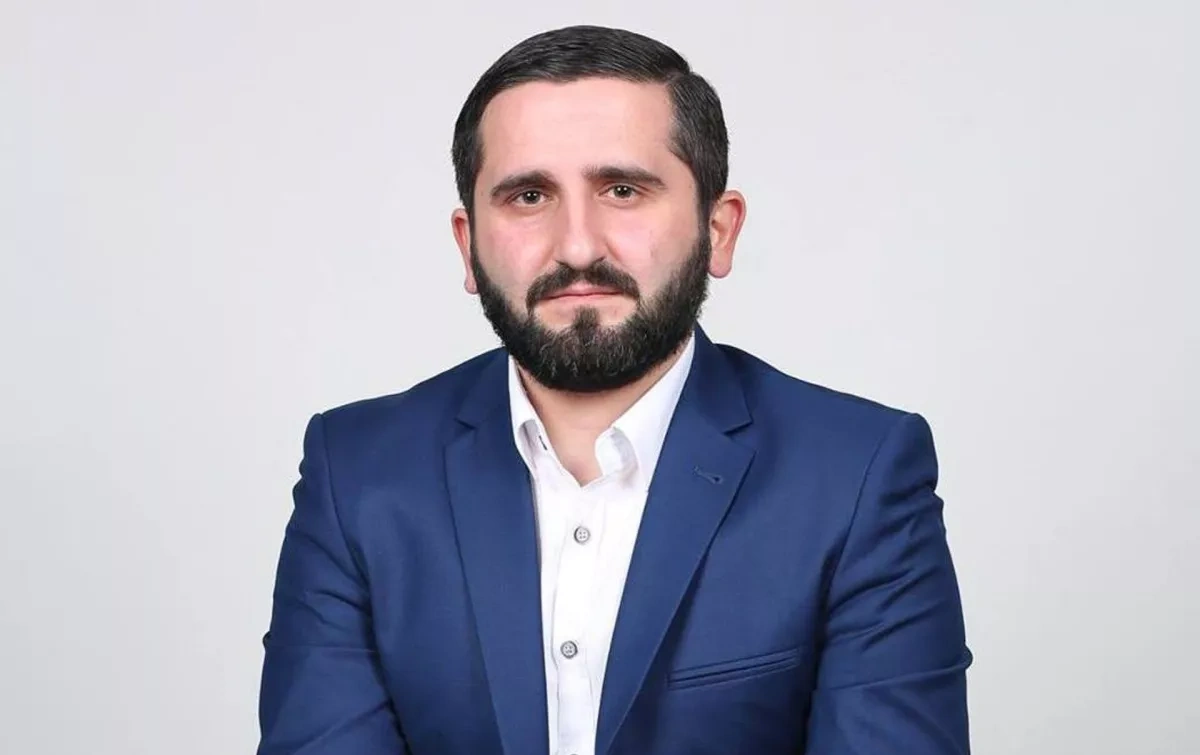
Just a week ago, Israeli National Security Minister Itamar Ben-Gvir made a series of highly controversial statements, calling for full Israeli control over the Gaza Strip, the restoration of Jewish settlements there, the encouragement of Palestinian emigration, and regular “targeted assassinations.” According to him, 30–40 people should be killed in Gaza every night, including not only those who directly pose a threat.
Meanwhile, the situation on the ground has undergone no fundamental changes over the past week. On August 23, Israeli strikes on the Gaza Strip killed at least two people, including a four-year-old child, while seven others were wounded. Israel said the strikes were carried out in response to launches from Gaza.
Against this backdrop, the question of whether Washington will be able to implement its plan for Gaza or whether the hard-line approach of Israel’s far right will prevail has become particularly pressing. What lies behind Ben-Gvir’s statements, and how much real influence does he wield over Israeli policy?
To address these questions, Caliber.Az spoke to prominent experts on the region.
Israeli military expert and author of the military-analytical YouTube channel Sergey Auslender stressed that Ben-Gvir’s statements should be viewed as harsh election rhetoric, given that the minister regularly makes similar remarks.
“For example, he pushed through a death penalty law — this is purely an electoral law that will never be implemented and that nobody needs. It is redundant because Israel already has the death penalty. The minister’s statements should be viewed accordingly.
Such statements generally create problems for Israel on the international front, provoking a backlash. It is one thing when an ordinary Knesset member says something like this — there are such politicians in every parliament. But here we are talking about a minister heading one of the key security agencies, who is effectively proposing to eliminate 30–40 people every day. This sounds strange and creates problems, so his words should be treated specifically as harsh election rhetoric.
Of course, Ben-Gvir also has some achievements. In particular, there is the issue of easing the process of obtaining gun permits following October 7. In my view, this was also an electoral measure, but it proved to be genuinely useful and correct. Nevertheless, all of this is accompanied by a great deal of harsh populism,” Auslender noted.
However, according to Middle East expert and Georgian political scientist Vasily Papava, it would be a mistake to dismiss Ben-Gvir’s statements outright. He notes that the remarks by Israel’s National Security Minister, made on the podcast of former hostage Rom Braslavski, reflect a consistent and long-standing position of the far-right wing of Israeli politics.
“He speaks directly about the need for the complete resettlement of the Gaza Strip, maximum encouragement of the Palestinian population to leave, and systematic ‘targeted assassinations’ not only of those who pose an immediate threat, but also of a broader group of people whom he refuses to regard as human beings. These words are not a random emotional outburst; they continue the line that Ben-Gvir and his Otzma Yehudit party have pursued since joining the government.
For a significant portion of his electorate, such rhetoric appears to be a logical response to the events of October 7, 2023, and the subsequent war. For the international audience and a significant part of Israeli society, including military personnel and diplomats, however, it sounds like a call for actions that could be classified under international law as war crimes or ethnic cleansing.
The practical feasibility of these proposals depends on several factors that are currently pulling in different directions. Ben-Gvir oversees the police and prison system, but does not have direct command over the military. Decisions on military operations in Gaza are made by the prime minister and the military leadership. In recent weeks, Israeli media have reported that restrictions have been placed on the authority to carry out strikes, a move the minister has publicly criticised. This indicates that even within the current coalition, his maximalist approach is facing resistance.
At the same time, elections are approaching, and hard-line rhetoric allows Ben-Gvir to strengthen his position among right-wing voters, who view compromise as a sign of weakness.
The external context further limits his room for manoeuvre. The Trump administration is promoting a plan that envisions the demilitarisation of Gaza, the establishment of a Palestinian technocratic administration, and a phased withdrawal of Israeli forces. The ‘Board of Peace’ and affiliated bodies are working on humanitarian and governance mechanisms that directly contradict the idea of mass population displacement and the restoration of settlements throughout the Gaza Strip.
Any steps that could be interpreted as forced deportation or systematic extrajudicial killings would immediately create serious problems in relations with Washington, Arab mediating countries, and a significant part of the international community. Even if some Palestinians genuinely wanted to leave under certain conditions, organised ‘encouragement of emigration’ on the scale advocated by the minister would require the cooperation of third countries, and there is currently little indication that they would agree to this.
Thus, Ben-Gvir’s statements serve more of a political and ideological function than reflect a realistic government action plan. They reaffirm his position and put pressure on Netanyahu, but at the same time complicate negotiations over Gaza’s future. Fully implementing such a scenario currently appears unlikely,” Papava concludes.